New York Paris London Palm Beach Hudson Valley

Posts Tagged ‘Old Fashioned Mom Magazine’

Something truly amazing is FINALLY coming to the Hamptons!!! A true one hundred percent vegan café!


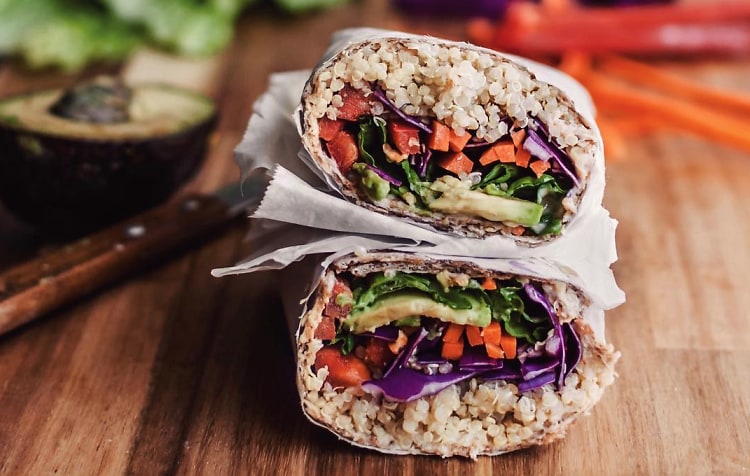
And while there are certainly plenty of suitable options for the health-conscious out East, the Hamptons is finally getting a 100%, totally vegan café. The Plant Based Coffee Shop, set to open this June, is the brainchild of Marley and Lennon Ficalora, two vegetarian-raised brothers who set out to create an establishment which would “make healthy plant-based food affordable and accessible to everyone.”


So, for those who want to maintain their Gwyneth-approved lifestyle (or just try it out), this café is the best thing to hit the East End since the SoulCycle BARN.


Plant Based Coffee Shop, 2487 Main Street, Bridgehampton

The Plant Based Coffee shop will feature cafe staples such as wraps and bowls, along with cold brew and kombucha on tap. It will be open daily from 10 am to 4 pm. Stay tuned!

Written By: Danielle Spoleti

Summer has finally sprung upon us. Though you may prefer to escape the hustle and bustle in favor of the crisp air near the Aegean Sea, spending summer in the city is truly magical, especially since you can, literally, find a taste of Mediterranean serenity without having to island hop. If you can’t afford an exotic adventure to Greece or Coastal Italy, you can, at least, take your taste buds on vacation.

Cafe Medi

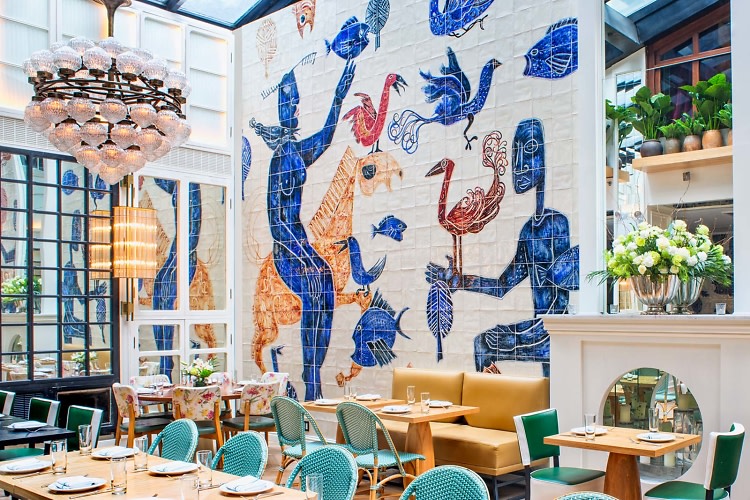
 Serving up dishes inspired by the traditional coastal fare of Spain, Italy, and France, Cafe Medi is not only a go-to for delicious and unique Mediterranean, but also for an amazing ‘gram. The beautiful space boasts an airy atmosphere, complete with high ceilings and stunning murals on the walls. Come summer, there’s also outdoor terrace seating – perfect for pretending you’re catching a seaside breeze.

Cafe Medi, 107 Rivington St.


Yefsi Estiatorio

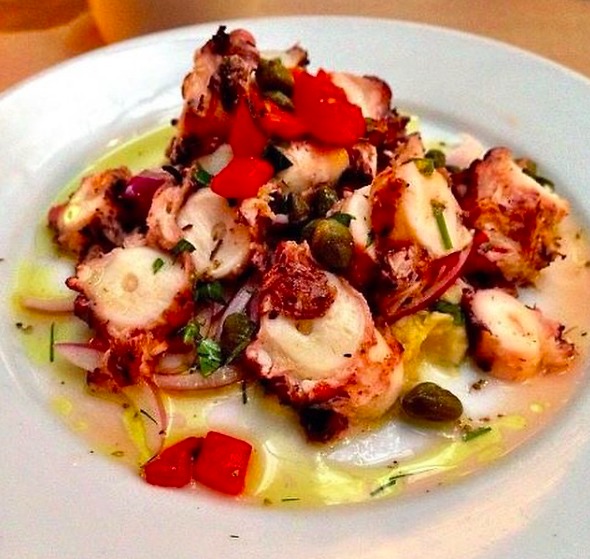
Located on the Upper East Side, Yefsi highlights charm and sophistication in their authentic meals, focusing on appetizer meze dishes. Enjoy a plate of grilled octopus with a chilled Retsina white wine in this dimly lit restaurant. Date night, anyone?


Yefsi Estiatorio, 1481 York Ave.


Avra

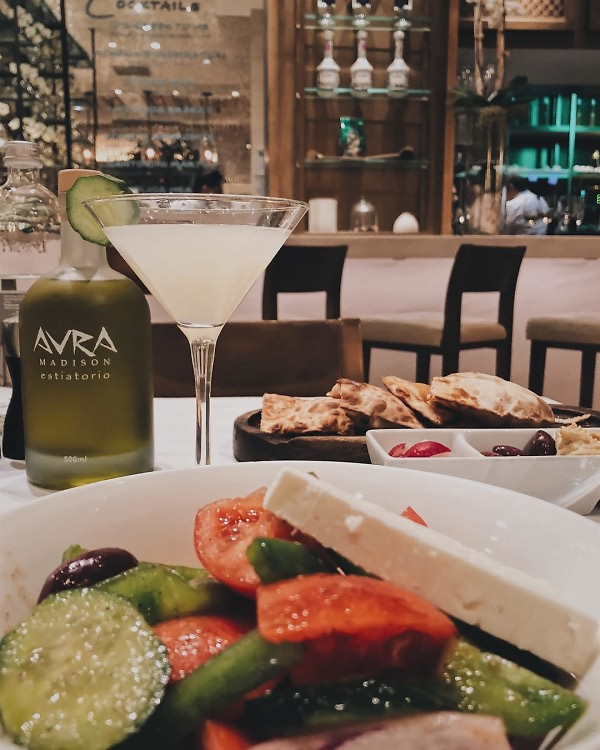
Craving seafood? This upscale eatery on Madison Avenue emanates a “villa vibe” with extended outdoor seating available, displaying fresh whole fish from the Aegean upon entrance.


Avra Madison Estiatorio, 14 E 60th St.

The Greek

The Greek Tribeca offers a cozy escape, where creative dishes and natural vines and greenery capture the spotlight, as if you were sitting in an outdoor taverna in Mykonos on a hot summer night.


The Greek,  458 Greenwich St. 

Estiatorio Milos

Named after the volcanic island featuring pristine clear-blue water, Milos is an NYC favorite. Its sleek interior truly brings out the contrasting colors native to Greece and sharpens the focus on the incredible seafood.


Estiatorio Milos, 125 W 55th St.

Ousia

Just a quick drive down the West Side Highway transports you to the beauty of Greece as you stumble upon Ousia, a recently opened restaurant on 57th and 11th. Conveniently located next to the Landmark movie theater, enjoy a bite of their hummus and pita, maybe some cocktails and a spanakopita, after a show.


Ousia, 629 W 57th St.

Souvlaki GR

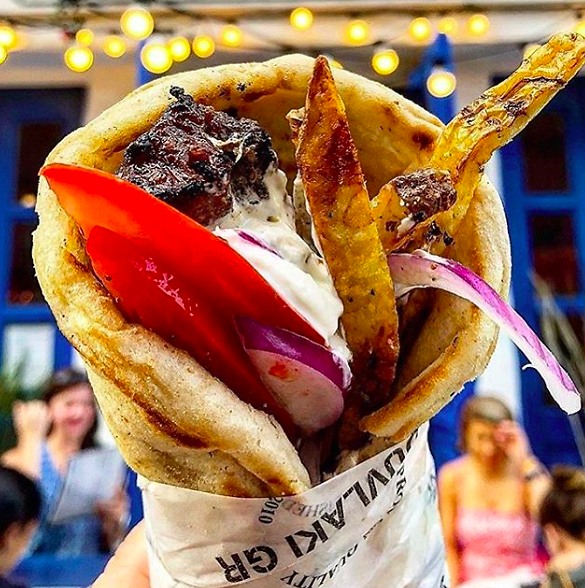
Walking down the grey and white cobblestones, you will immediately feel as if you’ve stepped foot into a local taverna in Santorini, greeted with white walls and blue straw chairs. If you’re looking for something more laid-back but as equally delicious as an upscale restaurant, journey to Souvlaki GR for their famous bifteki sandwich or a few souvlaki skewers. Sit back, relax, and breathe in the fresh air of Greece while situated in the middle of the Lower East Side.

Souvlaki GR, 116 Stanton St.

Santina

Tired of Greek food? Hop on over to the Amalfi coast for this Italian-Mediterranean fusion restaurant situated just beneath The High Line. The glassed-in, jewel box of a space creates the perfect atmosphere to munch on some seafood and pasta after a day of roaming around Chelsea.


Santina, 820 Washington St.

Shuka

A small, intimate setting with colorful plates for curious palates awaits New Yorkers on Macdougal street. Shuka offers Mediterranean fare, creative cocktails, and a trendy clientele. Enjoy shawarma, shakshuka, and other small plates as you wine and dine while seeing and being seen.


Shuka, 38 Macdougal St.


Written By: Stella Stephanopoulos

1. Osteria Francescana – Modena, Italy

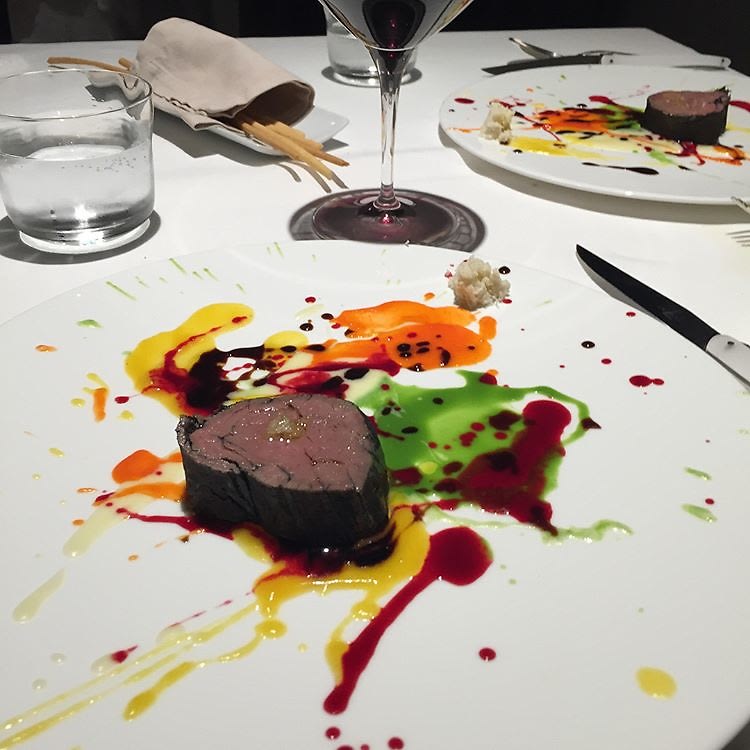
Don’t let its modest facade fool you. The world’s top eatery is once again Osteria Francescana, run by Italian-born chef Massimo Bottura and his American wife, Lara Gilmore. Previously named Number One back in 2016, the non-traditional restaurant serves up modern Italian cuisine like a story, with dishes woven with narratives and tastes of the region.

2. El Celler de Can Roca – Girona, Spain


The Roca brothers have made El Celler de Can Rocathe world’s top eatery twice, and although it comes in as Number Two this year, the innovative space in northern Spain is nevertheless a must-visit. The food is contemporary Catalan while the plating is purely imaginative. Some lucky few diners even get to tour Josep Roca’s unbelievable wine cellar.

3. Mirazur – Menton, France


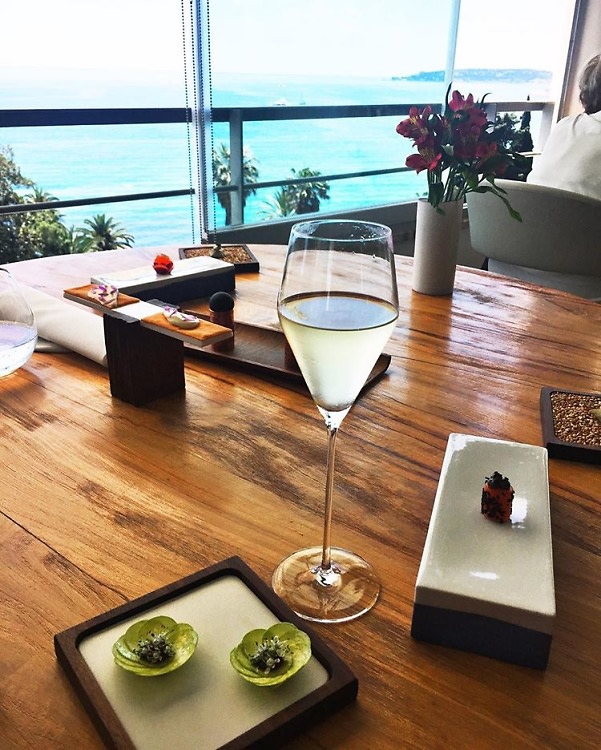
Chef Mauro Colagreco is informed by his Argentine-Italian heritage, making his Mediterranean fare all the more adventurous on the French side of the riviera. Expect stunning views and fresh seafood at Mirazur.

4. Eleven Madison Park – New York, New York


After snagging last year’s top spot on this list, our very own Eleven Madison Parkclosed for a much-needed face-lift. Now it’s back and more modern than ever – and we’re not just talking about the interiors. Chef Daniel Humm has taken to more minimalist plating, but the European-inspired dishes are just as delicious. It might have fallen a few spots, but it’s still Number One in North America.

5. Gaggan – Bangkok, Thailand


Officially named the best restaurant in Asia for four years in a row, Gaggan is known for their progressive Indian creations mixed with traditional Thai hospitality. The tasting menu is written out in emojis so that each dish is a literal surprise.


6. Central – Lima, Peru


Peru’s unique biodiversity is celebrated at Central, which has topped Latin American restaurant lists for years. Husband-and-wife team Chef Virgilio Martínez and Pía León have become leaders in Peruvian dining, taking guests on a tasting journey through the land in 17+ courses.


7. Maido – Lima, Peru

Peruvian-Japanese cuisine reigns at Chef Mitsuharu ‘Micha’ Tsumura’s Maido in Lima, where colorful Nikkei dishes include fish hot dogs and Cau Cau dim sum with sea snail. Unique to say the least!

8. Arpège – Paris, France

Vegetables take the main stage at Arpège, where Michelin-starred (a million times over) chef Alain Passard cooks fresh fare from his own farms. After years of going fully vegetarian, meat has returned to the French eatery in small quantities – so carnivores are welcome!

9. Mugaritz – San Sebastian, Spain


Traditional Basque dishes get a creative twist at Mugaritz during a 20-course meal, during which you’re asked to give over to your senses. All thanks to pioneering chef Andoni Luis Aduriz.


10. Asador Etxebarri – Axpe, Spain

Located in the Spanish countryside, Asador Etxebarri is worth the trek for Chef Victor Arguinzoniz simple, local dishes, and wood-fired barbecue. The stone dining room and service remains unpretentious, despite its world-renowned status.

Written By: Stephanie Maida

Whether you’re looking for adventure on the steppes or a hammock steps from the ocean, here are the best trips to take this summer.

June 21 marks the first day of summer in the Northern Hemisphere, and vacation season is in full swing—with plenty of destinations to choose from, no matter your style or speed. To make decision time go as smooth as that beach side sangria, take a look at our list of 2018’s best summer trips.

BORNEO

If you love pygmy elephants, glow-in-the-dark mushrooms, floating markets, secret gardens hidden in caves, and the rehabilitation of endangered orangutans—then Borneo is the summer trip for you. After a day of spelunking in Borneo’s Gunung Mulu National Park, visitors can stick around to observe the “Bat Exodus,” as over three million bats swoop into the fading sky from Deer Cave, the largest cave chamber on the planet. Borneo is also the place to spot Irrawaddy dolphins, proboscis monkeys, soft-shelled turtles, clouded leopards, the world’s longest insect, and 15,000 species of plants—including carnivorous pitcher plants; the famous corpse flower; and monster flowers, the largest known blossoms on the planet.


Cloud forest covers the mountains in Malaysia, on Borneo. Several countries—Malaysia, Indonesia, and Brunei—make up the island’s territory.


ICELAND

Iceland is so much more than a quirky layover or winter Northern Lightssite. From May through June the midnight sun provides plenty of daylight hours for soaking in thermal pools, hiking on glaciers in Skaftafell National Park, and sidestepping tide-washed icebergs on black-sand Diamond Beach. In Iceland, mosquitoes don’t exist; the temperature hasn’t gone above 87°F since 1939; and the tap water, filtered underground through ancient lava fields, is some of the purest drinking water in the world. Spend the afternoon beside bubbling mudpots, the black basalt falls of Svartifoss,the magic mossy cascades of Skógafoss … and you’ll see exactly why most Icelanders still believe in elves.


Skógafoss is one of Iceland’s most iconic waterfalls.


    ILHA GRANDE

Brazil’s Ilha Grande may only be a 15-minute boat ride from Jacareí (or a roughly hour-long ferry from Rio), but its 106 quiet beaches, musical rainforests, and car-free streets feel a world away. Most of the island is protected within Ilha Grande State Park, meaning the jungle hikes to Parnaioca and Lopes Mendes Beach offer sightings of many endangered tropical species, including maned sloths, brown howler monkeys, and the red-browed amazon parrot. Stay in a breezy pousada, drink passionfruit caipirinhas lagoon-side, or visit one of the island’s over 30 restaurants for a bowl of traditional shrimp moqueca—a bright stew of fresh seafood steeped in coconut milk and palm oil.


Clouds skirt Mount Bromo, an active volcano in Java, Indonesia.


LEBANON

The Spaniards argue that crème brûlée is just a French version of crema catalana. Welsh historians claim Arthur Guinness smuggled his famous stout recipe from a Welsh tavern to Dublin. And Lebanon … Lebanon wants their hummus back. Often overlooked as a culinary destination, Lebanon crafts the ideal summer mezze table in an equally ideal temperate climate. Stroll open air markets in Byblos, one of the world’s oldest cities. Cool off at the Baatara Gorge Waterfall. Then settle in beneath the cedars for a feast of local wine, tabbouleh, tiny rounds of hot sesame pita, baba ghanoush sprinkled with pomegranate seeds, and plates of herb-y cheese, all drizzled in bright swoops of local olive oil.


Lebanon is an overlooked culinary destination.


MASAI MARA

There are few African safari lands that get as up-close-and-personal as Masai Mara, an expansive and fenceless preserved savannah that stretches between Kenya and Tanzania. The region is home to a dream team of wildlife including lions, cheetahs, zebras, elephants, giraffes, gazelles, rhinos, leopards, and baboons. July through September is the best time to visit, when two million wildebeest bravely storm across crocodile-clogged rivers and grassy plains on their annual migration to the Serengeti. Witness the tension by safari car or on horseback, sail over hippos in a hot air balloon, visit a local Maasai community, then snorkel off that savannah sand in the coral reefs off of Kenya’s peaceful Diani Beach.

Image result for masai mara


Late summer to early fall is the best time to see Masai Mara’s famous wildebeest migration.


MONGOLIA

Medical anthropologist and National Geographic explorer, Carroll Dunham, and her family have spent sixteen blue-sky summers living among nomadic tribes in Mongolia—one of the least population-dense, and most hospitable, countries in the world. And while Dunham loves camping in a traditional ger, watching archery displays at local Naadam festivals, and horseback riding through wild poppies—she says the main reason her family returns is for the people. “No one can sing from the depths of their being and bellies like the Mongols,” she writes. Landlocked Mongolia is known for its 1,000-foot-high singing dunes, crystal clear rivers, cool summer nights, ancient dinosaur fossils, bad cell service, exquisite cashmere, Buddhist lamas, and golden mountains. One spirited horseback ride through these green steppes and we’re sure you’ll be throat singing too.


Wild horses graze on a Mongolian plateau. National Geographic offers an expedition that allows visitors to explore the country on horseback with local experts.


PAPUA NEW GUINEA

May marks the end of the rainy season in Papua New Guinea, making summer the best, and least slippery, season for hiking the Kokoda Track—a historic 60-mile mountain trek along waterfalls, rope bridges, and vibrant villages. Further north, in Mount Hagen, more than 70 tribal groups gather every August for the Sing-Sing Festival, a joyful celebration of ancestral song and dance with lizard-skin drums, swishing grass skirts, conch-shell necklaces and stunning feather headdresses. A dream destination for snorkeling, diving, and birding, PNG claims over 600 islands, 800 native languages, and almost all 43 unbelievably colorful species of birds-of-paradise, including the stunning, neon-blue-feathered Vogelkop, just identified this year by ornithologist Edwin Scholes and National Geographic photographer Tim Laman.


Papua New Guinea is famous for its biodiversity, both on land and at sea.


PERU

Peru enjoys its dry season from May through October, meaning clear skies and sun are likely for Inti Raymi, one of the biggest festivals in South America. Every year, the climax of the festival falls on June 24: Hundreds of dancers in handwoven ponchos descend on Cusco to sing, burn fires, and call upon the Sun God in a stunning day-long ritual that has been performed since the early Incan empire. If crowds in the thousands-plus unnerve you, an August trip to similar, smaller festivals in Wiracochapamp and Huamachuco promise firework displays, fewer tourists, and equally colorful turco and campesino performances.


Peru’s traditional Inti Raymi festival climaxes on June 24.


YOSEMITE

This year California’s Yosemite National Park will complete a four-year-long ecological restoration of the Mariposa Grove. On June 15, the magnificent stand of over 500 giant sequoias will reopen with restored hydrology, accessible shuttles and trails, and better-protected habitats for both the trees and their resident weasel-like Pacific fishers. Yosemite’s towering Sequoiadendron giganteumcan survive for thousands of years—thanks in part to their virtually fireproof bark and naturally insect-resistant tannins. The largest trees by volume on Earth, some sequoias measure up to 154 feet in diameter. After a day of tree-gawking, opt for a May Lake picnic at the base of Mount Hoffmann, or take a hike along Yosemite’s 11.5-mile Valley Loop Trail for gigantic views of El Capitan, Yosemite Falls, Bridal Veil Falls, and Cathedral Rocks. Yosemite is the perfect summer place to get outside and feel oh-so-gloriously small in the most delightful way.

Iconic views—like this vista of Bridal Veil Falls—make Yosemite one of America’s most beloved national parks.


Written By:Caitlin Etherton

Related image

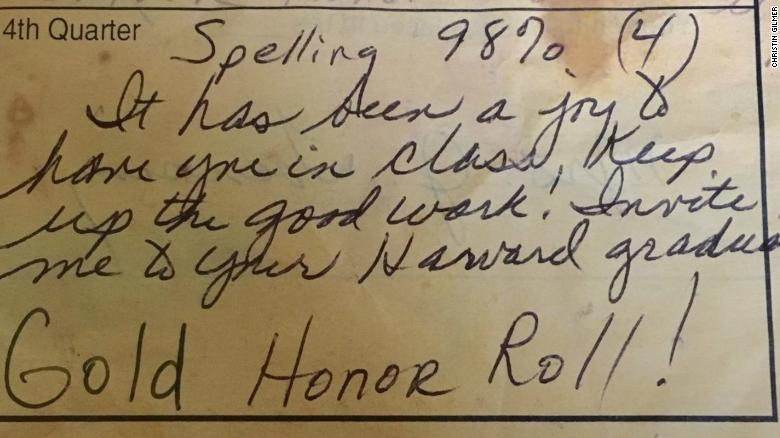
Judith Toensing didn’t just teach her students, she inspired them. A sixth-grade teacher from Yuma, Arizona, Toensing made a strong impact on one of her students 21 years ago. At the end of the school year in 1997, Mrs. Toensing, wrote a note on the student’s report card: “It has been a joy to have you in class. Keep up the good work! Invite me to your Harvard graduation!.” This week, the student, Christin Gilmer graduated from Harvard as a doctor of public health.

Mrs. Toensing wrote a note on this 12-year-old's report card back in 1997.

Mrs. Toensing wrote a note on this 12-year-old’s report card back in 1997.
 Gilmer who is now 33, was only 12 at the time, but she kept the message all these years.
“It meant a lot to me to know that outside my mom, someone who knew me so intimately believed in my dreams and my ability to accomplish them,” Gilmer told CNN. Gilmer, who wrote a thank you note prior to her graduation, said Toensing was the first person to encourage her in the journey of studying public health.
“Ms. Judy Toensing, taught me about current events, global health, and human rights. She was the first person who passionately conveyed the plight of people living with HIV/AIDS to me,” the letter said.
This letter quickly grabbed the attention of school administrators, who decided to honor Toensing by inviting her to the 2018 Harvard T.H. Chan School of Public Health’s convocation, at no cost to her.

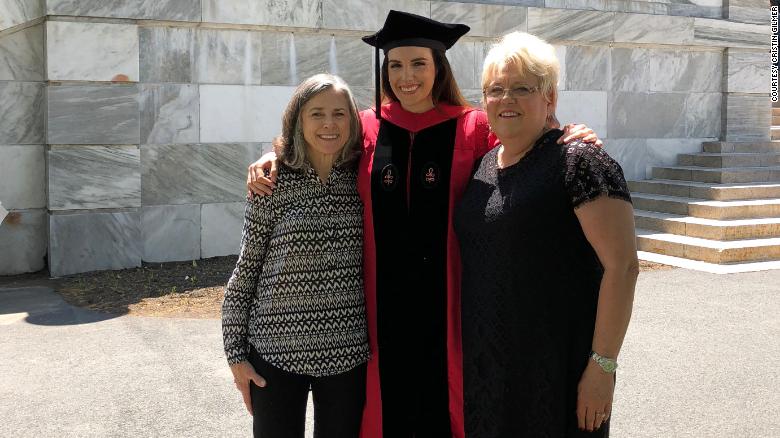
Mrs. Toensing and Gilmer's mom posed for a photo after the ceremony.

Mrs. Toensing and Gilmer’s mom posed for a photo after the ceremony.
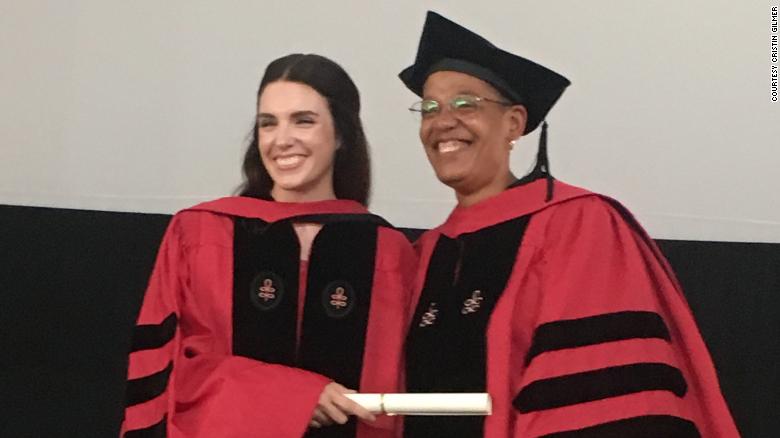
Dean Michelle Williams thanked Toensing — and all public school teachers — for the “immeasurably important” work they do.
“You don’t just teach young people. You inspire them, and you propel them along a path of fulfillment and service to others. Your work is what makes our work possible,” Dean Williams said.
This came to a surprise to Toensing, who felt “shocked, flabbergasted, humbled” when she received the invitation from Harvard, which was personally delivered to her by Gilmer.
“I have high expectations of all my students, so to hear that Christin had achieved this goal did not surprise me in the least,” Toensing told CNN. “I feel honored that Harvard chose to tell Christin’s story, her journey, and that I was a small part of that journey,” she added.

Christin Gilmer received her doctor of public health degree on May 23, 2018.

Christin Gilmer received her doctor of public health degree on May 23, 2018.
Gilmer who got her master’s degree in public health at Columbia University, says that Toensing always encouraged her students to think of ways to help others.
“She lit a fire in me that helping people is a powerful tool, and through education, you can better serve populations in need. I will never forget her passion for others,” Gilmer told CNN. As a student in Toensing’s class, she and others wrote a 100-page advertisement, interviewed the mayor and envisioned how recycling could work in their town 15 years before it actually happened, and helping others is something she plans to focus on.
“I would love return to southern Arizona to work in health, politics, and community development,” Gilmer said. “I wanted to learn from the best institutions in the world so that I could bring back the knowledge and skills I have obtained and share them with the communities from which I came.” Toensing, who says this experience revitalized and energized her to become a better teacher for her students, praised all the hard work Gilmer has done and believes this is just the beginning of a great future.
“She has many more miles to go, I know with her tenacity, her dedication, and her passion for helping humanity, she will be highly successful and that we will all be the better for knowing her,” Toensing said.
Toensing, who taught Gilmer all her sixth-grade subjects, now teaches sixth- and eighth-grade Social Studies.
Written By: Andrea Diaz, CNN
CNN’s Carma Hassen contributed to this report

david-beckham-kids

Despite his sporting success over the years, David Beckham‘s greatest achievement is without a doubt being a proud father to his four children, whom he shares with wife Victoria Beckham. And in honour of Father’s Day, here at HELLO! Online, we have decided to take a look back at the retired footballer’s cutest moments with his kids, Brooklyn, Romeo, Cruz and Harper Beckham!

The celebrity dad previously gushed about his children, explaining how fatherhood has become his number one priority since he retired from football back in 2013. In an interview with InStyle last year, he shared: “My children mean the world to me. Being a parent is always the best thing, but it can also be challenging as well because you want to set the right example. I feel that I do, but sometimes you make mistakes as parents. He added: “The children are very proud of me. They’re back in London, but they’re very proud and they know that daddy’s receiving an award tonight. They know that I go on these trips and I come back and I explain the trips to them. It’s always something to be part of this organisation, I’m very proud.”

It’s clear the Beckhams love spending quality time with one another as the 42-year-old often takes to his Instagram page to share gorgeous pictures of his brood. He also spoke to HELLO! about the importance of family time, explaining: “My family is the biggest accomplishment I have. I’m so proud of Victoria and my children; they’re my greatest achievement.”

David-Beckham-Harper

David and Harper share sweet kiss on family safari holiday

There’s no denying that the sporting ace has a close bond with the youngest of the Beckham clan, his daughter Harper. During their family African safari last month, David shared a snap of himself and Harper sharing a sweet kiss, captioning it simply: “Kiss for Daddy <3”

David-Beckham-brooklyn

David teases Brooklyn with embarrassing baby photo

Although many would think he’s the coolest dad, Brooklyn was left cringing after his dad shared an embarrassing baby photo on Instagram in honour of his 18th birthday! In the adorable snap, which shows a young Brooklyn with a beard of bubble bath, the proud father wrote: “This little man turns 18 tomorrow so as you can imagine I have many photos to post so here we go … Happy 18th eve to my handsome young man and best friend … @brooklynbeckham @victoriabeckham #18mañana.”

David-Beckham-brooklyn

David chaperoned Brooklyn’s date

In 2015, David revealed how he accompanied his eldest son Brooklyn – then 14 – on his first ever date. During an appearance on The Late Late Show, the sports star told James Corden: “On his first date – Victoria was in London – it was Valentine’s day, and he said he’d love to take this girl for dinner. I said ‘OK great’ and I called Victoria and she replied ‘Really?’ So Victoria said, ‘OK make sure you take him, and make sure you sit in the restaurant’. And I was like, ‘Really, you’re going to make me do that?” and she said, ‘Yes, that’s the only way I’m letting him go’.” He added: “So we took him to a sushi restaurant, and he sat at the bar and I sat five tables back. My daughter is 4 years old but when she turns 14, I’ll be closer than that!”

David-Beckham-sons

David and his boys at sporting events

The father-of-four enjoys several father-and-son bonding moments. He often takes them to see football or basketball matches and even Wimbledon. Last month, David shared a snap from the Dodger Stadium with all three sons and in the caption, he wrote: “Opening day at the Dodgers baby ⚾️ 🇺🇸.”

David-Beckham-kids

David goofs around on Snapchat during kids’ ‘boring’ trip to the dentist

The doting father began to play around on Snapchat after he grew bored during a trip to the dentist with his children. Although he didn’t mention which child he was chaperoning, he decided to post a video of himself pulling facial expressions with a rabbit mask over his face while waiting. He said: “Kids teeth check-up and daddy got bored.”

David-Beckham-cruz

David Beckham enjoys cuddles with son Cruz

Proud dad David recently couldn’t help but share a touching photo of him and his youngest son Cruz enjoying a cuddle. The former footballer and his ten-year-old son are shown overlooking a lake with pet dog Olive at their side in the sweet snap. “Cuddle with my little man… #cuddlewithcruzie,” he captioned the striking photo.

David-Beckham-romeo

David cheering Romeo at the London Mini Marathon

In 2015, David and the Beckham family stepped out in full force to cheer on young Romeo, who took part in the London Marathon children’s race. The then 12-year-old successfully completed the three-mile run, raising £6,000 for charity in the process. The whole clan were pictured wearing t-shirts emblazoned with ‘Team Romeo’.

Image result for little harper beckham learning to ride her bike

Little Harper learning how to ride a bike

Written By: Sharnaz Shahid

Related image

Support from parents is key to helping kids do well academically. Here are 10 ways parents can put their kids on track to be successful students.

Related image

1. Attend Back-to-School Night and Parent-Teacher Conferences

Kids do better in school when parents are involved in their academic lives. Attending back-to-school night at the start of the school year is a great way to get to know your child’s teacher and his or her expectations. School administrators may discuss school-wide programs and policies, too.

Attending parent-teacher conferences is another way to stay informed. These are usually held once or twice a year at progress reporting periods. The conferences are a chance to start or continue conversations with your child’s teacher, and discuss strategies to help your child do his or her best in class. Meeting with the teacher also lets your child know that what goes on in school will be shared at home.

If your child has special learning needs, additional meetings can be scheduled with teachers and other school staff to consider setting up or revising individualized education plans (IEPs), 504 education plans, or gifted education plans.

Keep in mind that parents or guardians can request meetings with teachers, principals, school counselors, or other school staff any time during the school year.


2. Visit the School and Its Website

Knowing the physical layout of the school building and grounds can help you connect with your child when you talk about the school day. It’s good to know the location of the main office, school nurse, cafeteria, gym, athletic fields, playgrounds, auditorium, and special classes.

On the school website, you can find information about:

  • the school calendar
  • staff contact information
  • upcoming events like class trips
  • testing dates

Many teachers maintain their own websites that detail homework assignments, test dates, and classroom events and trips. Special resources for parents and students are also usually available on the district, school, or teacher websites.


Image result for school


3. Support Homework Expectations

Homework in grade school reinforces and extends classroom learning and helps kids practice important study skills. It also helps them develop a sense of responsibility and a work ethic that will benefit them beyond the classroom.

In addition to making sure your child knows that you see homework as a priority, you can help by creating an effective study environment. Any well-lit, comfortable, and quiet workspace with the necessary supplies will do. Avoiding distractions (like a TV in the background) and setting up a start and end time can also help.

A good rule of thumb for an effective homework and/or study period is roughly 10 minutes per elementary grade level. Fourth-graders, for example, should expect to have about 40 minutes of homework or studying each school night. If you find that it’s often taking significantly longer than this guideline, talk with your child’s teacher.

While your child does homework, be available to interpret assignment instructions, offer guidance, answer questions, and review the completed work. But resist the urge to provide the correct answers or complete the assignments yourself. Learning from mistakes is part of the process and you don’t want to take this away from your child.


4. Send Your Child to School Ready to Learn

A nutritious breakfast fuels up kids and gets them ready for the day. In general, kids who eat breakfast have more energy and do better in school. Kids who eat breakfast also are less likely to be absent, and make fewer trips to the school nurse with stomach complaints related to hunger.

You can help boost your child’s attention span, concentration, and memory by providing breakfast foods that are rich in whole grains, fiber, and protein, as well as low in added sugar. If your child is running late some mornings, send along fresh fruit, nuts, yogurt, or half a peanut butter and banana sandwich. Many schools provide nutritious breakfast options before the first bell.

Kids also need the right amount of sleep to be alert and ready to learn all day. Most school-age kids need 10 to 12 hours of sleep a night. Bedtime difficulties can arise at this age for a variety of reasons. Homework, sports, after-school activities, TVs, computers, and video games, as well as hectic family schedules, can contribute to kids not getting enough sleep.

Lack of sleep can cause irritable or hyper types of behavior and might make it difficult for kids to pay attention in class. It’s important to have a consistent bedtime routine, especially on school nights. Be sure to leave enough time before bed to allow your child to unwind before lights out and limit stimulating diversions like TV, video games, and Internet access.


Image result for healthy breakfast

5. Teach Organizational Skills

When kids are organized, they can stay focused instead of spending time hunting things down and getting sidetracked.

What does it mean to be organized at the elementary level? For schoolwork, it means having an assignment book and homework folder (many schools supply these) to keep track of homework and projects.

Check your child’s assignment book and homework folder every school night so you’re familiar with assignments and your child doesn’t fall behind. Set up a bin for papers that you need to check or sign. Also, keep a special box or bin for completed and graded projects and toss papers that you don’t need to keep.

Talk to your child about keeping his or her school desk orderly so papers that need to come home don’t get lost. Teach your child how to use a calendar or personal planner to help stay organized.

It’s also helpful to teach your child how to make a to-do list to help prioritize and get things done. It can be as simple as:

  1. homework
  2. soccer
  3. put clothes away

No one is born with great organizational skills — they need to be learned and practiced.

Image result for young kids playing sports

6. Teach Study Skills

Studying for a test can be scary for young kids, and many educators assume parents will help their kids during the grade-school years. Introducing your child to study skills now will pay off with good learning habits throughout life.

In elementary school, kids usually take end-of-unit tests in math, spelling, science, and social studies. Be sure to know when a test is scheduled so you can help your child study ahead of time rather than just the night before. You also might need to remind your child to bring home the right study materials, such as notes, study guides, or books.

Teach your child how to break down overall tasks into smaller, manageable chunks so preparing for a test isn’t overwhelming. You also can introduce your child to tricks like mnemonic devices to help with recalling information. Remember that taking a break after a 45-minute study period is an important way to help kids process and remember information.

Your child probably will be introduced to standardized testing in elementary school. While students can’t really study for standardized tests, some teachers provide practice tests to help ease students’ worries.

In general, if studying and testing becomes a source of stress for your child, discuss the situation with the teacher or school counselor.

Image result for kids studying

7. Know the Disciplinary Policies

Schools usually cite their disciplinary policies (sometimes called the student code of conduct) in student handbooks. The rules cover expectations, and consequences for not meeting the expectations, for things like student behavior, dress codes, use of electronic devices, and acceptable language.

The policies may include details about attendance, vandalism, cheating, fighting, and weapons. Many schools also have specific policies about bullying. It’s helpful to know the school’s definition of bullying, consequences for bullies, support for victims, and procedures for reporting bullying.

It’s important for your child to know what’s expected at school and that you’ll support the school’s consequences when expectations aren’t met. It’s easiest for students when school expectations match the ones at home, so kids see both environments as safe and caring places that work together as a team.

8. Get Involved

Whether kids are just starting kindergarten or entering their last year of elementary school, there are many good reasons for parents to volunteer at school. It’s a great way for parents to show they’re interested in their kids’ education.

Many grade-schoolers like to see their parents at school or at school events. But follow your child’s cues to find out how much interaction works for both of you. If your child seems uncomfortable with your presence at the school or with your involvement in an extracurricular activity, consider taking a more behind-the-scenes approach. Make it clear that you aren’t there to spy — you’re just trying to help out the school community.

Parents can get involved by:

  • being a classroom helper or homeroom parent
  • organizing and/or working at fundraising activities and other special events, like bake sales, car washes, and book fairs
  • chaperoning field trips
  • planning class parties
  • attending school board meetings
  • joining the school’s parent-teacher group
  • working as a library assistant
  • reading a story to the class
  • giving a talk for career day
  • attending school concerts or plays

Check the school or teacher website to find volunteer opportunities that fit your schedule. Even giving a few hours during the school year can make an impression on your child.

9. Take Attendance Seriously

Sick kids should stay home from school if they have a fever, are nauseated, vomiting, or have diarrhea. Kids who lose their appetite, are clingy or lethargic, complain of pain, or who just don’t seem to be acting “themselves” should also take a sick day.

Otherwise, it’s important that kids arrive at school on time every day, because having to catch up with class work and homework can be stressful and interfere with learning.

If your child is missing a lot of school due to illness, make sure to check with the teacher about any work that needs to be completed. It’s also a good idea to know the school’s attendance policy.

Sometimes students want to stay home from school because of problems with classmates, assignments or grades, or even teachers. This can result in real symptoms, like headaches or stomachaches. If you think there’s a problem at school, talk with your child — and then perhaps with the teacher — to find out more about what’s causing the anxiety. The school counselor or school psychologist also might be able to help.

Also try to avoid late bedtimes, which can result in tardy and tired students. A consistent sleep schedule can help.
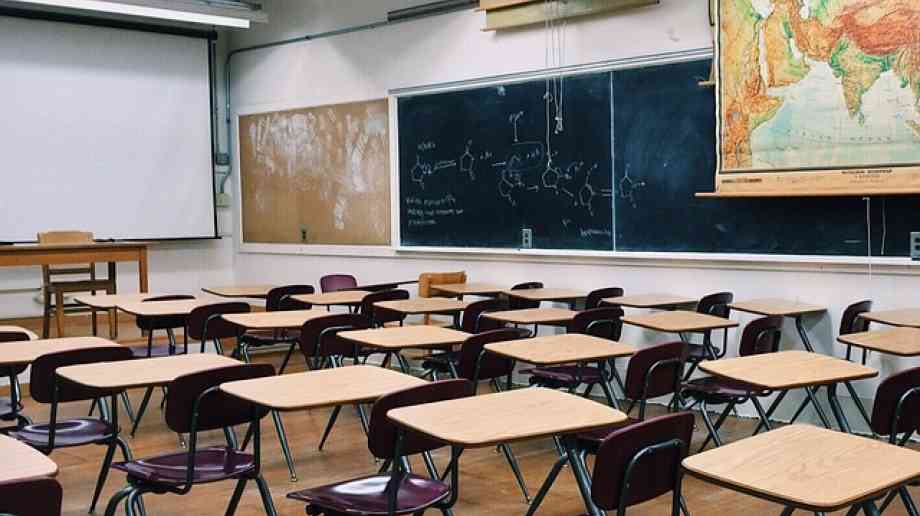
 

Image result for missing school


10. Make Time to Talk About School

It’s usually easy to talk with elementary students about what’s going on in class and the latest news at school. You probably know what books your child is reading and are familiar with the math being worked on. But parents can get busy and forget to ask the simple questions, which can have an effect on children’s success at school.

Make time to talk with your child every day, so he or she knows that what goes on at school is important to you. When kids know parents are interested in their academic lives, they’ll take school seriously as well.

Because communication is a two-way street, the way you talk and listen to your child can influence how well your child listens and responds. It’s important to listen carefully, make eye contact, and avoid multitasking while you chat. Be sure to ask questions that go beyond “yes” or “no” answers.

Besides during family meals, good times to talk include car trips (though eye contact isn’t needed here, of course), walking the dog, preparing meals, or standing in line at a store.

These early years of schooling are an important time for parents to be informed and supportive about their child’s education.


Image result for sending off your child to the bus


Reviewed by: D’Arcy Lyness, PhD
Human rights expert, former Law School dean, receives Harvard’s highest honor

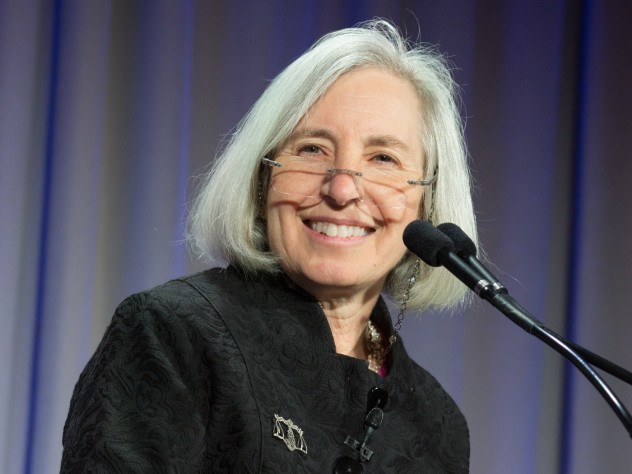
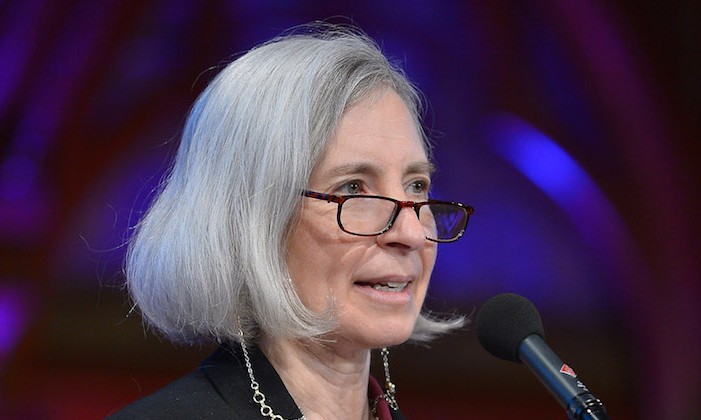
Human rights expert Martha Minow, the Carter Professor of General Jurisprudence at Harvard Law School and a Harvard University Distinguished Service Professor, has been named a University Professor, Harvard’s highest faculty honor.

Renowned human rights expert Martha Minow, the Carter Professor of General Jurisprudence at Harvard Law School and a Harvard University Distinguished Service Professor, has been named a University Professor, Harvard’s highest faculty honor.

Minow, who was dean of Harvard Law School from 2009 to 2017, will begin her appointment as the 300th Anniversary University Professor on July 1.

Known for her wide-ranging intellectual curiosity and influential interdisciplinary scholarship, Minow has offered original ways to frame and reform the law’s treatment of racial and religious minorities as well as women, children, and persons with disabilities. She has taught and written about privatization, military justice, and ethnic and religious conflict, among other matters. Her work in constitutional law has addressed issues of equal protection, freedom of speech, the religion clauses, and federalism. Her current work focuses on whether and when legal systems and rules should promote forgiveness.

“Martha Minow is a scholar of extraordinary scope, imagination, and impact, whose wide-ranging work is anchored in a deep commitment to justice,” said Harvard President Drew Faust. “Throughout her career, she has powerfully combined scholarship with service and education with inspiration. It is a special pleasure to recognize her with the 300th Anniversary University Professorship.”

John F. Manning, Morgan and Helen Chu Dean and Professor of Law at Harvard Law School (HLS), noted that “Martha Minow has been a transformative scholar across multiple fields and disciplines, a devoted and influential teacher, an innovative and impactful dean, and a tireless advocate for those in need of legal services.

Image result for martha minow

“I am delighted that the University has recognized her extraordinary contributions to Harvard and to the world by appointing her the 300th Anniversary University Professor,” said Manning.

Among Minow’s most influential works are two books, “Between Vengeance and Forgiveness,” which addresses legal and societal responses to mass violence, and “Making All the Difference,” which examines the legal treatment of group differences and identities in areas including race, gender, disability, and sexual orientation. She is frequently cited for her publications on the interpretation of rights, on the privatization of traditionally public services (such as prisons, schools, and police), on the influences of social history on family law, and on violence within families and between groups.

“It is an honor to teach and study at this extraordinary University, as it was to serve as dean of the Law School under President Faust’s outstanding leadership,” said Minow, who also was a fellow last year at the Radcliffe Institute for Advanced Study. “And now, this recognition moves me to work even harder to try to advance justice with every possible tool. This new appointment provides energizing encouragement as I return to the classroom after a wondrous, boundary-crossing year with generous colleagues at the Radcliffe Institute. I am particularly humbled to follow Laurel Ulrich and Derek Bok, whose works exemplify imagination, rigor, and conscience. I will work hard to be worthy of the great traditions and aspirations of Harvard and the project of using reason to advance understanding, opportunity, fairness, and peace.”

Image result for martha minow

A recipient of nine honorary degrees, Minow received her bachelor’s degree from the University of Michigan (1975), a master’s degree in education from the Harvard Graduate School of Education (1976), and a law degree from Yale Law School (1979), where she was an editor (1977–78) and then the articles and book reviews editor (1978‒79) of the Yale Law Journal. Following law school, she was a clerk to Judge David Bazelon of the U.S. Court of Appeals for the D.C. Circuit (1979–80) and Associate Justice Thurgood Marshall of the U.S. Supreme Court (1980–81).

A highly regarded and dedicated teacher who has taught more than 25 different courses, seminars, and reading groups at the Law School, she began her academic career there as an assistant professor of law in 1981. She was promoted to professor of law in 1986 and to a named professorship in 2003. She received HLS’ Sacks-Freund Award for Excellence in Teaching in 2005, and chaired the HLS curricular review from 2003 to 2007. She holds an appointment as lecturer on education in the Harvard Graduate School of Education, and is a longtime senior fellow in the Harvard Society of Fellows.

As dean of the Faculty of Law from 2009 to 2017, she guided HLS through a time of strong faculty hiring, notable curricular and pedagogical innovation, significant expansion of the School’s clinical programs, growth in financial aid, emphasis on public service, enhancements of the physical plant, and careful financial management. She is past acting director of what is now the Safra Center for Ethics at Harvard, and was the inaugural chair of the Deans Steering Committee of the Association of American Law Schools from 2013 to 2015. She has delivered more than 75 major lectures in this nation and abroad on topics ranging from religion, medicine, and law to genocide and mass violence, from the legacy of Brown v. Board of Education to access to justice.

Image result for martha minow

Besides Minow’s scholarship, teaching, and service to Harvard, she is highly active in service to the legal profession and the broader community. Since 2010 she has been vice chair of the board of directors of the Legal Services Corporation, the largest funder of civil legal aid for low-income Americans, and previously served on the Boston Bar Association Statewide Task Force to Expand Civil Legal Aid in Massachusetts. She serves on the boards or advisory councils of such diverse organizations as the Advantage Testing Foundation, the American Bar Association Center for Innovation, CBS, the MacArthur Foundation, the MIT Media Lab, the Russell Sage Foundation, and WGBH.

The University Professorships were established in 1935 to recognize individuals whose work on the frontiers of knowledge crossed the traditional boundaries of academic disciplines. University Professors can teach and pursue research at any of Harvard’s Schools.

Minow will occupy the University Professorship held since 2006 by the American historian Laurel Thatcher Ulrich, who will retire on June 30. Prior incumbents include President Emeritus Derek Bok.


Photo by Ken Richardson

Image result for harvard gazette


<p>TK</p>


Eva Longoria has been an actress, a producer, and an activist, but now, she’s taking on a brand-new role as a first-time mom.

On Tuesday, Longoria welcomed a baby boy named Santiago Enrique with her husband Jose Antonio Bastón.

Eva and Jose shared the first photo of their little boy with Hola! USA, telling the site, “We are so grateful for this beautiful blessing.”


Image result for eva longoria son


In March, she talked about how she intends to raise a feminist son.

“I’m so excited that I’m having a boy because I think the world needs more good men,” she said in an Instagram video on International Women’s Day.

“This boy, my son, will be surrounded by very strong, educated, powerful women and I think it’s important that he sees those types of role models in his life so he knows how to support it, how to applaud it and how to honor it.”

The new mom is currently hard at work directing episodes of Black-ish and producing the ABC drama pilot Grand Hotel. She continued to work far into her pregnancy, posting pictures of herself on set up until this month.


Written By: Alexandra Whittaker

For those who call the concrete jungle home, transporting themselves from Manhattan to Montauk every weekend is enough of a struggle. For most, the commotion to get to the ocean consists of the following: sitting on the Long Island Expressway in bumper-to-bumper traffic, catching the last Hampton Jitney or earliest LIRR, and last but not least, micro-managing the splitting of an Uber bill amongst friends (oh, and the not-so-casual barrage of texts to those past-due on their amount owed).

Now picture the endless Goyard duffle bags slipping off your arm, overflowing with practically an entire summer’s worth of clothing for one weekend. We’re all guilty of committing this clearly unnecessary crime, and end up using around 15% of the total baggage we lug like weightlifters to and from the Hamptons.

But now you can cast your worries (and baggage) aside, because there’s a new service in town. Local entrepreneur, Danielle Candela, has created the solution to solve every weekender’s first class, first world problems. Her company, Tote Taxi, will transport your bags, golf clubs, bicycle, designer duffles, and more all across the island. Plus, the service has teamed up with BLADE to offer door-to-door pickup, and eliminate the issue of weight restrictions on your flight.

With plans to expand, Tote Taxi currently offers service from Manhattan on Thursday, Friday, or Saturday, and from Montauk to New York on Sunday and Monday.

Book a bag and check out the service HERE. Believe us, it’s tote-ally perfect.


Written By: Danielle Spoleti

Image result for guest of a guest logo