New York Paris London Palm Beach Hudson Valley

Posts Tagged ‘Old Fashioned Mom Show’

Luxury Living opens its first showroom in New York City.


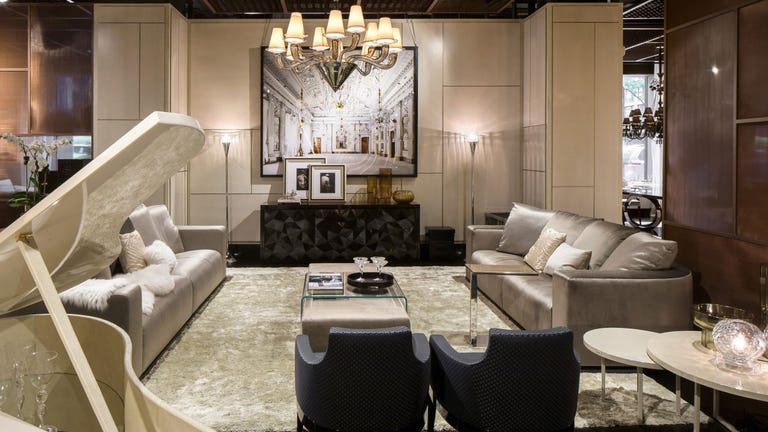
Luxury Living Group, the Italian lifestyle company that produces and distributes furniture collections for Fendi Casa, Kenzo Maison, Bentley Home, as well as its own signature line Heritage and others has found a new home in New York City’s Midtown East. The showroom held its grand-opening party last week.

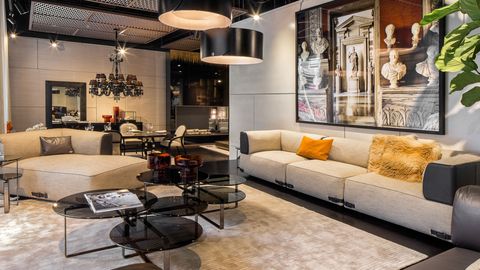
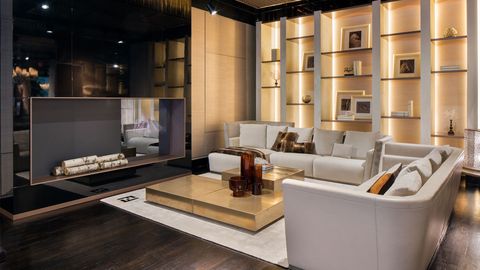
Spanning two floors, the 11,000-square-foot showroom offers everything from decorative lighting, sofas, storage units, mirrors, to bed linens, kitchen counters, and pianos. The lower level includes a wall of home accessories, featuring items such as the Fendi Casa Lapin Rex pillow in a number of colors- one standout being an intensely hued Fendi-esque yellow. Other focal points of the showroom include the mirror-like Regina Bronzed Glass Coffee Tables from Fendi and Heritage’s Orient Express Suitcase Cabinet featuring faux mini suitcases that pull out instead of drawers.

The star of Luxury Living’s New York location is clearly Fendi Casa. With over 300 models, all of which are completely customizable in color, material and stitching, Fendi fills sizable portion of the showroom. “We can really customize anything,” said Raffaella Vignatelli, U.S. President of Fendi Casa, “From the size to the color to the set-up in your home. The customers want something unique and luxurious.”

For now, Fendi Casa and Kitchen, Bentley Home, and Heritage Collection are the only lines included in the New York based showroom, but the company plans to expand by adding more luxury brands in the near future. Luxury Living New York, located at 153 Madison Avenue, is the brand’s third location in the U.S.

Written By: Kristen Bateman

Image result for bazaar logo

When looking for an apartment in New York City it’s easy to be swept away by all of the luxury options. There are many to choose from but here are our top 10 choices:

1. The Lara- 113 Nassau Street, Manhattan

NYC Real Estate

One of the financial district’s most ultra-modern buildings is The Lara. Amenities include a full gym with studio boxing, a high tech gaming room, and several lounges. You will find a library and seating areas with fireplaces indoors in addition to a garden, fountain, and all-weather pool table outdoors. Studios, one, and two bedroom apartments are all available with walnut wood floors, Grohe faucets, and stunning soft close cabinetry. Kitchens also contain state of the art appliances including dishwashers, ranges, and garbage disposals. Rental prices start at $3,500/month.

2. BKLYN Gold- 257 and 277 Gold Street, Brooklyn

NYC Real Estate

Brooklyn Gold is actually two buildings and is located in the Metro Tech Center neighborhood. It is centrally located with access to Long Island Rail Road and many subway stations including the 2, 3, A, C, M, R, Q, 4 and 5 trains. You can’t get better accessibility than that. Some of the fantastic amenities you will experience here are a 6,000 sq ft fitness center (no more waiting for a treadmill), a glass enclosed indoor pool, gardens, bike storage, and more. The apartments include washer/dryer units, large closets, and built in surround sound speaker systems with iPod and mp3 docking stations. This rental community offers studios, one and two bedrooms starting at $2,350/month.

3. Arias- 150 Fourth Ave, Brooklyn

NYC Real Estate

Located in Park Slope, Arias is sleek and modern. Some of the more interesting amenities you will find there are a putting green, yoga room, and a pet spa, in addition to the more expected gardens, on-site parking, and billiards table. It is served by the R, 2, 3, D, N, and R trains and is a breath away from the Barclays Center. In-unit perks include individual temperature control, stainless steel kitchen appliances, white oak cabinetry, and washer/dryers. Studios begin at $2,985/month. One and two bedrooms range from $3,000-$4,795/month.

4. Tapestry- 245 E 124th Street, Manhattan

NYC Real Estate

Harlem’s found a gem in the Tapestry building. If you’re looking for luxury in a quiet area, this is the place for you.  Amenities here cater to busy tenants with in-house dry cleaning and housekeeping services available. Laundry facilities have televisions so you can pass the time while you fold. Just a two-block walk to the 4, 5, and 6 trains the complex also boasts green living with smoke-free apartments, energy conserving appliances, and a rainwater retention system. Studios are a mere $1,873/month with one and two bedrooms ranging from $2,575- $3,400/month.

5. 4545 Center Blvd, Queens

NYC Real Estate

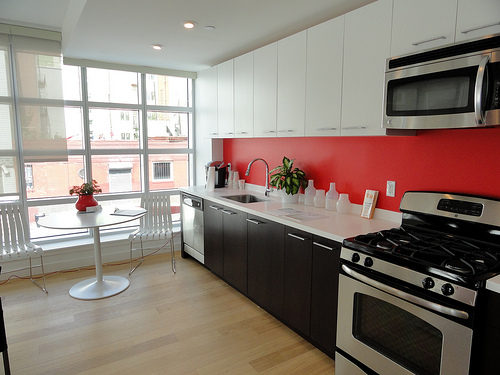
You can’t forget Long Island City when searching for luxury apartments. The area is accessible by the 7 train. 4545 Center Blvd is a TF Cornerstone building which includes such amenities as multiple tennis courts, beach volleyball court, Children’s playrooms both indoor and outdoor, as well as a dog run for your furry friends. Units have floor to ceiling windows, bright interiors with white lacquer cabinets, and stainless steel appliances. Studio, one, two, and three bedrooms are all available in this beauty of a building from $2,750/month.

6. 2 Cooper Square, Manhattan

NYC Real Estate

Located in the chic neighborhood of NoHo, 2 Cooper Square is a cool and beautiful place to live. You can get to this area via the 6, N, and R trains. The outdoor space here is unbeatable with a resort-style pool, lounge chairs, barbeque, and granite bar complete with refrigerator and icemaker. You can kiss Laundromats goodbye with the Bosch washers and dryers in every unit. You also have complete control over the heating and cooling system as well as solid oak flooring and 9-12 foot ceilings. Studios, one, two, and three bedrooms are available starting at $4,100/month.

7. 55 Thompson, Manhattan

NYC Real Estate

Luxury in SoHo isn’t easy to find, so hold onto this prize at 55 Thompson Street. Possibly the best thing you will find in this building is their “Sky’s the Limit” concierge service. You can have anything from massages, to car service, to personal shopping. It does cost the resident separately for these services but the organization is completely handled by the building at no fee to you. You even have the option to have a private chef come into your home and cook a meal. In the unit you will enjoy stunning kitchens with rainforest stone countertops and top of the line gas range and stove. One, two, and three bedrooms are available as well as “townhouses”. Rent ranges from $6,500- $16,250/month.

8. The Union-568 Union Avenue, Brooklyn

NYC Real Estate

Williamsburg isn’t shy on luxury buildings but one of the best is The Union. Gorgeous outdoor pool, furnished roof top terrace, and parking are just some of the perks of this complex. Unique design elements make the units quite special when added to the warm toned hard wood floors and oversized windows. Caesarstone countertops and stainless steel appliances in the kitchen will make you wish you were a gourmet chef.  The L train will be your mode of transportation in this area. Studio, one, and two bedrooms units are available starting at $2,600/month.

9. 89 Murray Street, Manhattan

NYC Real Estate

Located in Tribeca, this beautiful building has everything you will ever need. There is a Whole Foods in the building… need I say more? Enjoy marble floors in your bathroom and stainless steel appliances in your kitchen as well as onsite storage. One of the best perks here is the ability to transfer apartments to any available unit in the building with just 30 days notice. As a tenant you will be notified of available units before they are made available to the public. There are many subway stations within walking distance including the A, C, 1, 2, and 3 trains. Studio apartments begin at $3,945/month. One, two, and three bedroom units are also available.

10. 432 Park Avenue, Manhattan

NYC Real Estate

Although it is not open for business yet 432 Park Avenue definitely still makes our list for one of the best luxury buildings. It is the tallest residential building in New York City. Beside the view, some of the amazing perks of living in this modern marvel are a spa, a fitness center, a children’s playroom, 75 foot swimming pool, parking garage, and a valet. Residents will enjoy 12 foot ceilings and private elevator landings for certain floors. Kitchens include natural oak cabinetry and Miele stainless steel appliances and the bathrooms have Italian staturario marble. This building is comprised of condos, whose prices start at $16.9 million.


Written By: Victoria Jempty

 logo

Raj Chetty, a MacArthur “genius grant” recipient and winner of the John Bates Clark Medal, will rejoin the Harvard Economics Department after three years at Stanford.

Raj Chetty

Economist Raj Chetty, whose work has illuminated the decline of American economic mobility, the impact of race on a child’s economic prospects, and other cracks in the American dream, is returning to Harvard after three years at Stanford University.

From 2009 to 2015, Chetty served on Harvard’s economics faculty, first as professor of economics and then as William Henry Bloomberg Professor of Economics. He is widely viewed as one of his generation’s most promising young economists, one who has taken advantage of recent advances in computing and statistical methodology to leverage big data and provide new perspectives on one of America’s biggest challenges: economic inequality.

At age 29, Chetty was among the youngest to gain tenure at Harvard. His new appointment, as the inaugural William A. Ackman Professor of Economics, will take effect this summer.

His work has brought him a number of honors, including in 2012 a MacArthur Foundation “genius grant” and in 2013 the John Bates Clark Medal of the American Economic Association, given to an economist under age 40 who has made “the most significant contributions to economic thought and knowledge.”

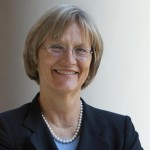
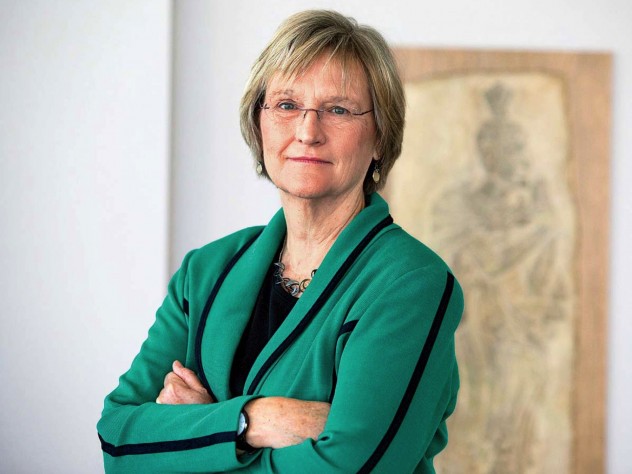
 Harvard President Drew Faust, who steps down June 30, welcomed Chetty back to campus, saying his return will boost a department that has been a traditional strength at the University.

“Raj’s research has laid bare issues that require innovative approaches and urgent attention,” said Faust. “His work has provided unparalleled insight into challenges of inequality and opportunity. We are delighted to welcome him back to Harvard.”

“We are thrilled that Raj has decided to come home to Harvard,” echoed incoming Harvard President Lawrence S. Bacow. “I look forward to working with him and others as we seek to extend opportunity to all. I have great appreciation for how Raj uses the tools of economics to both understand and seek solutions for one of our country’s biggest challenges.”

Chetty said he’s making the change to be closer to Harvard-based colleagues with whom he still works, to leverage the University’s public policy expertise to help remedy the inequality on which his research focuses, and because of commitments of support for work in that field from top Harvard officials.

“There’s great scientific value in understanding what’s going on, and that has to be the first step. But we want to go beyond just shaping the conversation,” Chetty said in an interview. “What we really need to do, at the end of the day, is figure out what the solutions are.”

Harvard Economics Department chair David Laibson said Chetty’s return is a sign of progress in a long-term effort to re-energize a department that saw Chetty’s decision to leave — on the heels of several other faculty departures — as a low point but also a wakeup call.

Since then, Laibson said, Harvard’s senior leadership, including both Faust and Bacow, as well as Provost Alan Garber, Faculty of Arts and Sciences Dean Michael Smith, and FAS Dean for Social Sciences Claudine Gay, have made extensive efforts to revitalize the department, supporting new faculty hires while working toward a solution to the space squeeze in its Littauer Building home.

Laibson, who took over as department chair shortly after Chetty departed, said the department has since hired three senior faculty members, Chetty, Xavier Gabaix, and Isaiah Andrews; a professor of practice, Karen Dynan; and has promoted to full professor five tenure-track faculty members, Tomasz Strzalecki, Nathaniel Hendren, Stephanie Stantcheva, Amanda Pallais, and Melissa Dell.

The department, which has the most undergraduate concentrators, also hired a number of assistant professors and celebrated its sixth Nobel Memorial Prize in Economic Sciences, awarded to Oliver Hart in 2016 “for contributions to contract theory.” Though the years have had some bumps, Laibson said he’s nonetheless encouraged by the overall progress.

“This has been a terrific period of rebuilding for us. We were feeling that momentum was very much in the wrong direction at the time Raj left,” Laibson said. “I now feel very optimistic about our future.”

Chetty has a deep history at Harvard. He received a bachelor’s degree there in 2000 and a Ph.D. in economics in 2003.

Chetty’s research seeks to understand the forces that influence whether ordinary Americans succeed or fail economically. His work involves government tax and education policy, social insurance, and human behavior. He has leveraged enormous data sets from the U.S. Census Bureau as well as anonymized tax records to explore some of the most enduring beliefs and myths about American society, from the importance of experienced classroom teachers to children’s later success to the effectiveness of social programs intended to raise children out of poverty, to the relative “stickiness” of childhood socio-economic status.

Through the Equality of Opportunity Project at Stanford, which he directs and will relocate to Harvard, he has begun pilot projects to put some of his findings to work. One study, for example, showed that some neighborhoods have higher rates of success at moving children out of poverty as they grow up.

Despite that knowledge, Chetty said poor families that receive government housing vouchers rarely move to neighborhoods statistically shown to give their children a better chance of moving up in society, even though the vouchers mean there’s no greater cost to them in doing so. Now he and his collaborators are working with the Seattle and King County housing authorities to encourage 2,000 families receiving housing vouchers to move to places that Chetty called “opportunity bargains” in the city.

“We’ll wait to see whether we’re effective in accomplishing that goal, but our sense is that could have quite a big impact on the outcomes of these kids and that could then be scaled to other programs in the U.S. — importantly — without spending more taxpayer dollars,” Chetty said. “It’s just trying to achieve better bang for the buck.”

Chetty tries to craft fiscal policy solutions to match behaviors

Chetty traced his interest in discovering the reality of the American dream to his own family’s journey. His parents were educated in the U.S., returned home to India, then came back here, with him and his sister in tow, seeking opportunity.

“For us and many immigrants, that’s what America’s all about,” Chetty said. “If you work hard, you can move up, you can do whatever you want. The sky’s the limit.”

His research has shown, however, that the American dream is elusive for many and increasingly difficult to attain. The research also shows that there are pockets of success where there’s greater economic mobility. If that success can be understood and replicated, it might counterbalance the nation’s increasing socioeconomic fossilization.

“What distinguishes America is the idea, or at least the aspiration, that any child of any background can succeed through hard work. And I worry, as I look at these data, that that’s really not the case,” Chetty said.

One advantage Chetty has in putting his research to work is that the overarching belief in the American dream transcends political boundaries, even if the major parties disagree on the details of possible solutions.

“Even in a politically polarized, divisive time,” Chetty said, “I am able to show the same set of slides on a given day to Paul Ryan and Elizabeth Warren and find that both of them react very positively and say: This is my agenda; this is what I really want to do.”


Written By: Alvin Powell

Image result for the harvard gazette

Sure, your heart thumps, but let’s look at what’s happening physically and psychologically

When it comes to thinking deeply about love, poets, philosophers, and even high school boys gazing dreamily at girls two rows over have a significant head start on science. But the field is gamely racing to catch up.

One database of scientific publications turns up more than 6,600 pages of results in a search for the word “love.” The National Institutes of Health (NIH) is conducting 18 clinical trials on it (though, like love itself, NIH’s “love” can have layered meanings, including as an acronym for a study of Crohn’s disease). Though not normally considered an intestinal ailment, love is often described as an illness, and the smitten as lovesick. Comedian George Burns once described love as something like a backache: “It doesn’t show up on X-rays, but you know it’s there.

Harvard study, almost 80 years old, has proved that embracing community helps us live longer, and be happier

Richard Schwartz, associate professor of psychiatry at Harvard Medical School(HMS) and a consultant to McLean and Massachusetts General (MGH) hospitals, says it’s never been proven that love makes you physically sick, though it does raise levels of cortisol, a stress hormone that has been shown to suppress immune function.

Love also turns on the neurotransmitter dopamine, which is known to stimulate the brain’s pleasure centers. Couple that with a drop in levels of serotonin — which adds a dash of obsession — and you have the crazy, pleasing, stupefied, urgent love of infatuation.

It’s also true, Schwartz said, that like the moon — a trigger of its own legendary form of madness — love has its phases.

“It’s fairly complex, and we only know a little about it,” Schwartz said. “There are different phases and moods of love. The early phase of love is quite different” from later phases.

During the first love-year, serotonin levels gradually return to normal, and the “stupid” and “obsessive” aspects of the condition moderate. That period is followed by increases in the hormone oxytocin, a neurotransmitter associated with a calmer, more mature form of love. The oxytocin helps cement bonds, raise immune function, and begin to confer the health benefits found in married couples, who tend to live longer, have fewer strokes and heart attacks, be less depressed, and have higher survival rates from major surgery and cancer.

Schwartz has built a career around studying the love, hate, indifference, and other emotions that mark our complex relationships. And, though science is learning more in the lab than ever before, he said he still has learned far more counseling couples. His wife and sometime collaborator, Jacqueline Olds, also an associate professor of psychiatry at HMS and a consultant to McLean and MGH, agrees.

Spouses Richard Schwartz and Jacqueline Olds, both associate professors of psychiatry, have collaborated on a book about marriage. Stephanie Mitchell/Harvard Staff Photographer

More knowledge, but struggling to understand

“I think we know a lot more scientifically about love and the brain than we did a couple of decades ago, but I don’t think it tells us very much that we didn’t already know about love,” Schwartz said. “It’s kind of interesting, it’s kind of fun [to study]. But do we think that makes us better at love, or helping people with love? Probably not much.”

Love and companionship have made indelible marks on Schwartz and Olds. Though they have separate careers, they’re separate together, working from discrete offices across the hall from each other in their stately Cambridge home. Each has a professional practice and independently trains psychiatry students, but they’ve also collaborated on two books about loneliness and one on marriage. Their own union has lasted 39 years, and they raised two children.

“I have learned much more from doing couples therapy, and being in a couple’s relationship” than from science, Olds said. “But every now and again, something like the fMRI or chemical studies can help you make the point better. If you say to somebody, ‘I think you’re doing this, and it’s terrible for a relationship,’ they may not pay attention. If you say, ‘It’s corrosive, and it’s causing your cortisol to go way up,’ then they really sit up and listen.”

A side benefit is that examining other couples’ trials and tribulations has helped their own relationship over the inevitable rocky bumps, Olds said.

“To some extent, being a psychiatrist allows you a privileged window into other people’s triumphs and mistakes,” Olds said. “And because you get to learn from them as they learn from you, when you work with somebody 10 years older than you, you learn what mistakes 10 years down the line might be.”

People have written for centuries about love shifting from passionate to companionate, something Schwartz called “both a good and a sad thing.” Different couples experience that shift differently. While the passion fades for some, others keep its flames burning, while still others are able to rekindle the fires.

“You have a tidal-like motion of closeness and drifting apart, closeness and drifting apart,” Olds said. “And you have to have one person have a ‘distance alarm’ to notice the drifting apart so there can be a reconnection … One could say that in the couples who are most successful at keeping their relationship alive over the years, there’s an element of companionate love and an element of passionate love. And those each get reawakened in that drifting back and forth, the ebb and flow of lasting relationships.”

Children as the biggest stressor

Children remain the biggest stressor on relationships, Olds said, adding that it seems a particular problem these days. Young parents feel pressure to raise kids perfectly, even at the risk of their own relationships. Kids are a constant presence for parents. The days when child care consisted of the instruction “Go play outside” while mom and dad reconnected over cocktails are largely gone.

When not hovering over children, America’s workaholic culture, coupled with technology’s 24/7 intrusiveness, can make it hard for partners to pay attention to each other in the evenings and even on weekends. It is a problem that Olds sees even in environments that ought to know better, such as psychiatry residency programs.

“There are all these sweet young doctors who are trying to have families while they’re in residency,” Olds said. “And the residencies work them so hard there’s barely time for their relationship or having children or taking care of children. So, we’re always trying to balance the fact that, in psychiatry, we stand for psychological good health, but [in] the residency we run, sometimes we don’t practice everything we preach.”

All this busy-ness has affected non-romantic relationships too, which has a ripple effect on the romantic ones, Olds said. A respected national social survey has shown that in recent years people have gone from having three close friends to two, with one of those their romantic partner.

“Often when you scratch the surface … the second [friend] lives 3,000 miles away, and you can’t talk to them on the phone because they’re on a different time schedule,” Olds said. “There is too much pressure, from my point of view, on what a romantic partner should be. They should be your best friend, they should be your lover, they should be your closest relative, they should be your work partner, they should be the co-parent, your athletic partner. There’s just so much pressure on the role of spouse that of course everybody isn’t able to quite live up to it.”

Since the rising challenges of modern life aren’t going to change soon, Schwartz and Olds said couples should try to adopt ways to fortify their relationships for life’s long haul. For instance, couples benefit from shared goals and activities, which will help pull them along a shared life path, Schwartz said.

“You’re not going to get to 40 years by gazing into each other’s eyes,” Schwartz said. “I think the fact that we’ve worked on things together has woven us together more, in good ways.”

Maintain curiosity about your partner

Also important is retaining a genuine sense of curiosity about your partner, fostered both by time apart to have separate experiences, and by time together, just as a couple, to share those experiences. Schwartz cited a study by Robert Waldinger, clinical professor of psychiatry at MGH and HMS, in which couples watched videos of themselves arguing. Afterwards, each person was asked what the partner was thinking. The longer they had been together, the worse they actually were at guessing, in part because they thought they already knew.

“What keeps love alive is being able to recognize that you don’t really know your partner perfectly and still being curious and still be exploring,” Schwartz said. “Which means, in addition to being sure you have enough time and involvement with each other — that that time isn’t stolen — making sure you have enough separateness that you can be an object of curiosity for the other person.”


Written By: Alvin Powell

Image result for the harvard gazette

graphic of brain


A study shows that both mindful meditation and the relaxation response provide benefits, however, the mindfulness program resulted in further improvements in measures such as self-compassion and rumination.

A variety of meditation-based programs have been developed in recent years to reduce stress and medical symptoms and to promote wellness. One lingering question is to what extent these programs are similar or different. In a study published in the June issue of Psychosomatic Medicine, a team led by Massachusetts General Hospital (MGH) researchers, in collaboration with members of the two leading mind-body stress-reduction programs, documents the different effects these mind-body practices have in the brain.

There are two widely used meditation-based stress-reduction courses. One is based on “The Relaxation Response” — first described by Herbert Benson, director emeritus of the MGH-based Benson-Henry Institute for Mind Body Medicine — which focuses on eliciting a physiologic state of deep rest, the opposite of the “fight or flight” stress response. The other is Mindfulness-Based Stress Reduction, developed by Jon Kabat-Zinn of the University of Massachusetts Medical School, which emphasizes a particular, nonjudgmental attitude termed “mindfulness” as key to stress reduction. Although both interventions are based on meditation, the scientific philosophies and meditative traditions upon which each is founded are different, and these differences are reflected in the instructions and exercises they teach.

“If the hypotheses proposed by the programs’ creators are in fact correct, they imply that these programs promote wellness through different mechanisms of action,” says Sara Lazar of the MGH Psychiatric Neuroscience Research Program, senior author of the current report and assistant professor of psychology at Harvard Medical School. “Such a finding would suggest that these programs could potentially have different effects on disease.”

To investigate that possibility, healthy adults with high levels of stress were randomized to two eight-week programs. Eighteen completed the relaxation-response program, and 16 completed the mindfulness program. Both programs successfully decreased stress and increased mindfulness in participants. However, the mindfulness program resulted in further improvements in measures such as self-compassion and rumination, clearly indicating that the programs are not the same, Lazar says.

To further understand the similarities and differences between the programs, the team measured brain activity during a meditation technique common to both programs — a body scan, in which attention is moved sequentially throughout the body to develop bodily awareness. While the relaxation-response program instructs participants to deliberately relax each body area as they become aware of it, the mindfulness program just emphasizes mindful awareness and acceptance “without any attempt to change anything.”

Lead author Gunes Sevinc, a research fellow in Lazar’s laboratory says, “By directly comparing the body-scan meditations, which differed only in cognitive strategy, we were able to identify the brain regions that are involved in mediating the common and differential strategies employed by each intervention

Meditation study shows changes associated with awareness, stress

The results showed that the strength of neural interaction between brain regions associated with present-moment awareness and bodily attention increased during both types of body-scan meditation. But each program also showed unique patterns of brain activity, in line with the different theoretical orientation of each program. The relaxation-response body scan strengthened coupling between neural regions commonly associated with deliberate control, including the inferior frontal gyrus and supplementary motor areas. Conversely, the mindfulness body scan strengthened coupling between neural regions associated with sensory awareness and perception, including the insula and the pregenual anterior cingulate.

“These findings indicate that the programs are working through different neural mechanisms,” says Sevinc. “The relaxation-response program is working more through deliberate control mechanisms, while the mindfulness program is working more through sensory-awareness mechanisms. It is somewhat analogous to weight training versus aerobic exercise — both are beneficial, but each has its unique mechanism and contribution.”

Norman Farb of the University of Toronto Department of Psychology, who was not part of the study, says, “Professor Lazar’s neuroimaging study helps us to better appreciate how these seemingly similar practices differ in important ways. Both practices seem to promote access to neural representations of the body, but they differ in how such representations are structured. This study is important for beginning to inform the public about key differences between conceptually similar therapeutic approaches, which may in turn allow people to make more skillful decisions about which practice might be right for their personal improvement.”

Lazar notes that future studies will be needed to determine whether these neural and psychological differences impact specific diseases in unique ways.


Written By: MGH Public Affairs

Image result for the harvard gazette

In her early years as president of Harvard University, Drew Faust began to imagine how a more inclusive Harvard — a more connected Harvard — might be developed. Each individual School was distinct and best in class. But how could the University as a collective benefit from the talents and specialties of each individual School? How could the whole be greater than the sum of its diverse and distinctive parts? The answer, it seemed to Faust, was both simple and visionary.


Image result for drew faust


The University, she said, should create new spaces across campus in order to generate greater discussion, collaboration, partnership, learning, and sense of belonging.  These spaces could allow the many social, academic, and cultural communities of the University to come together across disciplines to create exciting, meaningful, and profound work.

“We learn again and again that spaces shape our intellectual and social interactions with each other and with the many visitors who come to Harvard and Cambridge to share in the life of this University. … It’s important that we take a focused look at our historic spaces … to ensure that we are taking full advantage of the ways in which our physical environment can support the kinds of engagement that enhance and sustain the vitality of the Harvard community,” Faust wrote in 2008, when she convened the Committee on Common Spaces at Harvard.

It was chaired by Lizabeth Cohen, dean of the Radcliffe Institute for Advanced Study and Howard Mumford Jones Professor of American Studies, and Mohsen Mostafavi, dean of the Graduate School of Design and the Alexander and Victoria Wiley Professor of Design, who spent a year listening and gathering thoughts and suggestions from students, faculty, and staff — 18 focus groups, including more than 150 individuals and more than 6,000 survey respondents.

The message was “loud, clear and strikingly consistent”: Harvard was short of common spaces. The University community longed for spaces where students could work informally in groups; where faculty, students, and staff from all Schools and disciplines could come together and cross paths. They wanted spaces that “nourished a sense of place.” Spaces for them to unwind, to study, to gather and celebrate with friends.

“As a university committed to interdisciplinary collaboration, we need spaces that can serve as the intellectual and academic crossroads for the campus, inviting the real-time and in-person transactions that support daring and border-crossing work,” the committee said.

Ten years later many of the committee’s early recommendations have been achieved with a series of renovated and new spaces, and by programming and experiments with the goal of enhancing both community and that desired core sense of place.

From the scattering of brightly colored chairs throughout the Yard to the activation of outdoor spaces like the lively plaza outside the Science Center to the Richard A. and Susan F. Smith Campus Center opening in the fall, Faust’s Common Spaces initiative is thriving.

“Early in Drew Faust’s presidency, in January 2008, she asked Mohsen and me to co-chair an ambitious effort to create more spaces on campus where students, faculty, and staff could interact,” said Cohen. “Now, a decade later, Drew is nearing the end of her presidency and I am delighted that we can look forward next fall to opening the final stage of our ambitious plans for more common spaces at Harvard: a much-needed campus center that will encourage greater contact and communication across our community’s diverse constituencies and schools. I anticipate that the Smith Center will have a transformative impact on our centuries-old Harvard campus.”

“Throughout her presidency, Drew Faust has encouraged all of us to think and act as one organic Harvard community and to cross disciplinary boundaries in the pursuit of new knowledge,” said Mostafavi. “Fundamental to such forms of collaboration is the spatial dimension that frames and shapes new opportunities for reimagining our physical environment. In this regard, the Smith Campus Center is both a manifestation of Drew’s vision of One Harvard and the site of innumerable productive encounters, dialogues, and ideas that are yet to come.”

Ke Tang and Kris Snibbe/Harvard file photos

When the initiative began to pick up steam, Faust made it formal, creating the Common Spaces Program in 2013. It hired its first director in 2016, and the group has continued to thoughtfully identify, develop, program, and maintain spaces across the University.

“The Common Spaces program is fortunate in that it has been guided by the visionary work of deans Cohen and Mostafavi and the Committee on Common Spaces developed nearly 10 years ago. Today, we’re building upon that foundation,” said Julie Crites, the program’s director, “working across the campus to foster welcoming and inclusive campus spaces. We are particularly excited by the countless possibilities for the University community within the new Richard A. and Susan F. Smith Campus Center, which will be the first space of its kind at Harvard.”

As planning began in earnest for the center, Cohen and Mostafavi were joined by Danoff Dean of Harvard College Rakesh Khurana. Together they joined forces to explore how a large, centrally located campus community space could continue to deliver on the promise and potential of University common spaces.

“In addition to the College’s providing resources to support students’ social opportunities on campus, we had an opportunity to build an amazing and central space to support their connecting with peers,” said Khurana. “Our focus is on identifying fun and inclusive social venues for our undergraduates — in the Houses, the Yard, and in our plazas. The Smith Center will be a unique space for our students, and I think it will be a gravitational force for many students and student organizations. I am looking forward to its opening.”

When it’s complete, the center will be a striking embodiment of Faust’s original vision: a crossroads for members of the community to gather in a space that belongs to all the Harvard community. A range of comfortable and relaxing gathering spaces and amenities including eight different local and unique food venues, Wi-Fi, and spaces to plug in or unplug, will attract faculty, students, staff, and community members to an abundant and thriving indoor University common space. The first and second floors of the building will include the Moise Y. Safra Welcome Pavilion and Plaza along Massachusetts Avenue, with space for the Harvard community and visitors to mingle, buy tickets to University events, join tours of campus, and take in the views onto Harvard Square with a coffee from locally owned Pavement Coffee. Interactive screens will highlight upcoming events across the University’s Schools, museums, libraries, theaters, institutes, and centers, so that both the Harvard community and campus visitors can see what is happening on or coming to campus.

The building and adjoining plazas will be home to double the number of chess tables as were available before, half of them indoors for year-round play. Members of both the Harvard and Cambridge communities provided input into the design of the plaza overlooking Massachusetts Avenue and of the other areas around the building’s exterior.

The first floor will strengthen the historical arcade space designed by the building’s original architect and Dean of the Graduate School of Design from 1953 to 1969 Josep Lluís Sert, replete with six large-scale 18-foot-tall vertical gardens and home to three distinct food venues (Bon Me, Swiss Bakers, and Whole Heart Provisions), along with an enclosed vitrine garden featuring seasonal plantings surrounded by benches and cafe seating. With its significantly increased exposure to nature and natural light, the space promotes healthy and more sustainable lifestyles.

The main floor of the Campus Center is complete with a hallmark new space, Harvard Commons, by day a large community living room home to lunchtime concerts and conversation and by evening transformed into a program space that will feature talks, lectures, and performances by Harvard students, faculty, and staff. The center also will house flexible meeting and multipurpose spaces for students, faculty, and staff meetings, events, and University activities. The Undergraduate and Graduate councils will have offices in the center.

“I am unbelievably excited for the opening of the Smith Campus Center in the fall, and the opportunities it presents for all students. The Undergraduate Council got the opportunity to tour the space recently, and I was blown away by the thought put in, especially from the students who had dreamed of this several years ago. … I really believe the center will have a huge positive effect on campus,” said Catherine Zhang ’19, Undergraduate Council president.

“After seeing the sketches and taking part in city zoning board meetings, it was exciting and inspiring to finally see the new Smith Campus Center renovations,” said Kevin Tian, Graduate Council president. “It is refreshing to imagine, in this place uniquely made for the Harvard community, how students could come together to make spaces for inclusion and belonging. The Harvard Graduate Council hopes to use some of this space as a cornerstone for University-wide events.”

The 10th (and top) floor will offer sweeping views of the Charles River, the Allston campus, and Harvard Yard. It will feature another food venue, and additional common lounges for Harvard affiliates and their guests, in addition to a conference and private event space for up to 400 people overlooking Massachusetts Avenue with a beautiful view across historic Harvard Yard.

In Faust’s recent letter to the Harvard community concerning the findings of the Report of the Task Force on Inclusion and Belonging, she wrote that the new Campus Center will offer a unique opportunity “to embody a number of the task force recommendations in its identity from the outset.” Convening spaces in the Smith Campus Center have been designated as locations for various programs related to issues of inclusion and belonging, including sessions on “civil disagreement” to be convened by Professor Danielle Allen, task force co-chair and director of the Edmond J. Safra Center for Ethics.  The Smith Center will also serve as an information hub that will help students, faculty, and staff experience different areas of campus.

“The Smith Campus Center is going to be a brilliant centerpiece for our campus and an exciting crossroads for our entire community. I am looking forward to seeing the finished spaces when the ribbon is cut this fall. So many people have worked to make the project possible, and I am especially grateful to Richard Smith and the late Susan Smith for their vision and generosity. They understood that they were helping to create a place of extraordinary possibility for students, faculty, and staff — and we will see it come to life in just a few short months,” said Faust.

“While Harvard is to some degree a set of productive discrete domains, its communal characteristics, including shared purposes, cross-disciplinary endeavors, and common physical spaces make it one university,” the Committee on Common Spaces report said 10 years ago. “By developing its common spaces, Harvard will lose none of its traditional character. It will become more essentially itself.”

As her tenure as Harvard’s 28th president ends, Faust leaves a campus more connected than ever. And with the proliferation of so many common spaces, more possibilities for even greater connections.


Written By: Brigid O’Rourke

Image result for the harvard gazette

Robin Bernstein, Lawrence Bobo, George Lauder, Yukio Lippit, and Amy Wagers have been named Harvard College Professors.


Five faculty members across a wide range of disciplines have been named Harvard College Professors.

Edgerley Family Dean of the Faculty of Arts and Sciences Michael D. Smith announced the honor for Robin Bernstein, Dillon Professor of American History and professor of African and African American studies and of studies of women, gender, and sexuality; Lawrence Bobo, W.E.B. Du Bois Professor of the Social Sciences; George Lauder, professor of biology and Henry Bryant Bigelow Professor of Ichthyology; Yukio Lippit, professor of history of art and architecture, Japanese art; and Amy Wagers, Forst Family Professor of Stem Cell and Regenerative Biology.

“These faculty members bring extraordinary passion and dedication to their work, and I am delighted to announce these appointments,” said Smith. “Their commitment to learning and intellectual energy are qualities that I cherish. I am delighted to recognize these outstanding individuals in the FAS for the impact they have had on the lives and education of our students.”

The Harvard College Professorships were launched in 1997 through a gift from John and Frances Loeb. They are five-year appointments that include extra support for research or scholarly activities, as well as a semester of paid leave, or summer salary.

Robin Bernstein. Kris Snibbe/Harvard Staff Photographer.

Robin Bernstein

“Performance is everywhere, it completely surrounds us,” said Bernstein. “Not just in videos, sports, concerts, and television … we perform in our everyday lives, all of us. My goal is for students to understand the complex relationship between race, gender, sexuality, and performance. There is always some sort of relationship, even if it is not straightforward.”

Bernstein was an actor and playwright before shifting to a career as a scholar.

“What I really wanted was to think about U.S. cultural history. I’ve also had a longstanding interest in childhood because you can add persuasiveness to any political argument by claiming it supports children. Ideas about childhood have been crucial to arguments about race since the middle of the 19th century.”

Lawrence D. Bobo . Stephanie Mitchell/Harvard Staff Photographer

Lawrence Bobo

The Civil Rights mission of Martin Luther King Jr. helped lead Bobo toward research and teaching focused on race, politics, and social inequity.

“I grew up under the warming sun of Martin Luther King’s vision and the Civil Rights struggle,” he said. “Too young to directly participate, I was nonetheless galvanized by the struggle, the ideals, and hope of those years for a society freed from the burdens of racism, discrimination, and inequality.”

Bobo specializes in social psychology. Among his popular courses is an undergraduate seminar titled “Race, Racism, and American Politics,” which he will offer again this fall. During spring semester he taught “Introduction to African American Studies” with Alphonse Fletcher University Professor Henry Louis Gates Jr.

George Lauder. Jon Chase/Harvard Staff Photographer

George Lauder

Lauder brings a lifelong passion for marine life to bio-robotics, helping design new systems for underwater exploration.

“I’ve always been interested in ocean life,” he said. “I’m a scuba diver, I like being in the ocean, and I’m also very interested in mechanics and how things work. So this really combines those two areas.”

At the moment, Lauder is focused on learning from fish. “We want to understand how fish swim so efficiently and effectively, with the goal of using that information to design more efficient robot systems.”

Lauder has incorporated plenty of fieldwork in his classes, including visits to the Charles River.

“Students seem to really enjoy the hands-on aspect of my courses, so I try to offer as much of that as I can.”

Yukio Lippit. Kris Snibbe/Harvard Staff Photographer

Yukio Lippit

Lippit has spent two decades studying the history of Japanese art, with a particular focus on links to Zen Buddhism.

“One of the aspects of teaching the history of art that is particularly rewarding is the special role that exhibitions and the study of objects can play in pedagogy,” he said.

Lippit emphasized that students’ work is critical to driving that process.

“Much of what I do is to stage encounters between students and artworks, and then to work with students to move outward in ever-larger concentric circles toward cultural history, to gain insights into the world that made them. What I’ve found is that, increasingly, students are teaching me how to stage these encounters for others. I’ve enjoyed sharing with students how artistic representation can relate to daily living, religious practice, and philosophical inquiry in the most remarkable and seemingly counterintuitive ways.”

Amy Wagers. Jon Chase/Harvard Staff Photographer

Amy Wagers

For Wagers, a career in the Department of Stem Cell Regenerative Biology is not merely a profession; it’s personal.

“I was a grad student studying immunology, and I received a call because I was a match for a bone-marrow transplant,” she said. “I got really interested in the field and decided to make it my focus.”
Wagers is particularly interested in the biology of aging.

“People recover from injury slower as they get older,” she said. “I’m really interested in how blood and skeletal systems change with age, and how we can boost the process of recovering from injuries.”

Going forward, she hopes to share her passion for biology with a wider range of students.

“I would love to introduce a general education course for students who are not concentrating in biosciences, but have an appreciation for it and would like to advance their understanding of it.”


Written By: Aaron Goldman

Image result for the harvard gazette

Australian Bogong moth


What if you had to find your way through hundreds of miles of unknown territory with only your eyes and a simple compass to guide you? That’s what the Australian Bogong moth does in its annual migration, flying over 600 miles (roughly 30 million times its body length) to seek a haven from summer heat in the cool caves of the Australian Alps.

An international team of researchers announced in the journal Current Biology that Bogong moths rely on a magnetic sense as well as vision to steer its flight path. This makes them the first nocturnal insect we know of that can sense the Earth’s magnetic field — and maybe use it to guide their seasonal odyssey, joining a sophisticated club of birds, sea turtles, and fish.

Move Over, Monarchs

Several moth varieties fly long distances during their migrations, but Bogong moths are the only insect other than Monarch butterflies who travel from a broad geographical area to gather in a specific spot. For the flashy Monarchs, that’s a warm winter getaway in Mexico called the Monarch Butterfly Biosphere Reserve, a UNESCO World Heritage Site and popular tourist destination. For the humble Bogongs, it’s a summer home in a remote set of caves in the Australian Alps.

“This particular species is interesting because we know exactly where they’re going,” says David Dreyer, a research fellow at the University of Lund, Sweden with expertise in neuroethology — the study of animal brains and behavior. He and Eric Warrant, a professor and neuroethologist also at the University of Lund, conducted much of the study.

Knowing the moths’ migration direction was key to the experimental design. When Dreyer and the team captured moths along their migration routes, they could be sure of which way the moths were headed — south toward the Australian Alps in the spring, north in the fall. If the moths were using a magnetic sense to navigate, captured moths in an artificial setup might similarly prefer to fly toward magnetic south or north poles, depending on when they were caught.

A Flight Simulator for Moths

The researchers tested the moths in a specialized flight simulator their colleagues had invented to study the migration of Monarch butterflies. They attached moths to long shafts that let them turn in any horizontal direction and which constantly logged the moths’ flight direction. Around each moth they placed a cylindrical plastic barrier, bare except for a few simple shapes as visual landmarks, and a magnetic coil that mimicked the Earth’s magnetic field.

Finally, to actually get the moths to cooperate and fly in this artificial setup, the researchers projected satellite images of the surrounding countryside onto a surface below the moth, following the direction of movement and simulating a natural moving landscape.

When the researchers kept the visual landmarks and magnetic field direction aligned, the moths consistently flew toward the landmarks, making corrections to their flight path when the landmarks and magnetic field were moved. However, when the researchers turned the magnetic field so it was now at a different angle relative to the visual cues, the moths became disoriented and flew in random directions. When the magnetic field and landmarks were returned to the original setup, the moths once again flew consistently toward the landmarks.

Because the moths became disoriented when the magnetic field didn’t agree with what they were seeing, the researchers conclude that Bogong moths are definitely able to sense magnetic fields, and that they seem to use a combination of magnetic senses and vision to steer their flying. It’s a step further to say that Bogong moths use their magnetic senses in their long-distance migrations, but Dreyer and Warrant think they probably do. After all, why develop magnetic senses without using them?

As a follow-up experiment, Dreyer and Warrant are working on a study to measure electrical signals in the brains of Bogong moths near changing magnetic fields. If they can detect changes in the moths’ brain signals, they’ll be close to finding where their magnetic sensors are located.

Just Checking

One surprise, though, was that changing the magnetic fields didn’t confuse the moths right away. It was usually “a couple of minutes before the moths seem to realize that something has gone horribly wrong,” Warrant says.

To the researchers, this suggests that the moths may navigate primarily with visual cues and that they use their magnetic sense to check that they’re on track once in a while. Warrant says, “It’s almost like they put their compass back in their pocket, if you like, and check the field only every couple of minutes.”

Maybe the moths navigate like many of us do in when we’re in somewhat familiar territory. You’re pretty sure you know how to find your way, but you sneak a look at Google Maps on your phone sometimes, just in case.


Written By: Erika. K Carlson

Galaxy NGC 3344 (Credit: NASA/ESA)


Albert Einstein’s name is synonymous with intelligence, but he’s more than earned his rep. The man revolutionized physics when he was in his 20s and 30s. He came up with a whole new way of understanding reality, not as a fixed grid against which events occur, but as fundamentally intertwined with time and perception. Trying to prove Einstein wrong, somehow, is a perennial goal of budding and experienced physicists alike.

Well, they’ll have to keep trying. A new study in Science today shows that Einstein was so good, even in distant galaxies he’s still right.

Warp Zone

It all has to do with general relativity, Einstein’s theory of gravity, which posits that anything with mass warps the fabric of space time. The bigger the mass, the more the very universe deforms around it. This explains why massive objects attract less massive objects: they’re just following space time’s curves. Light also follows the warps and wefts created by gravity — black holes and galaxies literally bend light around them.

Sometimes, when massive enough objects line up just right, they can actually focus more distant light like a glass lens in a telescope, with the bends in space time acting as a kind of “gravitational lens.”

And while these are useful in studying those ultra-distant objects emitting that warped light, they can also serve as a “laboratory” for testing relativity itself.

Relatively Straightforward

That’s important, because even though scientists have confirmed Einstein’s general relativity within the solar system, that’s still small potatoes compared to the larger universe. As the paper’s authors write, “the long-range nature of gravity is still poorly constrained.” So they found a way to use a nearby gravitational lens around galaxy ESO 325-GOO4 to test out relativity on the galactic scale.

First, the team measured just how much the galaxy was warping spacetime, using Hubble data of the area. This allowed them to derive the galaxy’s mass. Then, they calculated the mass a different way, by observing stellar movement, this time using data from the Very Large Telescope in Chile. If Einstein was right, the two figures should be about the same.

Spoiler alert: Einstein was right. The ratio between the two values was 0.97 ± 0.09, which is pretty darn close to the predicted value of 1.

This is great news not just for Einstein worshipers, but anybody who wants to understand what’s going on in the universe at large scales. The finding rules out many alternative theories of gravity, and confirms that even at large scales general relativity holds true. It also means we have to keep around the notion of dark energy — the still mysterious force propelling the universe to expand faster and faster — since it’s (partly) a consequence of general relativity.


Written By: Bill Andrews


If Alice had been of drinking age when she fell down the rabbit hole, she probably would have found herself in a strange and surreal universe resembling Maison St-Germain, which made its 2nd annual return to NYC last night.

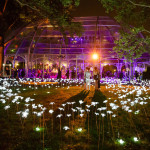
Held at the Battery Gardens, the floral fete felt like a dream. Arms served up cocktails from within picture frames. Golden palm trees grew disco balls rather than coconuts. Interpretive dancers moved like air within a field of light-up flowers. Giant pastel fish circled themselves in a trippy seaglass carousel. Even Alice would say that “wonderland” was an understatement.

St-Germain, the high-end elderflower liqueur, has always had a vintage vibe, from its bottle to its mindful approach to cocktail-making. It’s no wonder then, that when they teamed up with A-list fashion stylist, Kate Young, to create the second iteration of this experiential event, they turned to the lavish bashes of the 1920s – drawing inspiration from F. Scott Fitzergald’s other classic, The Beautiful and Damned.

A pink sunset poured into a massive clear dome housing multiple bars, giant flower installations, a gilded bed worthy of Cleopatra, and a glittering DJ booth where MGMT’s Andrew VanWyngarden was responsible for filling the room with tunes. Well-heeled guests, including Lynn Yaeger, TK Wonder and Cipriana Quann, Timo Weiland, and Carly Cushnie explored the surrounding gardens, which were dotted with bar carts, plush couches, and plenty of Instagrammable surprises. At every turn, it seemed, there was something else to gasp at.

Some major musts of the evening included an artful temporary tattoo studio, as well as a turn on the Battery’s famous SeaGlass Carousel. You know, besides trying every 1920s-esque cocktail on the menu. Crafted by St-Germain Global Ambassador Camille Ralph Vidal, the throwback sips ranged from a classic St-Germain elderflower spritz to an absinthe-splashed Brin Vert.

The night culminated in a breathtaking performance by the Battery Dance Group, who took over the stage for an ethereal number that left attendees (us, especially) with goosebumps.


Timo Weiland


TK Wonder, Cipriana Quann

Andrew VanWyngarden

Brittany Asch

Lynn Yaeger, Lola Rykiel


Carly Cushnie


Camille Ralph Vidal


Written By:  Stephanie Maida