New York Paris London Palm Beach Hudson Valley

Posts Tagged ‘Old Fashioned Mom Magazine’

FullSizeRender

Nicole Abate

Story by Nicole Abate:

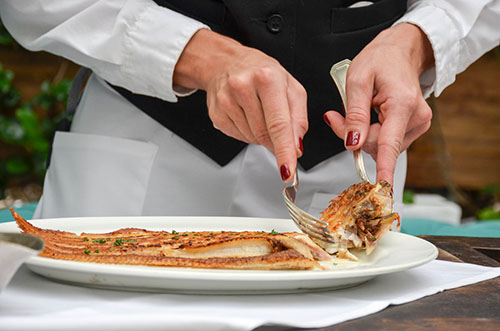
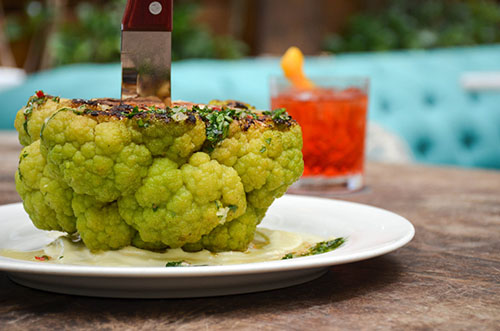
If you haven’t considered a trip to Miami you’re surely missing out. On a recent trip to the sunshine state my husband and I were delighted with warm and sunny days for a little break from New York City‘s cold. On our mini escapade we visited some of the best culinary spots in the Miami Beach area where we sojourned. Soho Beach House was definitely the winning location in terms of food, ambiance and delicious cocktails. Although you must be a member or invited by one to enter this artsy and prestigious beach club you have the option to dine at their open to the public “hot spot” Cecconi’s.

cecconis soho house miami 7

element
This superb northern Italian restaurant originated in Venice and is a must visit. Located in a beautiful courtyard that will definitely have you, coming back for more! …. with an upscale yet laid back atmosphere.  This venetian-style eatery with its flagship restaurant in London offers hand-made pasta and seafood, using the finest, freshest ingredients with a beautiful garden setting. I especially enjoy a glass of Salon-Blanc de Blanc, “Le Mesnil“,1997 and their signature Calamari Fritti.

element

restaurant 3
restaurant 1

element
Families adore Cecconi’s and the children’s menu has all the classic options: Mac & Cheese, Spaghetti & Meatballs, Grilled Cheese, etc.

Sergio Sigala~Excurive Chef at Cecconi's at Soho Beach House, Miami Florida

Sergio Sigala~Excurive Chef at Cecconi’s at Soho Beach House, Miami Florida

element- all group
element

They say inspiring places can fuel passion and that’s exactly what Soho House Miami Beach club is all about by offering uniqueness in one space.  A tip for non members is to book a beautiful hotel room with astonishing views of the “Miami Riviera” beautifully built in an old art deco building with luxe rooms that provide magical hospitality in a relaxed setting that will give you access to all of the clubs open spaces and amenities.

element
cecconis soho house miami 5
cecconis soho house miami 11
cecconis soho house miami 12
cecconis soho house miami 9
cecconis soho house miami 6
element

A variety of daily classes and events like getting fit with your kids or sunset paddling in the beach among many others will surely grant you a paradisiac stay. A monthly calendar is created by SH offering a vast list of activities packed with culture, fashion and art that will keep your day filled with action. If your more into indulging in a relaxation treat, book a massage at Cowshed their modern-rustic spa and we assure you wont regret it!

Cecconi’s

Phone: 1-786-507-7902
Location:
Soho Beach House
4385 Collins Avenue
Miami Beach, FL 33140

Website: www.cecconismiamibeach.com

Hours:
Sunday to Thursday: 7am – 11pm
Friday & Saturday: 7am – 12am

More than any other food, chocolate delights and enchants….chocolate tantalizes and it comforts. No one knows this better than Maribel Lieberman, the founder of Marie Belle Chocolates. From her first chocolate shop in Soho, N.Y., Maribel’s passion for discovering and sharing new flavors has seen her continually reinvent how we enjoy chocolate.

Read on »

gazette-logoHow to Raise a Voracious Reader: Promoting literacy with dinnertime storytelling, family conversation, and books about food.

image1-2

As we gather around the family table for festive holiday banquets or low-key daily suppers, we’re nourishing our minds as much as our bodies, says Anne Fishel, cofounder of the Family Dinner Project, housed under the Project Zero umbrella at the Harvard Graduate School of Education. In fact, regular family dinner may be a more powerful vocabulary-builder for young kids than reading.

A large body of research — much of which arises from the pioneering literacy work of HGSE Professor Catherine Snow — has shown that rare or sophisticated words are the building blocks of a robust vocabulary in children. And it turns out that rare words — those that don’t appear on an age-defined list of 3,000 common words — show up more often at the dinner table than they do in the picture books we read to our children, says Fishel, an associate clinical professor of psychology at Harvard Medical School.

A 2006 paper by Snow and Diane Beals found that children between the ages of three and five heard about 140 rare words when caregivers read aloud to them from picture books. At the dinner table, they heard about a thousand rare words. “That was the real jackpot,” Fishel says. “Kids who have bigger vocabularies learn to read more easily and earlier, because they can decipher the meaning of more words when they’re reading.”

And it’s not just listening to words – it’s using them to explain, remember, and tell stories. Research shows that “kids who know how to tell stories are better readers,” says Fishel, whose recent book on the topic is Home for Dinner: Mixing Food, Fun, and Conversation for a Happier Family and Healthier Kids. “The dinner table is a place where we encourage our kids to tell us stories. When you ask your children open-ended, ‘why’ and ‘how’ questions, or when you ask them to reminisce with you, you’re helping them build their narrative skills.”

The benefits of family dinner — or shared meals of any kind — don’t stop at literacy growth. Recent studies have suggested that the practice confers all manner of mental and emotional benefits for kids: less depression and anxiety, lower rates of stress, and lower rates of substance abuse and teenage pregnancy, among others. In her clinical practice — she’s the director of the Family and Couples Therapy Program at Massachusetts General Hospital — Fishel often asks clients about their own experiences and memories of family dinner, finding it a productive way to probe family connections.

Usable Knowledge asked Fishel to talk about how to make family dinner more feasible, satisfying, and brain-building.

For many families, a shared meal at dinner is hard to pull off. What are the barriers, and how do you work with families to overcome them? 

The first thing is busy schedules — for both the kids and parents. And here’s where I’ll try to push back against the dominant culture. I’ll ask parents why they think it’s important for kids to be in 10 different afterschool activities — why time with their families is somehow less important than music lessons and traveling soccer and a third language.

If I don’t get traction with that approach, I’ll often say to families that if dinner isn’t possible, then how about breakfast? Or how about planning a late-night snack, where everyone takes a break from homework and comes together for hot chocolate and apples and some meaningful conversation? Or a brunch on Saturday?

The idea is, Let’s start with what you can do. Maybe it will have a domino effect. Maybe the experience itself will make you want to do more of it.

What are some of the other barriers to a regular family dinner?

Another barrier is that parents are just really tired. If you’re working full time and you come home and you don’t have any help making dinner, and you have children or a partner who are critical of what you make and who want four different meals — who wants that?

For those kinds of barriers, I think out loud with people about shortcuts — making double batches of food, so you can defrost things during the following week, or making breakfast for dinner, which can be a lot easier.

And we also talk about not letting the burden fall on one person. There’s a lot of work in getting dinner on the table – not just the cooking, but the planning, the shopping, the cleaning up. Others in the family can help with that, if possible.

Finally, we think about taking the emphasis off the food and putting it onto the conversation, the relationships, and the fun. Food brings us to the table, but it’s everything else that keeps us wanting to stay there.

All the benefits from the scientific literature about family dinner have nothing to do with heirloom tomatoes or gourmet meals. They’re all based on the connection at the table, not the food. The benefits come from making a warm and welcoming and fun atmosphere at the dinner table.

At the Family Dinner Project, you encourage kids and parents to draw explicit connections between dinner and reading. How?

We encourage families to have fun by making a literary meal. There are so many children’s books and nursery rhymes that feature food as a central player in the action. Kids and parents can recreate one of those literary morsels and then read the book, or part of it, aloud over dinner. Split pea soup from George and Martha or spaghetti and meatballs from Cloudy with a Chance of Meatballs are two of many examples. Or get more creative — imagine what Harry Potter’s meals at Hogwarts are like and try to make an end-of-year feast.

What are the connections you’ve made between books and food in your own life?

I love the subgenre of memoirs about food, so I’ve loved Comfort Me with Apples, by Ruth Reichl, and Home Cooking and More Home Cooking by Laurie Colwin — collections of very homey essays about dinner and cooking. I’ve also loved Yes Chef by Marcus Samuelsson and Blood, Bones, and Butter by Gabrielle Hamilton.

And I love the food scenes in Nora Ephron’s Heartburn; she’s a great food writer.

My very first food-related book, which I found again about a year ago, was called Mud Pies and Other Recipes. It’s a very fanciful book about cooking for dolls. It totally delighted me as a five-year-old. And I remember wishing I could taste that Turkish delight from the Lion, the Witch, and the Wardrobe, and resonating with the picky eaters in Green Eggs and Ham.

The Family Dinner Project has a free online program that offers a four-week path to better family dinners. What do you hear from people who complete it?

One thing we consistently hear is that although most families go in with a goal of eating more healthy and nutritious foods, what they find at the end is that the biggest improvement is that they’re having more fun and conversation. And I love that. I think all the cooking shows are making us feel as if that’s where we need to focus our conversation. I love to cook, but I think you could hate to cook and still love family dinner.

Additional Resources

  • Age-appropriate conversation starters from the Family Dinner Project.
  • Age-appropriate dinner games to stimulate minds and strengthen family bonds.


By Bari Walsh

image1-3

Take the family to the historic Omni Grove Park Inn in Asheville, NC, for a memorable Thanksgiving vacation. This hotel has plenty of food around the clock. This Inn’s Thanksgiving Traditions package starts at $897 per night. In addition to deluxe accommodations, the package includes daily breakfast in Blue Ridge and a Thanksgiving Day Grand Buffet or Thanksgiving banquet meal and overnight valet.

image1-4

Guests will also receive an Omni Grove Park Inn keepsake. Guest should check out the new Edison Craft Ales & Kitchen restaurant, which will offer Thanksgiving treats. And during the holidays, culinary masterpieces — made of sugar and spice and everything nice — will be on display during the annual National Gingerbread House Competition Display.

web site: www.omnihotels.com

The Omni Grove Park Inn
290 Macon Avenue
Asheville, North Carolina 28804
Phone: (800) 438-5800


Amelie-Dress-Party-Wear

Susie & Rose are a mother daughter team. For years they have talked about creating a clothing range together.  Susie, Rose’s mum, has worked as a professional dressmaker for over 50 years. Rose has always had a keen interest for design and fashion, designing her own clothes from a young age.

element
image1-1
element

Starting work at the early age of 14 years old, Susie, began her career in theatrical dressmaking based in Soho, London. It was here that she made clothes for David Bowie, Freddie Mercury and television programs such as Upstairs Downstairs (and even on the recent remake too!).

element
image4
element

Following this, Susie went on to work in high fashion for nearly 20 years. Working for David Fielden Bridal Couture for 17 years and Jasper Conran.

element
image2
element

In the last 15 years Susie has made the move back to theatrical dressmaking. Working for Adrian Gwillym and his team at Academy Costumes, on projects such as Pirates of the Caribbean and Casino Royale.
spacer

susie & rosespacer

Susie currently works for Pat Farmer and team, working for the BBC on commissions such as Tess of the D’Urbervilles, The Mighty Boosh, Call the Midwife and Little Britain.


YOUR HANDMADE ORDER

Once you have ordered your Susie & Rose garments online, we will start to hand tailor them in our workshop. You can even follow them being made via our blog and twitter page! Please expect a two week wait till you receive your goods as we individually make them for you.All of our products are limited edition designs. We want our customers to own something that is beautiful and unique, that stands out from the crowd and not only that – has an interesting story that comes with it!Susie & Rose will release new designs every few weeks. Making our collections fresh, inventive and something for our customers to look forward to in our new releases.

Our aim is to create a world away from the generic mass produced high street fashion. Instead of buying clothes that are considered “throw away fashion” to buy garments that are treasured forever.


susieandroseheadertest

Web site: www.susieandrose.com

This is one of the museum’s most popular annual seasonal exhibitions. Butterflies and moths make up a large group of insects known as the Order Lepidoptera (lep-i-DOP-ter-ah). The name—from the Greek lepido, “scale,” and ptera, “wings”—refers to a prominent feature of adult butterflies and moths, the tiny scales that cover the wings and the rest of the body.

Adult butterflies are wonderfully diverse in shape, size, and color. Active during the day, they live almost everywhere around the world, from Arctic tundra to tropical rain forests.

There are more than 250,000 known species of Lepidoptera, of which about 18,000 are butterflies. Based on their anatomy, butterflies are classified into five families. This exhibition features butterflies from three of the families: the Pieridae (PYAIR-i-dee), commonly known as whites and sulphurs; the Papilionidae (pah-pill-ee-ON-i-dee), or swallowtails; and the Nymphalidae (nim-FAL-i-dee), which includes morphos, longwings, and others.

More more information visit: http://www.amnh.org/exhibitions/current-exhibitions/The-Butterfly-Conservatory


Exhibit information:

Dates:September 5, 2015 – May 29, 2016

alumni notre dameAlumni Couple makes $20 million gift to establish the Notre Dame Institute for global investing.

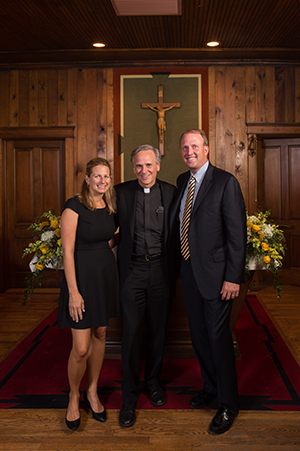
James Parsons and Dr. Carrie Quinn of New York City have made a $20 million gift to the University of Notre Dame to endow a new Institute for Global Investing in their alma mater’s Mendoza College of Business.

“This magnanimous gift will allow a cadre of superb finance faculty members at Notre Dame to advance their teaching and research to new levels,” said Rev. John I. Jenkins, C.S.C., the University’s president. “Jim and Carrie are distinguished graduates of the University, and we are most grateful for their wonderful generosity.”

The Notre Dame Institute for Global Investing is poised to advance investment-management research and educational outreach on a worldwide scale, according to Roger D. Huang, Martin J. Gillen Dean of the Mendoza College of Business.

“The Notre Dame Institute for Global Investing provides that vital nexus for research, the classroom, our alumni and other partners so that we can leverage all of it for a greater impact than the sum of its parts,” he said. “I’m confident that the institute will enable us to expand opportunities for our stakeholders — especially for our students — and become a significant thought leader in the global investment community.”

Scott Malpass, vice president, chief investment officer and a professor in Notre Dame’s Applied Investment Management (AIM) course, added: “I have known Jim since he was a junior at Notre Dame and have watched him become one of the finest money managers in the nation today. Jim and Carrie’s tremendous generosity will allow us to train the next generation of top-tier money managers imbued with the strong business ethics and principle-centered leadership that come from a Notre Dame education.”

The institute will leverage three key strengths of Notre Dame — top-rated finance faculty, an innovative finance curriculum and extensive strategic partnerships — to form a platform for both learning and influencing the way investment managers the world over think about global finance.

The institute’s goals include expanding internship and career placement opportunities; leveraging key partnerships among the college, the Notre Dame Investment Office and the University’s extensive alumni network; furthering faculty research and thought leadership; attracting prospective finance faculty; and adding depth and breadth to Mendoza’s already strong finance curriculum.

Shane Corwin, associate professor of finance, has been named as the inaugural director of the institute. A member of the Notre Dame faculty since 2000, he teaches and researches in the areas of security market design and investment banking. He has published articles in numerous finance journals, most recently studying the role of limited attention in securities trading, the measurement of transaction costs and conflicts of interest related to maker-taker fees on U.S. stock exchanges.

Corwin has served as a member of the Nasdaq Economic Advisory Board and has been awarded research grants from the Notre Dame Deloitte Center for Ethical Leadership, Morgan Stanley and the Q-Group. He earned a doctorate in finance from Ohio State University and bachelor’s and master of business administration (MBA) degrees from Mankato State University.

Parsons earned his bachelor’s degree in finance from Notre Dame and an MBA from Harvard University. He is founder and portfolio manager for Junto Capital Management in New York City and previously served as a portfolio manager for Viking Global Investors in New York.

Quinn is a graduate of both Notre Dame and Tufts University Medical School. She completed her pediatric residency at Boston Children’s Hospital. After working in private practice in Queens, New York, for six years, she is now an assistant clinical professor of pediatrics at Mount Sinai Hospital. In addition to seeing patients and teaching medical students, she is the executive director of the Mount Sinai Parenting Center, a not-for-profit entity created to support and educate parents in evidence-based parenting practices designed to help improve the health, resilience and well-being of children and families. The couple has three children.

“There has never been a greater need for outstanding leadership in the investment management industry,” Parsons said. “It has been a privilege to work together with the Mendoza College of Business, Scott Malpass, the Investment Office and other University leaders to form an institute that should enable the University to adequately address the need to educate the investment management leaders of tomorrow. The University is uniquely positioned to assist in the formation of leaders around the globe, and Carrie and I are delighted that our gift will help address this critical need.”

Quinn and Parsons made a $5 million gift in 2010 to endow the directorship of Notre Dame’s Boler-Parseghian Center for Rare and Neglected Diseases. They also have made gifts to their alma mater for a Donor Advised Fund, scholarship, the Applied Investment Management Alumni Endowment Fund and the President’s Circle.


Philanthropy Story ~ By Dennis Brown

egg nog 1
element
EggNog Creme Brûlée Ingredients:

Ingredients

8 cups water

2/3 cup Best Eggnog

3/4 cup heavy cream

1/2 cup whole milk

1/8 teaspoon freshly grated nutmeg

5 large egg yolks

1/3 cup plus 1/4 cup granulated sugar

elementimage2(2)

Total Time: 

Makes: 6 servings

Crème brûlée enriched with a little homemade eggnog is a surprisingly easy dessert, and a festively sweet way to celebrate the holidays.

What to buy: We recommend making this with our own Best Eggnog recipe, but you’ll get great results with store-bought eggnog too.

Special equipment: You can brown crème brûlée under the broiler, but a small kitchen blowtorch is a nifty gadget that makes the process even easier.


image1(4)

Instructions

1. Heat the oven to 300°F and arrange a rack in the middle. Bring the water to a simmer in a medium saucepan over high heat; keep at a simmer.

2. Combine the eggnog, cream, milk, and nutmeg in a medium saucepan and bring to a simmer over medium heat. Meanwhile, whisk together the egg yolks and 1/3 cup of the granulated sugar in a medium bowl until pale yellow and thick, about 3 minutes.

3. While whisking constantly, slowly pour the heated eggnog mixture into the yolks in a steady stream. Once combined, divide the mixture among 6 (4-ounce) ramekins and place in a 13-by-9-inch baking dish. Pour the hot water between the ramekins until it reaches two-thirds of the way up the sides (you may not need all of the water). Cover the baking dish with aluminum foil and poke a few holes in it with a skewer or knife to allow steam to escape.

4. Bake until the centers of the custards are just set, about 30 to 35 minutes. Remove from the oven and transfer the custards to a wire rack to cool to room temperature, about 30 minutes. Cover the ramekins with plastic wrap and refrigerate until completely chilled, about 1 hour.

5. When ready to serve, heat the broiler to high and arrange a rack in the upper third. Place the custards on a baking sheet and sprinkle about 2 teaspoons of the remaining 1/4 cup sugar evenly over each. Place under the broiler until the sugar is caramelized and golden brown, about 1 to 2 minutes—watch carefully to avoid burning. (Alternatively, you can use a kitchen torch.) Serve immediately.

Recipe by Ray Lee


CharlemagneCharlemagne: 
King of the Franks and emperor of the Romans in the late eight and early ninth centuries, Charlemagne had 20 children, some with wives and others with concubines. He insisted that they all receive a thorough education, including the girls. When one of his sons, known as Pepin the Hunchback, was found guilty of participating in a plot to kill Charlemagne, it was expected that he would be executed along with his co-conspirators. Instead, the emperor took pity on Pepin, ordered his sentence commuted and sent him to a monastery.

Czar Nicholas ll
Czar Nicholas II: 
The last Russian emperor, Nicholas had five children with his wife, the German-born Alix of Hesse. A loving father, Nicholas was especially concerned with the health of his only son and heir, Alexei, who suffered from hemophilia. Their child’s illness led the czar and his wife to consult the controversial healer Rasputin, whose influence over the royal family compromised their standing on the eve of the Russian revolution.

Mark Twain
Mark Twain: 
Mark Twain and his wife, Olivia, had three daughters during their 34-year marriage. Though he doted on all his children, Twain was particularly close with his oldest, Susy, who shared his love of acting and writing. He based at least two major characters in his novels on her. When she died of meningitis as a young woman in 1896, Twain fell into a deep depression. Later, he included passages written by Susy about her father in his autobiography.

Bust of Cicero

Cicero: 
A prominent ancient Roman statesman and philosopher, Cicero adored his daughter Tullia and was devastated when she died of complications from childbirth in 45 B.C. Inconsolable despite his friends’ many letters of condolence, some of which are still in existence, Cicero isolated himself for several weeks at the home of his friend Atticus, where he read texts by Greek philosophers about how to overcome grief. He later divorced his second wife, Pubilia, supposedly because she had not been sufficiently saddened by her stepdaughter’s death.

Darwin....
Charles Darwin
: The father of modern evolutionary science was also a devoted dad to 10 children, of whom two died in infancy. He played a central role in raising and educating his brood at a time when childrearing was seen as women’s work. The death in 1851 of 10-year-old Annie was a crushing blow for Darwin and his wife, Emma, and some have speculated that it caused him to lose his religious faith.

Ease up on the overparenting and teach your children these basic skills so they’ll be prepared for life outside the nest.

By Ellen Sturm Niz


image1(4)


As parents, we love our kids so much we want to protect them, help them, and cultivate them into perfect, happy humans. Unfortunately, this overparenting has the opposite effect, leaving our kids unready for the world and life as adults.

“We parents, we’re doing too much,” says Julie Lythcott-Haims, former dean of freshmen at Stanford University and author of “How to Raise an Adult: Break Free of the Overparenting Trap and Prepare Your Kid for Success.” “We have the very best of intentions, but when we over-help, we deprive them of the chance to learn these really important things that it turns out they need to learn to be prepared to be out in the world of work, to get an apartment, to make their way through an unfamiliar town, to interact with adults who aren’t motivated by love.”

Now the mom of two high schoolers, Lythcott-Haims’ a-ha moment came in 2009 after telling parents at Stanford’s freshman orientation to let their kids go and then coming home for dinner and cutting her then 10-year-old son’s meat.

“That’s when I got the connection,” she says. “When do you stop cutting their meat? When do you stop looking both ways for them as they cross the street? These are all things that we’re doing to be helpful, protective and so on, but if you’ve sheltered your 18-year-old all the way up to 18 by doing all of those things, then they end up bewildered out in the world. I realized this was why the Stanford freshman I was working with, however accomplished in the G.P.A. and childhood resume sense, were reliant upon mom or dad to kind of do the ‘work’ of life.”

Republican vice presidential candidate, Rep. Paul Ryan, R-Wis., his wife Janna, and children Charlie, sitting next to Janna, Sam, and Liza look over the menu before ordering breakfast at Josie's restaurant, Friday, Oct. 12, 2012, in Lexington, Ky. (AP Photo/Mary Altaffer)

Are you ready to stop helicopter parenting and prepare your kid for life as a young adult? Lythcott-Haims shares 12 basic life skills every kid should know by high school:

  1. Make a meal

“By the time your kid is in high school, they really ought to be able to do everything related to their own care, if they had to,” Lythcott-Haims says. “I’m not saying stop making dinner for your kids, but I am saying you ought to have confidence that they could make a breakfast for themselves, that they could make a lunch.”

While most days you are going to be preparing their meals, you want them to be able to feed themselves if necessary. “When something happens, grandma gets sick and one parent’s got to rush across town to look after her and the other parent’s off at work, you want to know your freshman in high school has what it takes to pack their own lunch, make his own dinner, you know? The more they age, the more they should feel that, ‘Yeah, I’ve got this.’ There’s a competence, and there’s a confidence that comes when we build competence.”

  1. Wake themselves up on time

“By the time your kid is entering high school, you ought to have confidence they can wake themselves up and get themselves washed and dressed in clothing that’s clean,” Lythcott-Haims says. “I underscore this because too many of us are letting kids off. We’re their alarm clock and then what happens? They’re late for breakfast; they’re late to school; and we drive them. All that teaches them is, ‘I’ll always be there to wake you up and drive you,’ which is not true.”

Lythcott-Haims recently heard from a colleague at a major university that a parent had installed a webcam in the dorm room of a freshman to wake the kid up. “That’s a parenting fail,” she says. “We’ve gotten ourselves worked up into a frothy frenzy about grades and scores in high school, and further into college, and we sort of treat our kids’ childhood as if every day, every quiz, every afternoon is a make or break moment for their future,” she continues. “We feel the stakes are high, and therefore we must help, but the stakes are low in childhood compared to what they will be in college, and what they’ll really be in the world beyond.”

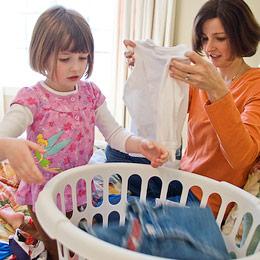
  1. Do laundryimage2

When teaching teens basic chores like laundry, we have to be careful not to be snippy and make them feel bad about not knowing how to do it yet. “If they haven’t learned, it’s because we haven’t taught them,” she says, “so parents need to acknowledge [to their kids] that they’ve been over-helping.” Instead, show them the ropes, watch them do it themselves once to make sure they’ve got it, and then let them handle it on their own.

  1. Pump gas

“When they learn to drive, they better know how to pump gas, okay?” Lythcott-Haims says. “I know of college students who have always had their parents fill their tank, whether at home in high school or even in college. The parents just top off the tank whenever they come visit her. Well, one day a 20-year-old student is out driving around, and her tank is near empty. And she says, ‘Oh my gosh, I’ve got to get gas. I’ve never done that. But I’m smart, I can figure it out.'” Long story short: She accidentally puts diesel in the car because no one ever taught her what to do. That’s an expensive and unnecessary lesson.

  1. Pitch in

“Employers these days are saying, ‘Hey, wait a minute, what is it with these 20-somethings, they just want to be told exactly what to do, kind of step-by-step, and they want to be applauded for doing it,'” Lythcott-Haims says. “If we’ve just served them, if parents have just said their academics and activities are all that matter and we’ll take care of everything else, no chores and no helping out around the house, then they get out into the workplace and they don’t have that pitch-in mindset.”

“Kids need to learn how to contribute for the betterment of the whole,” she says. “Maybe they have siblings and one is stressed out about something, and the other says, ‘I’ll do your chore for you. Because I see you’re stressed out and you need some help.’ That’s building a sense of it’s not just about me. I can do for others.”

  1. Advocate for themselves

Most of us have heard the stories of the parents who are calling college professors to complain about their kids’ grades, right? News flash: This needs to stop in high school, too. “If you’re the one throughout high school who’s always got to be emailing the teacher, you basically are teaching your kid, ‘You’re not competent, and I’m going to have to do it for you,’ which is terribly harming,” Lythcott-Haims says.

Instead, teach your child how to have a conversation with an authority figure and advocate for themselves. “So I’d say, ‘Look honey, I know you’re frustrated about this grade or you’re upset about that happening on the soccer team, or you don’t understand this information. You need to be the one to go talk to your teacher respectfully and advocate for yourself.'” she says. “And if they look at you in horror, say, ‘You can do it; I know you can do it. Do you want to practice with me?’ The only way to teach them is to get out of their way and make them do it.”

Also, prepare them to listen well to what the other person is saying and understand it might not go their way. “Many times they won’t get the outcome they desire, and it’s ‘Well, ‘I tried.’ And they come home and they learn to cope with it, because not everything in life will go your way.”

  1. Pack their own bag

“We’re always putting their stuff in their backpacks,” Lythcott-Haims says. “‘Oh, don’t want you to forget your homework!’ And then that backpack becomes a bag or a briefcase one day in the workplace, and they haven’t learned that skill of being responsible for remembering their own stuff, doing that inventory every morning, ‘What do I need? Wallet, keys, lunch, work, laptop.'”

  1. Order at restaurants

While this skill should be taught sooner than high school, if that’s where parents find themselves, it’s not too late. If they’ve never ordered for themselves, say, “Hey, guys, it’s time you started ordering for yourselves. I realize it’s not for me to decide what you’re going to eat, or me to assume you’re going to have your usual order, or for me to order for the whole family,'” she says.

Remind them to look the server in the eye, be polite, communicate their request, and say, “thank you.” “One day before long, they’re going to be out with friends or out with a girlfriend or boyfriend, and they’re going to want to have that skill to not only order food, but to do so respectfully—and not look like a jerk who’s an entitled kid with a credit card, who can pay for it, but can’t really treat the server respectfully,” Lythcott-Haims says.

  1. Talk to strangers

“Their life will be full of strangers, if we think about it, but we have this blanket rule, ‘Don’t talk to strangers,’ which isn’t the right rule,” Lythcott-Haims says. “The right rule would be, ‘Let me teach you how to discern the very few, creepy strangers from the vast, vast majority of normal strangers.’ That’s a skill.”

Then, send your children out in the world to talk to strangers—safe ones. Lythcott-Haims taught her own kids this skill by sending them to a store within walking distance of their suburban home to run a small errand and ask the sales clerk for help. She handed them a $20 bill and off they went. “They come back with a spring in their step,” she says.

  1. Go grocery shopping

Has your child ever even noticed that the grocery store aisles are nicely labeled with signs hanging from the ceiling? They should know how to navigate a supermarket on their own, Lythcott-Haims says. “Send them off on their own with one of those little hand-held baskets to go get five or six things,” she says. “If you’ve got a 13-year-old, and you’ve never let him or her out of your sight in a grocery store, you’re going to be freaking out; but 13-year-olds don’t get abducted from grocery stores.”

  1. Plan an outing

“Whenever the peer group is old enough and ready to plan an outing, let them do it,” Lythcott-Haims says. “I’m the parent who’s very comfortable with my 12-year-old girl going to a matinee movie with friends where she arranged it—you know, one parent’s going to do the drop-off, one’s doing the pickup, but the girls are getting the tickets, bringing money for snacks.”

While you should ask them to walk you through the plan so you know they are not setting off willy-nilly, don’t let your fears for them make them fearful of the world. “Making their way out into the world’ to go to the movie, or to go to a mall, or to go walk up and down the big street in town and then get some food somewhere, whatever it is—they want that,” Lythcott-Haims says. “This is them trying to spread their wings.”

  1. Take public transportation

When I travel around the country, people say, ‘Oh, my gosh. I wouldn’t let my 17-year-old daughter ride the metro alone,'” Lythcott-Haims says. “And I’m like, ‘What’s your long-term plan here? Would you let your 25-year-old daughter? Is it even up to you when she’s 25?'”

“Of course, [17 is] old enough! People join the Marines and the Army and the Air Force and the Navy at 18,” Lythcott-Haims points out. “This is just a lovely example of how far we’ve strayed, because no one is yet saying at 18 they’re too young to sign up to go fight for our country. So, we’re fine when [kids choose the military], but the kids who choose a four-year college? Oh, no, no. They need their mom or dad there all the time. It’s a reminder of how absurd it is.”