New York Paris London Palm Beach Hudson Valley

Posts Tagged ‘Hudson Cornelius Heinemann’

Celebrate Traditions

Carving pumpkins at Halloween and watching fireworks on the Fourth of July are part of our national culture. Holding neighborhood barbecues and New Year’s Day pot lucks provide us opportunities to meet and get to know our neighbors. Baking special birthday cakes and setting the table with a birthday tablecloth create a sense of belonging in families.

These are all traditions. Traditions are rituals that help us build support, connection and caring in our families, neighborhoods, schools and communities. Celebration of traditions creates a common bond and builds community. Often we celebrate traditions without realizing how they started or why they are important. Think about the traditions in your life. What are they? Why do you celebrate them?

Traditions can be created by intentional words or deeds to value a person or event in our life. If you want to learn more about older traditions, consult with elders to find out about the traditions of their childhood. Ask older members of your family or neighbors what they used to do. Think of what they say. Would it be fun to start a new-older tradition? Consider dropping May Day baskets on May 1 or eating black eye peas on New Year’s Day. Reviving something old will link older generations to today’s youth.

Celebration of traditions gives us a positive sense of self. Traditions that are based in our cultural heritage give us a sense of who we are and where our ancestors came from. Weaving cultural heritage activities throughout our daily lives roots us with a sense of purpose and promotes family togetherness. Working together with grandchildren, children, and parents to cook special foods, to sing songs, to dance ceremonial dances, and to hear family stories connects family members and preserves their heritage for future generations.

To preserve your traditions or to start new ones, follow these guidelines:
• Keep your traditions simple.
• They should be fun, inexpensive and not time consuming.
• Provide opportunities for all to be involved, from the youngest to the oldest.
• Look at your interests as a group and create an activity based in this interest.

Discuss your thoughts with all family members including the children. Ask for their suggestions on what to do or how to improve something you are already doing. Rituals don’t need to be complex to be meaningful. Finally, you may also want to start a traditions journal with your family to record the current traditions you celebrate all year long. In your journal, write all about it. Include recipes, pictures, and a brief description of your activities. Future generations will maintain and continue the tradition if there is a written record. Families with a strong sense of traditions and special celebrations are more likely to raise kids who have a strong sense of identity, are healthy, have close ties to family members, and succeed in school.

This is a great time of year to focus on traditions, either experiencing them through the holidays or including them in a New Years’ resolution. May your holidays be filled with your best traditions!
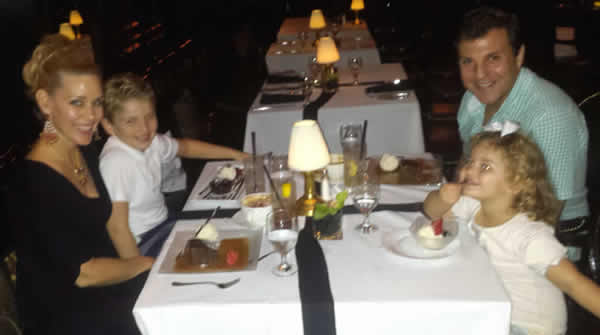
The Leopard Lounge….located in the Chesterfield Hotel in Palm Beach at 363 Cocoanut Row, is really one of my favorite places to have dinner with the family. The food is fresh and delicious using the finest local and seasonal ingredients and the staff is extraordinarily attentive. There is live entertainment every night which my children especially enjoy that creates a lively and spirited mood. There is also a fabulous range of wine, spirits, cocktails and they have their own home made flavored vodkas. The pineapple martini is divine!

Set your taste buds alight in the Leopard’s Lair

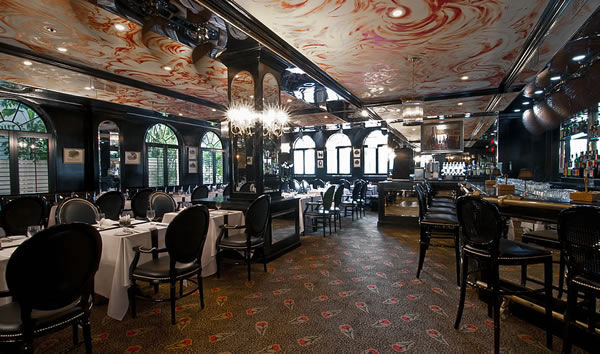
The legendary and newly refurbished Leopard Lounge, one of Palm Beach’s best loved institutions, is the epitome of sleek sophistication. Jet black lacquered walls, window blinds, granite topped tables, leather banquette seating and chairs, are perfectly complemented by a leopard skin patterned carpet, beveled mirrors, punkah fans and the richly swirling white and red images of the decadent hand painted ceiling.

Open for breakfast, lunch, dinner and everything in between, the menu features an eclectic mix of classic American, English, Oriental and International dishes prepared with flair and imagination by
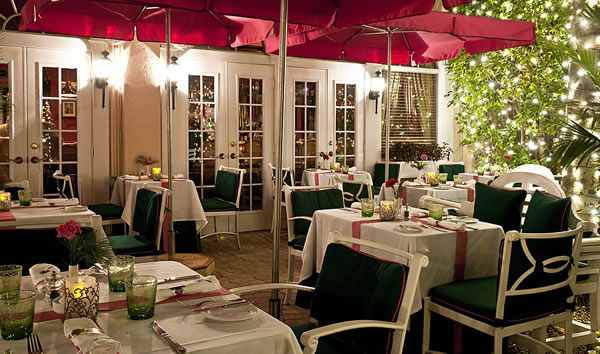
Executive Chef Gerard Coughlin. Breakfast and lunch can also be enjoyed on the courtyard patio or by the pool.

Lunchtime favourites include their famous Aberdeen Angus Beef Burgers served with the fresh topping of your choice and a wire basket of crispy fries, their inspired Leopard Club Sandwich with avocado and hard-boiled egg, and Bea’s Chicken Noodle Soup – a velvety smooth bowl of delicious goodness created by the founder, Bea Tollman.

Signature dinner dishes include the Veal Chop and the 14oz boneless New York Strip, both cooked to perfection in a 900° wood burning Josper Grill. The searing heat produces a lightly charred outer layer that locks in all the natural juices and rich flavor to create an unforgettably appetizing taste experience. The South African Style Chicken Curry, prepared with a special mix of 10 exotic spices and served with fragrant jasmine rice, crispy poppadoms and tangy mango chutney, is equally popular.

Diners also love their signature Maryland Style Lump Crab Cakes. Made from genuine lump crab meat, lightly breaded then pan seared to a golden brown and drizzled with our Chili Lime Mayonnaise, they’re a delicious appetizer.

Bartenders are minor celebrities in their own right and every night they provide some of the finest live entertainment in all of Palm Beach – this is definitely the place to be seen, to dance the night away, or to just sit back and soak up the atmosphere.

The Leopard Lounge and Restaurant at The Chesterfield, Palm Beach

Heinemann Family at The Leopard Lounge Restaurant

The Heinemann Family at The Leopard Bar and Restaurant – Palm Beach, FL

Afternoon tea at The Leopard Lounge and Restaurant

English Afternoon Tea

Leopard Bar & Restaurant Palm Beach, FL

The Restaurant

Leopard Bar & Restaurant Palm Beach, FL

The Bar

Leopard Bar & Restaurant Palm Beach, FL

The Courtyard

Ron BurkhardtPhilanthropist and Artist Ron Burkhardt is the genius behind The Notism Movement. A method of painting that exhalts the Beauty of Memory and is symbolic of primal loss; the fading reality of nature’s perfection.

The hieroglyphic scribbles and scrawls in his work manifest in a unique pictorial language that reflects urgent efforts to preserve our personal histories and rapidly fleeting histories.

I first met Ron at a luncheon given by a mutual friend at the Mar-a-Lago Club in Palm Beach. We immediately bonded over art and our common interest in various charities.

Throughout the history of the world, important needs have been filled by volunteers, people working for the common good of others. These individuals are essential to the well being of people everywhere. Ron is a wonderful example of this. His charities that he is involved with include: South Hampton Hospital, Project Angel Food, Eisenhower Medical Center, Children’s Cancer and Blood Foundation, Children’s Development Center of the Hampton’s, and African Child Foundation.

Giving back to the community is very important to Ron as he has made it a priority to help those around him and positively impact those in need providing a renewed sense of hope.

My family and I thoroughly enjoyed our visit to his Art Studio. The view from his work space overlooks Lake Worth and manicured Versailles styled gardens in Palm Beach, the perfect inspiration for his recently created “letterscape” masterpieces.

My son Hudson immediately selected his favorite as did my daughter Hyacinth. For me, it was somewhat difficult as there were several paintings that I fell completely in love with.

Ron has received over 200 awards for creative excellence and his work has been honored by The United Nations, Palm Springs International Film Festival, and Hollywood International Broadcast awards to name a few.

Each day I am moved and inspired by the generosity and creativity of people like Ron Burkhardt who genuinely want to leverage their wealth for the common good.

Michelle-Marie Heinemann & Ron Burkhardt

Ron Burkhardt with Hudson Heinemann and Hyacinth Heinemann

Ron Burkhardt with Hudson and Hyacinth Heinemann

Ron Burkhardt Art

Artwork – Ron Burkhardt

Michelle-Marie Heinemann & Ron Burkhardt

Michelle-Marie Heinemann & Ron Burkhardt

Ron Burkhardt Art

Artwork – Ron Burkhardt

RonBurkhardt.com >>

“Make time each day to listen to your children without distractions. Pay attention when your child speaks, respect their feelings and watch your tone of voice.”

See the book “Ten Powerful Things to Say to Your Kids” by Paul Axtell

Advice - Listen to Your Child

Quote from Catherine M. Wallace

The basics

Like so many other things, talking and listening can be done badly, just OK, or really well. And like any other skills, you get better with practice.

Good communication with children is about:

  • encouraging them to talk to you – and listening so they can tell you how they feel
  • being able to really listen and responding in a sensitive way to all kinds of things – not just nice things or good news, but also anger, embarrassment, sadness or fear
  • focusing on body language and actions as well as words, and interpreting nonverbal forms of communication.

Some children need a lot of encouragement and positive feedback to get talking. Others will be desperate to talk to you when you’re busy doing something else. This might mean stopping what you’re doing and listening.

Top tips for talking and listening

  • Set aside time for talking and listening to each other.
  • Listen to your children when they want to talk, have strong feelings or have a problem.
  • Be open to talking about all kinds of feelings, including anger, joy, frustration, fear and anxiety. Talking about feeling angry is different from getting angry, though. Learning the difference is an important step for a child learning to communicate.
  • When talking to your child, try to remember how it was when you were a child and how you were generally attracted to those people who really listened to you. After all, children think differently from grown-ups. There are a lot of things they don’t know and a lot of things they don’t have the words to talk about.
  • Let your child finish talking and then respond. When listening, try not to jump in, cut your child off, or put words in your child’s mouth – even when your child says something ridiculous or wrong or is having trouble finding the words. Children appreciate this as much as grown-ups!

  • Use language that your children will understand. Sometimes we forget that children don’t ‘get’ everything.
  • Watch your child’s facial expression and body language. Listening isn’t just about hearing words, but also trying to understand what’s behind those words.
  • To let your child know you’re listening, and make sure you’ve really understood, repeat back what your child has said and make lots of eye contact.
  • Show your interest by saying such things as, ‘Tell me more about …’, ‘Really!’ and ‘Go on …’. Ask children what they feel about the things they’re telling you about.
  • Avoid criticism and blame. If you’re angry about something your children done, try and explain why you want them not to do it again. Appeal to their sense of empathy.
  • Work together to solve problems and conflicts.
  • Be honest with each other.

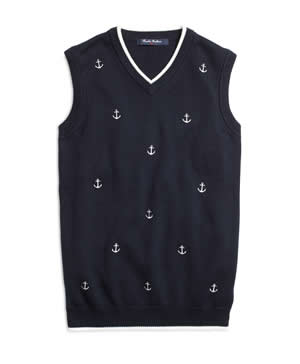
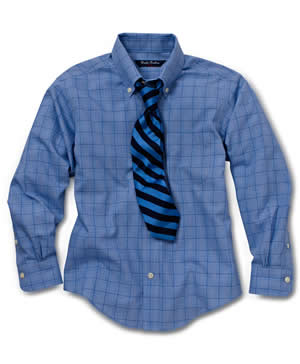
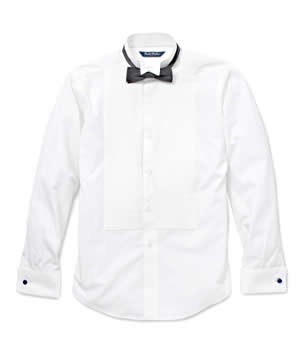
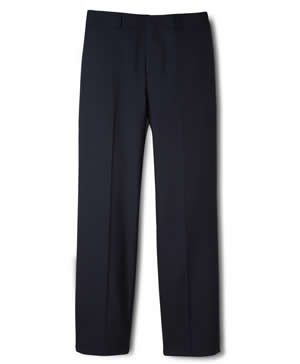
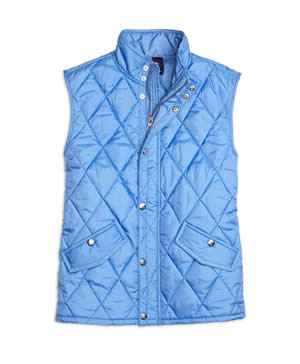
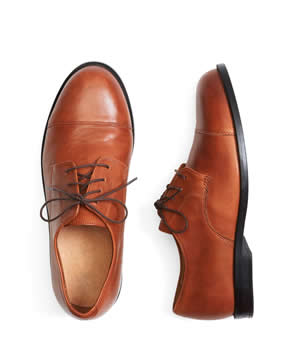
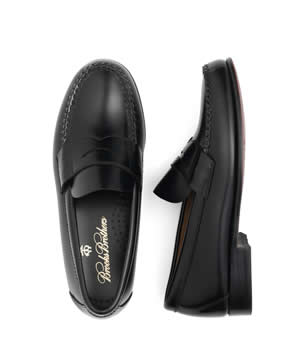
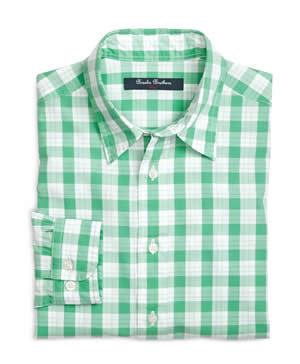
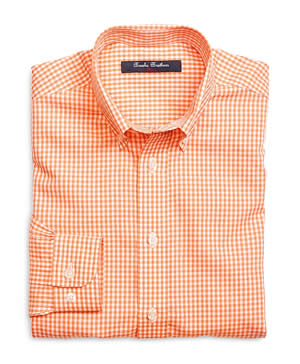
Brooks Brothers is known for Classic Clothing and Apparel. It is a great store for children and I especially like it for boys….however you can certainly leave with something for the entire family.

I adore their sport shirt, which is crafted in cotton with forward point collars and barrel cuffs. The shirts are machine washable, which is always a plus.

Brooks Brothers is the oldest men’s clothier chain in the United States and is head quartered on Madison Avenue, New York City. Notable alumni include Ralph Lauren who started out as a salesman there….and Brooks Brothers is the official clothier of the Jazz at Lincoln Center Orchestra.

www.brooksbrothers.com

Brooks Brothers

Cotton V Neck Sweater

Brooks Brothers

Sweater Vest

Brooks Brothers

Button-Down Glen Plaid Dress Shirt

Brooks Brothers

Tuxedo Dress Shirt

Brooks Brothers

BrooksEase Junior Plain-Front Dress Trousers

Brooks Brothers

Nylon Quilted Vest

Brooks Brothers

Captoe Lace-Ups

Brooks Brothers

Penny Loafers

Brooks Brothers

Embroidered Ribbon Belt

Brooks Brothers

Classic Leather Belt

Brooks Brothers

Plaid Sport Shirt

Brooks Brothers

Non-Iron Gingham Sport Shirt

Brooks Brothers

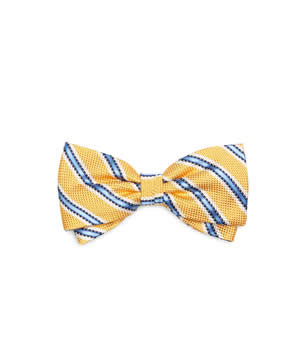
Stripe Pre-Tied Bow Tie

Brooks Brothers

Stripe Pre-Tied Bow Tie

Brooks Brothers

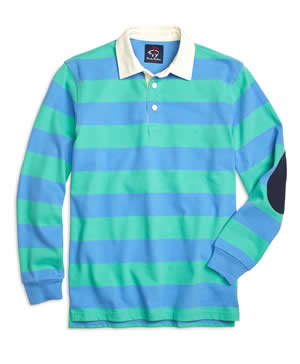
Classic Stripe Rugby

Brooks Brothers

Double Stripe Polo

Brooks Brothers

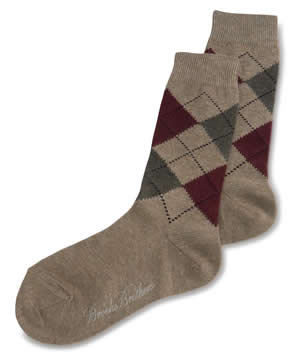
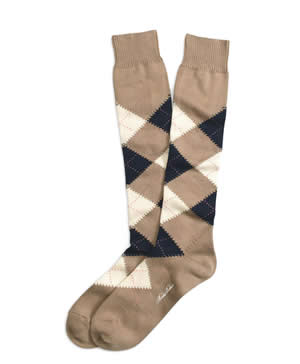
Argyle Socks

brooks-brothers15

Argyle Over-the-Calf Socks

Brooks Brothers

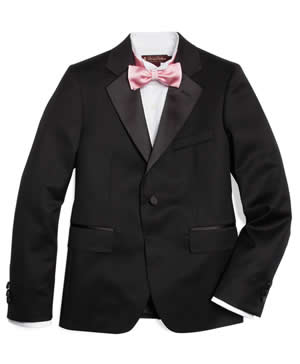
One-Button Tuxedo Prep Jacket


Brooks Brothers


“There is nothing that I enjoy more than spending time as a family….I love listening to what my children have to say and seeing their milestones as they grow. They make me laugh and teach me so much. I am a better person because of them and I cherish their individuality. Spend time as a family…the memories you are creating will last a lifetime and be forever remembered in your child’s mind.”

Heinemann Family Winter Tubing

Spending time as a family is a wise investment. Children in families that participate in religious activities together are more likely to report having parents who show affection, and those with involved parents tend to fare better in school and are less likely to engage in risky behaviors.

  • Spending time in everyday family leisure activities is associated with greater emotional bonding within the family. A family’s “core” leisure activities (those that are typically everyday, low-cost, home-based activities such as playing board games, playing in the yard, gardening and watching television together) were related to the family’s cohesion (“the emotional bonding that family members have toward one another”). Both a family’s “core” activities and their “balance” activities (those that are novel experiences and require a greater investment of time, effort, planning and money–such as vacations, special events, and sports activities) were related to the family’s ability to adapt.1
  • Children in families that participate in religious activities together are more likely to report seeing expressions of love and affection between their parents. Two dimensions of family religious involvement–family participation in religious activities at least once per week and parental prayer more than once per day—were associated with greater expression of love or affection between the parents, as reported by their children.2
  • Parents of families in which both the parents and children attend religious services are more likely to know their children’s social networks.  They are more likely to know their children’s friends, those friends’ parents, and their children’s teachers, than parents of families in which only the parents or only the children, or neither, participated in religious activities.3
  • Children’s academic success is associated with having mothers who frequently communicated with them. This entailed talking with the children, listening to them, and answering their questions.4
  • Children whose fathers spend time with them doing activities tend to have better academic performance. Preteens whose fathers spent leisure time away from the home (picnics, movies, sports, etc.) with them, shared meals with them, helped with homework or reading, and engaged in other home activities with them earned better grades in school, on average, than peers whose fathers spent less time with them. Similarly, teens whose fathers engaged in activities in the home and outdoors, spent leisure time, and talked with them earned better grades, on average, than teens whose fathers spent less time with them.5
  • Adolescents whose parents are involved in their lives tend to exhibit fewer behavioral problems. Parent involvement was assessed by how often the parent or parental figure asked about their children’s lives, encouraged their interests, gave good advice, and spent free time with them in school activities.6
  • Youths who communicate, do activities and have close relationships with their parents are less likely to engage in violence. Family integration through bonds with a parent (in particular, with a mother who was living in the home) was associated with a decrease in the likelihood that an adolescent will commit an act of violence. (Parent-child bonds were measured by adolescents’ reports of feeling close to their parents, being involved in family activities, and communicating with their parents.) Youths in twoparent families whose bond with their resident mothers was just one standard deviation higher than the mean level were 18 percent less likely to commit an act of violence than peers with average maternal bonds. Among youths living in single parent families, a bond with that parent that was one standard deviation above the mean was associated with a 17 percent decrease in violence, while a one-unit increase in bonding with a nonresident parent was associated with a 5 percent decrease in violent behavior.7
  • Teens who frequently have dinner with their families are at a lower risk for substance abuse. Compared with teens who frequently had dinner five times or more per week with their families, those who had dinner with their families only two nights per week or less were twice as likely to be involved in substance abuse. They were 2.5 times as likely to smoke cigarettes, more than 1.5 times as likely to drink alcohol, and nearly three times as likely to try marijuana.8
  • Teens whose parents are home with them after school and in the evening are less likely to experience emotional distress. Other parental factors included having parents who engaged in activities with the teens and parents who had high expectations regarding teens’ academic performance.9

Footnotes

  1. Ramon B. Zabriskie, and Bryan P. McCormick, “The Influences of Family Leisure Patterns on Perceptions of Family Functioning,” Family Relations 50, No. 3 (July 2001): 281-289.
  2. Christian Smith and Phillip Kim, “Family Religious Involvement and the Quality of Parental Relationships for Families with Early Adolescents,” Research Report of the National Study of Youth and Religion 5 (2003): 1-23.
  3. Christian Smith, “Religious Participation and Network Closure Among American Adolescents,” Journal for the Scientific Study of Religion 42, No. 2 (2003): 259-267.
  4. Tom Luster et al., “Family Advocates’ Perspectives on the Early Academic Success of Children Born to Low-Income Adolescent Mothers,” Family Relations 53, No. 1 (January 2004): 68-77.
  5. Elizabeth C. Cooksey and Michelle M. Fondell, “Spending Time with His Kids: Effects of Family Structure on Fathers’ and Children’s Lives,” Journal of Marriage and the Family 58 (August 1996): 693-707.
  6. Michelle J. Pearce, “The Protective Effects of Religiousness and Parent Involvement on the Development of Conduct Problems Among Youth Exposed to Violence,” Child Development 74, No. 6 (November/December 2003): 1682-1696.
  7. Chris Knoester and Dana L. Haynie, “Community Context, Social Integration Into Family, and Youth Violence,” Journal of Marriage and Family 67, No. 3 (August 2005): 767-780.
  8. The National Center on Addiction and Substance Abuse at Columbia University, “The Importance of Family Dinners II,” (September 2005), http://www.casacolumbia.org/download.aspx?path=/UploadedFiles/cvq5rn5t.pdf.
  9. Michael D. Resnick et al., “Protecting Adolescents from Harm: Findings From the National Longitudinal Study on Adolescent Health,” Journal of the American Medical Association 278, No. 10 (1997): 823-832.

Only the sweetest memories fill my mind when I think of La Maison du Chocolat…..as I have been coming here with my children since they were born. Undoubtedly the best hot chocolate in the world and the pastries that can accompany this dark nectar are heaven.

In fact when my son, Hudson, was little he said ” Mom, this must be what heaven is like.” I will never forget this and a location must exist where heaven is located.

Last week when we were there the waiter only spoke French to us, so this allowed me to exercise a language I at one time spoke somewhat well. Hudson courageously sang a French song he had just learned in School. What a delight! This is a fabulous place to stop in with children, go straight to the back and take a seat. A friendly waiter will greet you and on the way out it is always nice to leave with a box of chocolates!