New York Paris London Palm Beach Hudson Valley

Posts Tagged ‘Old Fashioned Mom Magazine’

Most celebrities do some kind of charity work — it’s good public relations — but a few stand out for going the extra mile.

Some like George Clooney, Angelina Jolie, Matt Damon, and Michael J. Fox, have devoted considerable time to using their fame to help groups working on big problems like genocide, poverty, or disease. Others, like director George Lucas and Hollywood icon Kirk Douglas and his wife, Anne, have given tens of millions of dollars to support causes like education, the arts, science, senior care, homelessness, and conditions like dementia.

Here are some other stars who have produced big results for charity but aren’t as widely recognized for their giving:


Alec Baldwin

TODD HEISLER/THE NEW YORK TIMES/REDUX

Best known these days for his impersonation of President Trump on Saturday Night Live,Alec Baldwin has given nearly $17.6 million to charity in the last decade through his foundation, including more than $2.7 million since 1993 to his alma mater, New York University’s Tisch School of the Arts; more than $1.7 million to the East Hampton Library on Long Island; and $1 million to the New York Philharmonic, where he is board member and for which he hosts a weekly radio series.


Leonardo DiCaprio

ALBERTO PIZZOLI/AFP/GETTY IMAGES

Actor Leonardo DiCaprio is a workhorse for environmental causes, raising at least $61 million for more than 65 climate-change, biodiversity, and conservation programs since 1998. Public records show he has donated about $3.2 million of his own money.


Michael Jordan

VCG/GETTY IMAGES

Chicago Bulls basketball legend Michael Jordan pledged $2 million last year to help build trust between communities of color and law-enforcement officers across the country, splitting the gift between the NAACP Legal Defense and Educational Fund and the International Association of Chiefs of Police’s Institute for Community-Police Relations. Other recent donations include $5 million to the National Museum of African American History and Culture and an undisclosed sum to nearly two dozen Chicago charities that help needy children.


Dikembe Mutombo

RODGER BOSCH/AFP/GETTY IMAGES

At 7 feet 2 inches tall, Dikembe Mutombo was a fearsome presence under the basket, blocking more shots in his 18-year pro-basketball career than Kareem Abdul-Jabbar. The NBA Hall of Fame center shows a softer side off the court. He has showered his wealth on people in need in the Democratic Republic of Congo, where he grew up, most notably giving $23 million to build a hospital that opened in 2007. He also gives time and money to help the homeless in Georgia and provides Christmas gifts to a children’s hospital in Atlanta, where he played for four-plus seasons.


Shonda Rhimes

(MARK PETERSON/REDUX

Television writer and producer Shonda Rhimes, whose credits include Scandal and Grey’s Anatomy, pledged $10 million to the National Museum of African American History and Culture. President Obama appointed her to the Board of Trustees of the John F. Kennedy Center of the Performing Arts in 2013.


ROYCE DEGRIE/TAS/GETTY IMAGES FOR TAS

Taylor Swift

At 27, pop superstar Taylor Swift has already established herself as a celebrity of uncommon generosity and dedication to a variety of causes. She pledged $4 million in 2012 to the Country Music Hall of Fame and Museum for an education center and regularly contributes to relief and recovery efforts for survivors of natural disasters. Last year she gave about $1.2 million to charities helping people affected by floods in Louisiana. In previous years she has donated $250,000 to help survivors of a tornado in western Alabama and $100,000 to help victims of a flood in Iowa.


Written By: Maria Di Mento

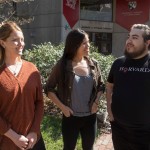
HGSE students, Julia Cunningham, (from left) Morgan Barraza, and Shane Trujillo

Of nearly 51 million K–12 students in the U.S., about 9 million attend rural schools. Yet despite being one-sixth of the nation’s student body, rural students, and rural education in general, are often overlooked in debates about education policy, specialists say.

Some Harvard-trained educators would like to change that.

During their one-year master’s program at the Graduate School of Education, Morgan Barraza ’18, Shane Trujillo ’18, and Julia Cunningham ’18, bonded over their commitment to the issue, working through the Rural Educators Alliance to foreground hurdles faced by students and teachers in rural settings. The group was co-founded by Cunningham and Carlye Sayler ’18.

“One of the missions of the group is to challenge the perceptions of rural America,” said Cunningham, who taught at an Oglala Lakota Nation school on the Pine Ridge Indian Reservation in South Dakota before enrolling at the Ed School. “Whenever anyone thinks of rural education, the picture that comes to mind for the most part is not of Native American students or black students in the South. It’s usually white Appalachia, and that’s not the whole picture.”

To shed light on the complexity of rural America, the group this spring organized a week of panels on identity, school practices, issues of gender and sexual diversity, and more.

Over the summer, the students will develop a virtual toolkit, with a list of resources, to be sent to Ed School faculty to help them cover rural education issues in their courses. The goal is to ensure that the School remains committed to addressing rural education, said Barraza, who worked as a high school teacher at the Laguna Pueblo Reservation and in Aztec, both in New Mexico.

As Barraza noted, faculty at the Ed School have supported the group’s efforts.

“Rural schools are a lifeblood of education in the country,” said Matt Miller, associate dean for learning and teaching. “As Mara Tieken, doctoral alumna of the Harvard Graduate School of Education and leading thinker on rural education, taught me over the years, we can’t talk about rural education as ‘not urban.’ Scholars and policymakers need to understand rural communities and their educational needs on their own terms.”

Experts say rural students lack the choices and opportunities available to urban students. According to the 2017 Report of the Rural School and Community Trust, more than 25 percent of the country’s public schools are rural, but only 17 percent of state education aid goes to rural districts. The organization listed lack of resources, teacher shortages, and limited childcare and early education programs among the challenges schools face in states such as Mississippi, Arizona, Alabama, South Carolina, South Dakota, Georgia, Nevada, Florida, Oklahoma, and Alaska.

In D.C. gathering, Faust and faculty discuss the importance of equity in learning

The challenges extend to Native American students growing up on reservations or in small towns. During their time at Harvard, Barraza, Trujillo, and a handful of students joined forces to draw attention to education for Native Americans.

A member of the Laguna Pueblo and Salt River Pima tribes, Barraza co-chaired Future Indigenous Educators Resisting Colonial Education, a group founded by Adrienne Keene, Ed.D. ’14. In March, the organization held a series of events highlighting issues that affect Native American communities, from the plight of missing and murdered indigenous women to tribal justice to feminism in indigenous communities.

“I feel a personal obligation,” said Barraza, who plans to teach in the Salt River Pima Maricopa Indian community, a tribe located in the metropolitan area of Phoenix. “Too often, issues regarding contemporary Native American peoples are not addressed, and indigenous and Native American peoples are blocked out of the conversation.”

“We live in a culture where indigenous peoples are seen as historical figures, or if they’re contemporary representations, they’re seen as broken and we need to go and save them,” said Trujillo. “We’re trying to highlight voices that have been lost in the margins.”

Courtney Van Cleve, Ed.L. ’20, who is pursuing a doctorate in education leadership, will take the helm of the Rural Educators Alliance this fall. For Van Cleve, who has spent most of her life in Mississippi schools as a student, teacher, principal, and regional director, it’s the perfect fit.

“Rural education remains at the core of my personal and professional identity,” she said.

Change is overdue, Van Cleve said, partly because of increasingly prominent divides between rural and urban America, but mostly because rural students deserve the same opportunities as their urban peers.

“There is a real opportunity for systems across contexts to learn from each other in shaping the future of education reform,” she said.


Written By: Liz Mineo

Image result for the harvard gazette logo

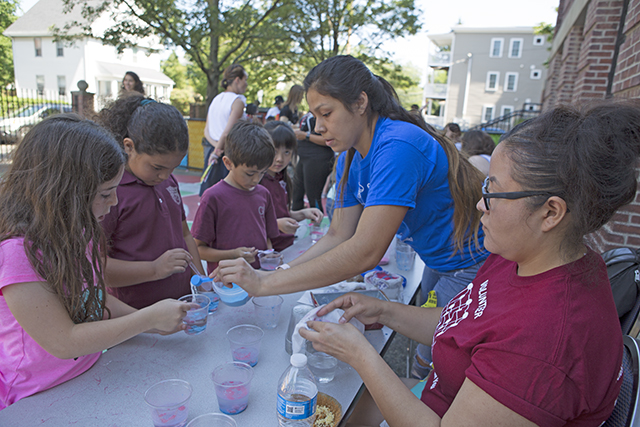
Star Velasquez, 9, a second grader at the Gardner Pilot Academy, can’t contain her excitement when the super-thin film coating on a piece of paper reflects a rainbow of color.


The experiment showcased the properties of super-thin films—nail polish dropped onto the top of the water spread into a nanometer-thick film that creates iridescent, rainbow colors on the paper.

Velasquez, a second grader at the Gardner Pilot Academy in Boston’s Allston neighborhood, and her peers learned about materials science during an outreach program conducted by students in the Research Experience for Undergraduates (REU) program at the Harvard John A. Paulson School of Engineering and Applied Sciences (SEAS).

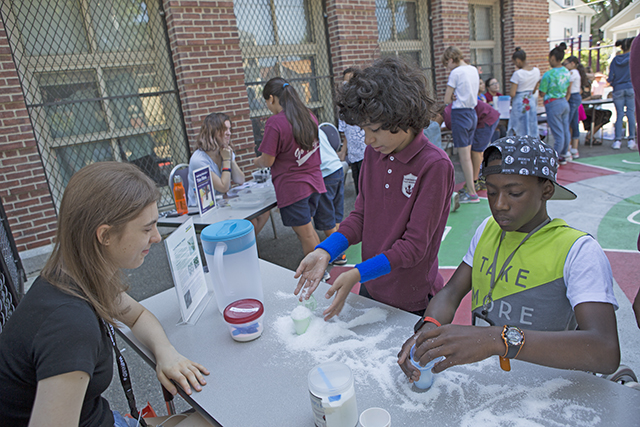
In another hands-on experiment, elementary school children mixed blue and pink sand in water to learn about hydrophobic materials. The blue sand collected at the bottom of the water-filled beaker, while the pink sand, which was hydrophobic, reacted by clumping together when it hit the water to form a protective barrier.

Second grader Raul Galdamez, 8, said he had never seen anything like the clumping pink sand.

“I enjoy science because you can do experiments and learn new things about the world,” said Galdamez, who hopes to become an astronomer.


REU students Dominique Pablito (left) and Trisheena Kills Pretty Enemy use different colored sand to explain how hydrophobic materials interact with water. (Photo by Adam Zewe/SEAS Communications)

REU students Dominique Pablito (left) and Trisheena Kills Pretty Enemy use different colored sand to explain how hydrophobic materials interact with water. (Photo by Adam Zewe/SEAS Communications)

REU students Trisheena Kills Pretty Enemy and Dominique Pablito explained the scientific reaction as Galdamez and his peers watched the colored sand.

“This is my way of giving back, and it helps inflame my own passion for science,” said Kills Pretty Enemy, a senior majoring in microbiology at Montana State University. “This is all about planting the seed, especially for minorities, because there are not as many of us in the STEM field.”

She and Pablito are spending the summer conducting research on the microbiome in the lab of George Whitesides, Woodford L. and Ann A. Flowers University Professor. They are developing a fast and simple test for bacterial infections using a paper strip, similar to pH paper.

For Pablito, a senior majoring in chemistry and biology at the University of Utah, working with the elementary school children reminded her why she decided to pursue science.

“I like that you don’t always know the end results of your experiments, and you get to be creative in finding a solution,” she said. “With research, it always feels like a huge success when you figure something out, no matter how small it is.”

REU student Cunningham, a sophomore at Princeton University majoring in operations research, oversees a hands-on science experiment demonstrating the properties of hydrogels. (Photo by Adam Zewe/SEAS Communications)

REU student Holly Cunningham, a sophomore at Princeton University majoring in operations research, oversees a hands-on science experiment demonstrating the properties of hydrogels. (Photo by Adam Zewe/SEAS Communications)

The joy of a successful experiment was apparent at a hydrogel demonstration overseen by Holly Cunningham and Jaylen Scott. Kids sprinkled white powder into cups half-filled with water; the powder absorbed the water and rapidly expanded into a puffy, white pile that spilled out the top of the cups, eliciting surprised laughs.

One of these kids might see an REU student who looks like them and think, ‘he’s a scientist, maybe I can be one, too.’

This powder, a polymer called polyacrylate, can absorb up to 1,000 times its weight in water, Cunningham explained to the kids.

“Being able to see science in action like this can help these kids really absorb the material,” said Cunningham, a sophomore at Princeton University majoring in operations research. “I love kids and I love encouraging them to enjoy science. Hopefully, some of them will develop a passion for it like I did when I was their age.”

Cunningham, working in the Privacy Tools Lab of Salil Vadhan, Vicky Joseph Professor of Computer Science and Applied Mathematics, enjoyed taking a break from the technical work to interact with such an excited group.

The outreach event is intended to help REU students increase their science communication skills, a goal of the annual program, explained Kathryn Hollar, Director of Community Engagement and Diversity Outreach at SEAS. The 70 students in this year’s cohort hail from New England, New Mexico, and everywhere in between, bringing a wide range of backgrounds to Harvard.

That diversity is important for the elementary school children to see, she said.

“Even more than teaching them about the materials, this event is an important opportunity for these kids to make a connection with young scientists,” she said. “One of these kids might see an REU student who looks like them and think, ‘he’s a scientist, maybe I can be one, too.’”


Written By: Adam Zewe

Image result for the harvard gazette logo

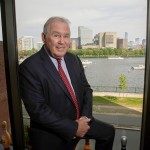
Prominent Boston business executive Joe O’Donnell ’67, M.B.A. ’71, seen here at his Cambridge Parkway office, is stepping down from the Harvard Corporation on June 30.


Joe O'Donnell,


Faust lauds ‘one of Harvard’s most devoted and inspiring alumni leaders’


During his first week as a Harvard freshman in the early 1960s, Joe O’Donnell passed the kind of personal test that would resonate for the rest of his life.

Surrounded by his classmates, most of them from well-off neighborhoods and with fathers who were lawyers, doctors, and professors, O’Donnell ’67 introduced himself, without hesitation, as a guy from Everett, the son of a cop.

“Everybody turned around and looked at me,” O’Donnell reminisced on a recent sunny morning in the conference room of his company, Belmont Capital LLC, located in a sleek building overlooking the Charles River. “I wasn’t worried about anything. I was physically the toughest kid in the class. It was a moment of truth, and I decided to be myself, to be truthful.”

O’Donnell has carried that straightforward approach and unassuming demeanor throughout his life, and it has served him well, mostly recently as a Harvard Corporation member. After seven years of service there, he will step down from the post on June 30.

After graduating from the College and then from Harvard Business School (HBS) in 1971, O’Donnell founded the Boston Culinary Group, a food service management company for sports, entertainment, and convention venues, and became a prominent local executive. He is chairman of Centerplate Inc., which acquired Boston Culinary Group, and owner of Allied Advertising Agency, and is considered one of Boston’s most influential people. In 2006, Boston Magazine named him first among “The 100 People Who Run This Town.”

At Harvard, he has long been an alumni volunteer, has served the University on the Allston Work Team and the Harvard College Fund Executive Committee, and has been responsible for organizing his College and HBS class reunions on many occasions. The Harvard College Fund awarded him the Richard T. Flood Award twice, and he won the HBS Alumni Achievement Award in 2005.

O’Donnell also served as an elected director of the Harvard Alumni Association and as an Overseer before joining the Corporation.

“For decades, Joe O’Donnell has been one of Harvard’s most devoted and inspiring alumni leaders. He’s always there when you need him, and he’s one of a kind,” said Harvard President Drew Faust, who also steps down from office on June 30. “Joe has been a terrific member of the Corporation, and I have no doubt he’ll remain an energizing force in the life of the University for years to come. We can’t thank him enough.”

“Joe has been a wonderfully thoughtful, dedicated, and generous alum,” said incoming President Larry Bacow. “His contributions to the Corporation more broadly and to the development of our Allston campus specifically have been invaluable. And while he may be stepping down from the Corporation, I intend to keep him on speed dial during my time as president.”

Harvard Corporation Senior Fellow Bill Lee ’72 agreed with those assessments, noting O’Donnell’s contributions to the Corporation and his helpful counsel, judgment, and connections.

“Everybody knows Joe, and he knows everybody, and everybody adores him. That’s the truth of the matter,” said Lee, who served with O’Donnell on the Board of Overseers and the Corporation. “Joe was uniquely positioned in the Boston community. He helped us build relations with the commonwealth, the city of Cambridge, and the city of Boston, and he did it in a way that no one had done before.”

Scott Abell ’72, former president of the Harvard Alumni Association, president of the Board of Overseers for the academic year 2017–18, and the current national chair of the John Harvard Society, said O’Donnell is one of Harvard’s great treasures.

“Every once in a while, a person comes along and dedicates time and effort to moving the institution forward, and they do it for a lifetime,” said Abell. “Joe is one of those people. Harvard is blessed to have several people like that in recent generations, but it’s unique when you find someone with Joe’s skills, his connections, his insight into the University, and his wise counsel, which is his most valuable contribution. He says what needs to be said, rather than whatever everybody wants to hear. And he never tires of helping.”

Tamara Elliot Rogers ’74, vice president for Alumni Affairs and Development, has known O’Donnell since the early 1990s, “Joe cares deeply about Harvard,” she said. “He’s tireless in his volunteerism. His willingness to engage with many parts of Harvard, to offer advice and counsel to a wide range of Schools in order to make ‘One Harvard’ a reality, and to lift us all, is something for which I and many others are truly grateful.”

O’Donnell credits his parents for laying the foundation for his success in life. They encouraged him to do well in school, do the right thing and stay in line. His father was a police officer of Irish descent, and his mother, a daughter of Italian immigrants and a homemaker, kept a tight ship at home.

Growing up in Everett in the 1950s also helped shape O’Donnell’s outlook and personality. Home then to Italian and Irish immigrant families, Everett was (and is) a blue-collar town. O’Donnell said that environment helped him learn important life lessons.

“Everett was a tough neighborhood in a tough city,” said O’Donnell. “There were a lot of good people there, and if you acted like a jerk, someone for sure would kick you in the ass. It was a great educational experience. It made me tough.”

It also gave him a deep appreciation for the opportunities he got and a down-to-earth demeanor, said William Fitzsimmons ’67, dean of admissions and financial aid. The two bonded over their common backgrounds — in the same class, both were the first in their families to go to college and both were on scholarships. They became close friends.

“Joe always celebrated his background and was never shy about it,” said Fitzsimmons. “In our senior year, our classmates traveled to Europe, and neither Joe nor I had traveled abroad before. We got loans and traveled with them, and while walking around London, he said with a sense of humor, but seriously, ‘Who would have thought that the two of us would be in London as Harvard graduates?’”

O’Donnell excelled as an athlete at Harvard. He was a stellar player on both the football and baseball teams. He earned six varsity letters, and in his senior year he captained the baseball team. To show his gratitude to the baseball program, in 1995 he donated $2.5 million to endow the baseball coach’s position. Harvard’s baseball field bears O’Donnell’s name.

In 2012, O’Donnell and his wife donated $30 million to the University. He is also a leading fundraiser in Harvard Campaign and development efforts. Giving back to Harvard, he says, is a responsibility.

“It’s payback,” O’Donnell said. “I got a scholarship because someone was smart and thoughtful enough to provide for a guy like me. I wasn’t a dumbbell, but I wasn’t the traditional blueblood. I got a break to go to Harvard. I want others to have a break. I do it because of a selfish reason: It feels good to make a difference.”

O’Donnell also gives back to Malden Catholic High School, which he also attended on scholarship.

“Joe is deeply concerned about the welfare of others,” said Thomas Doherty III, headmaster of Malden Catholic. “He’s exceptionally generous to us and wants us to be successful. He is deeply committed to Everett, his hometown. We have a lot of students from Everett. And despite all of his successes, he still understands where he came from, and he is supportive of the students who come from Everett.”

Of all his philanthropic efforts, the one that is closest to O’Donnell’s heart is the Joey Fund, which he and his wife, Kathy, started to honor the memory of their son, also named Joe, who died at 12 of cystic fibrosis, a genetic disorder that affects the lungs and for which there is not yet a cure.

“My No. 1 passion is trying to find the cure for cystic fibrosis,” said O’Donnell. “My dream is to live long enough to see it happen.”

As for his long ties to Harvard, O’Donnell said he plans to keep them alive and support the University in any way he can. After all, he said, Harvard changed his life by giving him opportunities to excel in academics and athletics, along with a plethora of connections, all of which helped him succeed.

“My life would have been different if I hadn’t come to Harvard,” said O’Donnell. “I would have been happy enough, but my life would have been diminished and the boundaries would have been much more restricted.

“I do what I do because of Harvard. That’s why I keep supporting it.”


Written By: Liz Mineo

Image result for the harvard gazette logo

David Wojnarowicz's unfinished film “A Fire in My Belly," (1986–87; Super 8 mm film) is considered one of his better-known pieces, in part due to its disturbing, surreal images.


When activist and artist David Wojnarowicz died of AIDS-related illnesses in 1992, he left behind a substantial legacy. In addition to his work as writer, painter, performance artist, and photographer, the 37-year-old New Yorker had been a key figure in the post-punk Cinema of Transgression movement, which used humor, sex, and violence to confront the more staid artists of the day — and to call out racism, sexism, and homophobia.

Using himself and the city as subjects, in works that blended imagery from the burgeoning hip-hop/street art culture and gritty urban scenes, Wojnarowicz’s work is both very much of its day and still extremely powerful. In the years since his death, however, Wojnarowicz has become less known for his multimedia creations than for the uproar around them — specifically, around his use of religious imagery.

A series of retrospectives this summer seeks to remedy this lack, and on Wednesday, 6–8 p.m., the Harvard Art Museums will screen “Transgressions: David Wojnarowicz, Post-Punk Cinema, and Queer Video Activism,” five short films by or featuring the artist, as part of the exhibition “Analog Culture: Printer’s Proofs from the Schneider/Erdman Photography Lab, 1981–2001,” on display through Aug. 12.

Jessica Bardsley, a Ph.D. candidate in film and visual studies at Harvard’s Graduate School of Arts and Sciences, curated the presentation. After the film, she will discuss Wojnarowicz’s life, death, and legacy with the artist A.K. Burns, whose current Lightbox Gallery installation “Survivor’s Remorse” was inspired by Wojnarowicz’s photographs.

The goal, says Bardsley, is “understanding the political and artistic context that David was working in and also understanding what a passionate, angry, but also beautiful maker he was.”

A still from “Beautiful People” (1988; 34 minutes). “Beautiful People” is among the rarely screened films by David Wojnarowicz and Jesse Hultberg.  Courtesy of Electronic Arts Intermix (EAI)

When Wojnarowicz died, she said, “he wasn’t really famous, but many of his contemporaries now are very well-known.” These artists, like Richard Kern, Beth B., Gregg Bordowitz, and Nick Zedd, have kept Wojnarowicz’s legacy alive, and this summer the Whitney Museum in New York is mounting a major retrospective. “The last few years,” said Bardsley, “there’s a growing desire to more fully pay attention to the work he made.”

Until now, she explained, when the general public has recalled Wojnarowicz at all, it has been because of his unfinished film, “A Fire in My Belly,” whose disturbing, surreal images of blood, masturbation, and self-mutilation seem to reference the AIDS crisis. A segment of this film, on which Wojnarowicz worked from 1986 to 1987, was shown in 2010 as part of a larger exhibition at the National Portrait Gallery of the Smithsonian Museum. Despite the footage being placed in a much larger context — it was shown in a room dedicated to AIDS-related artwork and required interested viewers to activate it by touch screen — the Smithsonian screening sparked controversy because of the film’s depiction of ants crawling over a crucifix. Although the artist never showed the film in his lifetime and there is some debate about his intentions for it, the existing footage — nearly 21 minutes — will be part of the Harvard Art Museums retrospective. This screening, said Bardsley, “is an attempt to speak to the interest in that particular film in the bigger context of what he was up to.”

Jennifer Quick, curator of the “Analog Culture” exhibit and co-organizer of “Survivor’s Remorse,” stresses the importance of that context. “David is really important in terms of his activist work. He brought a lot of attention to the AIDS crisis and how it was impacting artists,” said Quick, the John R. and Barbara Robinson Family Associate Research Curator in Photography, Division of Modern and Contemporary Art. “Living in the Village in the ’80s and the ’90s, David was at the heart of it — it was such a small network, they all knew each other.”

“He was living with AIDS,” Bardsley elaborated. “He had many friends who were dying of AIDS-related illnesses, and as a queer person and a person without much money or health care, [he was] trying to articulate being outside society — on the margins.

“He’s a wonderful example of an artist whose activism and art practice is really one,” she said. “Especially right now, when there are so many artists who are trying to find ways of channeling their politics into their art.”

Transgressions: David Wojnarowicz, Post-Punk Cinema, and Queer Video Activism,” will be screened Wednesday, 6–8 p.m., at the Harvard Art Museums.Tickets will be distributed beginning at 5:30 p.m. at the Broadway entrance. One ticket per person.


Written By: Clea Simon

Image result for the harvard gazette


His next door neighbor? Oprah. Though, not for long apparently.

With their sons all grown up and out of the house, perpetual dream boat Rob Lowe and his wife, jewelry designer Sheryl, have decided to list their Montecito mansion for the whopping price of $47 million.

“Classical style meets California comfort,” as Sotheby’s realty describes it, the 6-bedroom, 11-bathroom home has EVERYTHING. From sprawling grounds, covered with beautiful rose gardens, a tennis court and pool, to a massive main house, jam packed with multiple offices, multiple kitchens, a wine cellar, movie theatre, and a pantry nicer than your home, it’s undeniably one of the prettiest houses – ever. Like, we can imagine Oprah seeing photos of this place and being like “oh shit, I should move there!”


Written By: Christie Grimm


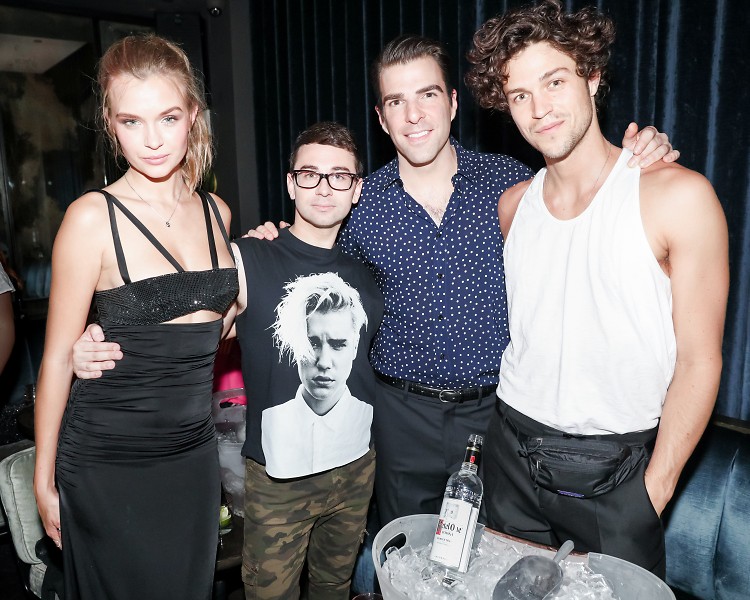
New York City’s Pride weekend celebrations kicked off on Saturday with an A-list rager at Soho hot spot, The Blond. Featuring free flowing Ketel One vodka, rainbow popsicle cocktails, and hot dudes wearing bunny masks, the bash hosted by Erika Jayne and Josephine Skriver was the place to be – and plenty of celebs agreed. Everyone from Christian Siriano and Zachary Quinto to Simon Huck and EJ Johnson came out for the fabulous festivities, where DJs Mike Nouveau and Mazurbate spun throughout the evening, the latter showing off his rainbow-painted locks. Guests grooved under the infamous red disco balls, though the entire place seemed to turn into a dance floor as the night went on. Click through for a look inside one of the wildest Pride parties of the weekend!


Josephine Skriver, Christian Siriano, Zachary Quinto


Simon Huck, Dorian Grinspan


EJ Johnson


Josephine Skriver, Christian Siriano


Josephine Skriver


Kelly Bensimon


Erika Jayne, Christian Siriano


Mazurbate


Written By: Stephanie Maida


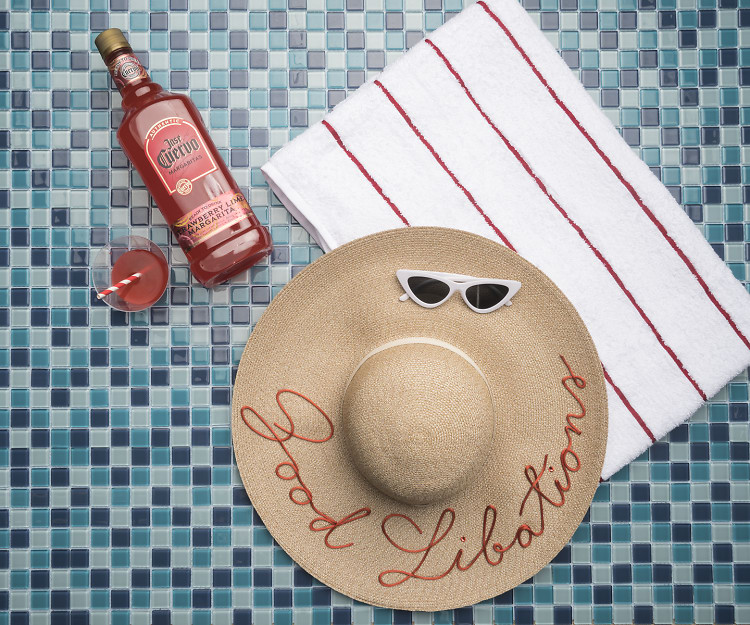
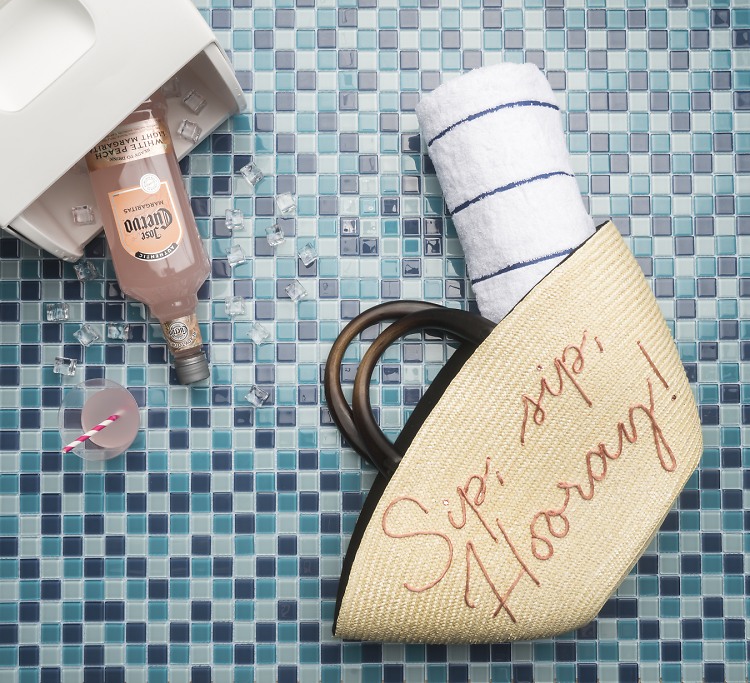
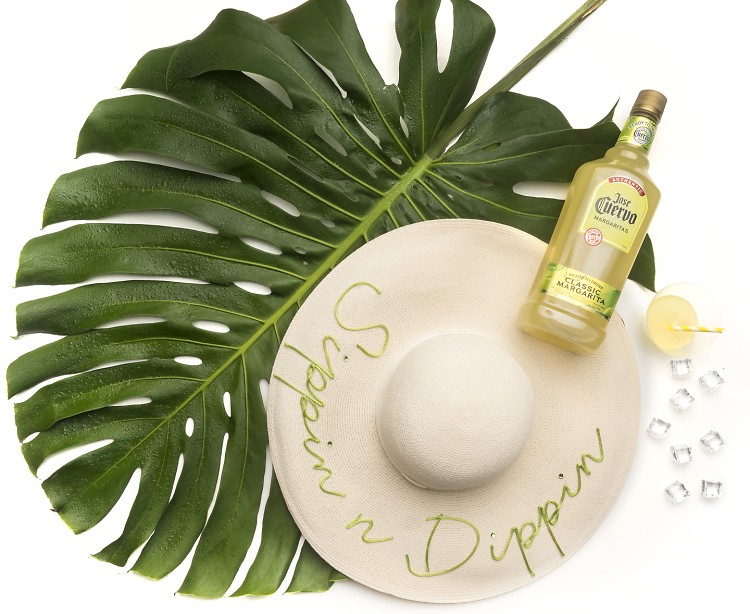
For years designer Eugenia Kim has been the go-to for cheeky summertime accessories, embroidering everything from hats to totes with fun phrases practically made for Instagram. This summer, however, she’s boozing things up by adding some tequila to the mix.

Last week the label debuted a new capsule collection with none other than Jose Cuervo, celebrating with a wild bash at new NYC hot spot Make Believe. A-listers including Ashley Benson came out for a first look at the pieces, which are inspired by Jose Cuervo’s Authentic Margaritas line – colorful, sweet, and ideal for the season.

Boasting sayings like “Yes Way, Jose” and “Good Libations,” these hats and bags are about to become every tequila-lover’s beachy essentials.


Ashley Benson, Eugenia Kim

Ashley Benson, Angel + Dren

 
Written By: Stephanie Maida

Traditional exercise classes often take a linear path, where workouts are focused solely on cardio, resistance training, or restorative stretching. However, fitness moguls have been stressing the importance of hybrid workouts, switching up your routine for maximum results. Here is your guide to the best fitness classes in NYC that’ll burn those calories and tone those muscles (and relieve any guilt about ordering that second martini).


Bari Studio

The ultimate hybrid class in NYC, Bari gets you bouncing, dancing, toning, and sweating from a chic boutique studio in Tribeca. Offering a range of classes, from sculpt to cardio, and even a self-proclaimed “hybrid” class that combines the best Bari has to offer, the It Girl workout makes use of mini trampolines, resistance bands from the ceiling, hand weights and more to ensure a long and lean physique. The best part? You’ll never be bored.

Bari Studio, 23 Leonard St.


bodē nyc

bodē nyc offers heated yoga sessions with a variety of classes that range from pure hatha yoga to their “Hot HIIT” 60 minute training session, which combines yoga and High Intensity Interval Training. Movements are low impact but are designed to tone muscles by lengthening and strengthening the body, just like a traditional yoga flow.

bodē nyc, 182 5th Ave.


Box + Flow

Opposites attract here at Box + Flow, where the high intensity of boxing and calmness of yoga intersect. Classes are in a dimly lit room featuring punching bags and neon “Flow” signs. Spend 35-40 minutes working up your heart rate with boxing, then 10-20 minutes in a relaxing sequence toning your muscles and creating space in your body through a yoga flow.

Box + Flow, 55 Bond St.


Beast: Fitness Evolved

Let’s be honest – you love showing off your workouts on Instagram. At Brooklyn’s new Beast: Fitness Evolved, you’ll have plenty of opportunities to snap around the art-filled studio, from a portrait of Biggie to the gorilla-shaped kettlebells. And, of course, the workout is great too. A live DJ spins tunes as you move around the room trying different circuit stations. Their Unleash classes let you go crazy – it’s an energy filled, full-body workout combining toning and cardio, while Core classes focus on flattening your stomach and tightening those abs.

Beast: Fitness Evolved, 458 5th Avenue, Brooklyn


Rumble

Rumble takes boxing to the next level – throwing punches just doesn’t cut it anymore. Founded by fitness enthusiasts, including Noah Neiman, a former Barry’s Bootcamp Trainer, Rumble gives you the workout you need to shed fat and tone muscle. Here, workouts combine boxing with HIIT elements such as weights and floor work for your core.

Rumble, 146 W 23rd St.


Barry’s Bootcamp

Want to burn up to 1,000 calories in a class? Head to Barry’s Bootcamp, the original HIIT fitness studio. Workouts go from the treadmill for a cardio sweat, to the floor, for weights and strength training. Each class is different, so you’re guaranteed a new routine every time you go. And who knows, you may even see a celebrity working out next to you!

Barry’s Bootcamp, Multiple Locations


F45 Training

Newbies and athletes alike flock to F45, a training method developed in Australia and taking over the world. Fusing High-Intensity Interval Training (HIIT), Circuit Training, and Functional Training into one hardcore workout, F45 effectively burns fat and builds muscle. What more can you ask for?

F45 Training, Multiple Locations


Orange Theory Fitness

Orange Theory’s ultra-scientific approach guarantees many calories burned and a great workout sesh, combining running, rowing, and weight training all in 60 minutes. During class, the instructor hooks you up with a heart monitor, tracking your beats per minute and how many calories burned. Goal of the workout? Achieve as many splat points as possible (indicating you’ve gotten your heart rate up past a certain number). Everyone’s burn is displayed on a screen, so it’s great for competitive types.

Orange Theory Fitness, Multiple Locations


Warrior Fitness

There’s no playing around at Warrior Fitness – step inside the studio and immediately start training like a Marine. From completing obstacle courses, to circuit training, to calisthenics, you will be sure to leave class sore, sweaty, and fulfilled. Not to mention ready to kick some ass.

Warriror Fitness, 240 Wythe Ave.


Aqua

Spinning, meet swimming (kinda). At Aqua, spin bikes are located in a small pool for the added resistance and a boosted heart rate, offering a low impact and cardio centric workout.

Aqua Studio NY, 78 Franklin Street.


Shaktibarre

Looking for something a little less heated, and a little more calming with a greater focus on toning? Come to Shaktibarre, a yoga-barre fusion class that combines element of isometric ballet-bare movements with vinyasa and kundalini yoga flows, perfect for a restorative start to your day.

Shaktibarre, 449 Keap St, Brooklyn NY.


Written By: Stella Stephanopoulos


Whenever I’m torn over whether a thank you note is *really* necessary, Kris Humphries’ voice rings in my ears: “You don’t want me to resent you, do you?” He was a total psycho, but his caveman voice is motivating. If you’re a civilized human being then you have many occasions to send correspondence: thank you notes for favors called in, gifts received, vacation homes stayed in. Also: birthdays, anniversaries, and the disingenuous card you have to write when you leave a job thanking your boss for ‘opportunities’.

Don’t go for the Rifle Paper cards – they’re more ubiquitous than Tumi carry-ons at a consulting firm. You don’t want your recipient to think you have the taste of the masses, right? If you take the worthwhile effort to patronize one of the following paperies, you’ll have no trouble finding a non-basic, extremely apposite card for whoever you’re writing.


Goods for the Study

Part of the McNally Jackson family, Goods for the Study is across the street from Loring Place. Perfect when you want to grab a hand pressed card before eating fried vegetables masquerading as health. Mercifully spare on the ‘yasss queen’ greeting cards, Goods for the Study is the best place to go if you’re shopping for a man. They have a weirdly large selection of cards for architects.

Goods for the Study, 50 W 8th Street


Pink Olive

Pink Olive is adorable in a Zooey Deschanel way (so some of you may hate it already). Everything is cute and nothing hurts. The vibe is succulents and enamel pins. It’s the best place to go if you’re looking for a ‘ladies supporting ladies’ type card for your friend who considers social justice a hobby (MLK turns over in his grave). Also good if you need a card for someone who has a baby.

Pink Olive, 30 Charles Street


Greenwich Letter Press

You know when you had birthday parties as a kid and there was always that one great friend who brought you a gift and attached to that gift was another smaller gift? This store sells those secondary gifts. Pencils that look like chopsticks. Sticky notes that look like a stick of butter. Greenwich Letterpress has a generous selection of political satire themed items and cards that reference CluelessSex and the City, and Mean Girls. If the store were a person it’d be the sort who takes great pains to be relatable and likens everything to pop culture references.

Greenwich Letterpress, 15 Christopher Street


Paper Presentation

What Paper Presentation lacks in personality it makes up for in selection. One of the only paperies with high ceilings, it sells everything stationery ranging from office-formal to the whimsy touted at smaller stores. You do need to possess some vision because the sheer quantity of inventory is overwhelming and the presentation is not particularly inspired. They carry balloons, candles, and decorations for those ill-conceived occasions when you’re in charge of making a walk-up look festive.

Paper Presentation, 23 West 18th Street


Domus

Though not a paperie exclusively, Domus has a large selection of stationery. It’s the perfect place to shop for your earth-loving, vegan pilates instructor – the one who swears by her rose quartz facial roller and reads her horoscope in earnest. Maybe she helped you lose that seemingly unlosable five pounds and thusly deserves something handcrafted by a foreign artisan. Berber pillow anyone? Good karma free with all purchases.

Domus, 413 West 44th St


Written By: Sanibel Chai