New York • Paris • London • Palm Beach • Hudson Valley

Posts Tagged ‘Michelle-Marie Heinemann’

Coffee is increasingly earning scientists’ approval. Studies continue to suggest that the beverage may have some beneficial effects on health.

In the latest analysis, published in the BMJ, researchers scanned nearly 220 studies on coffee and found that overall, coffee drinkers may enjoy more health benefits than people who don’t drink the brew.

The scientists, led by Robin Poole from the University of Southampton in the UK, learned that people who drank coffee were 17% less likely to die early during the study period from any cause, 19% less likely to die of heart disease and 18% less likely to develop cancer, compared to people who did not drink coffee.

Image result for good looking coffee

Other recent studies have linked coffee drinking to lower rates of heart disease, early death and diseases like liver cirrhosis, type 2 diabetes and even neurological conditions like Parkinson’s and Alzheimer’s disease. Poole’s group found that the strongest benefit occurred among people who drank around three cups of coffee a day.

“I think now we can be reasonably reassured that overall, coffee drinking is a safe habit,” says Dr. Eliseo Guallar, professor of epidemiology and medicine at Johns Hopkins Bloomberg School of Public Health, who wrote an editorial accompanying the study.

Other studies have tried to tease apart which ingredients in coffee contribute to its health benefits. Those might include its antioxidants, which can combat cancer, and anti-inflammatory compounds, which can reduce the risk of chronic diseases such as heart conditions and even neurodegenerative disorders like Alzheimer’s, as well as the risk of liver diseases like cirrhosis and cancer.

While they say that the results support moderate coffee drinking as a relatively healthy habit, both Poole and Guallar say the findings don’t go far enough to prompt anyone to change their coffee-drinking habits in the hopes of improving their health. The study did not confirm, for example, that people who do not currently drink coffee should start adding a cup or two a day in order to lower their risk of getting heart disease or any of the other chronic conditions studied. The data also do not support the idea that current coffee drinkers should drink even more coffee to enhance whatever benefits they might be receiving. Too much coffee, the data suggest, starts to bend the benefit curve back down.

The findings should be reassuring for coffee drinkers, as long as they drink in moderation, Poole says. Further studies will hopefully look deeper into the type and amount of coffee that confers the most health benefit.


Try our Old Fashioned Mom Coffee! Click HERE to order now!

Written By: Alice Park

Image result for TIME

The Oprah Winfrey Foundation


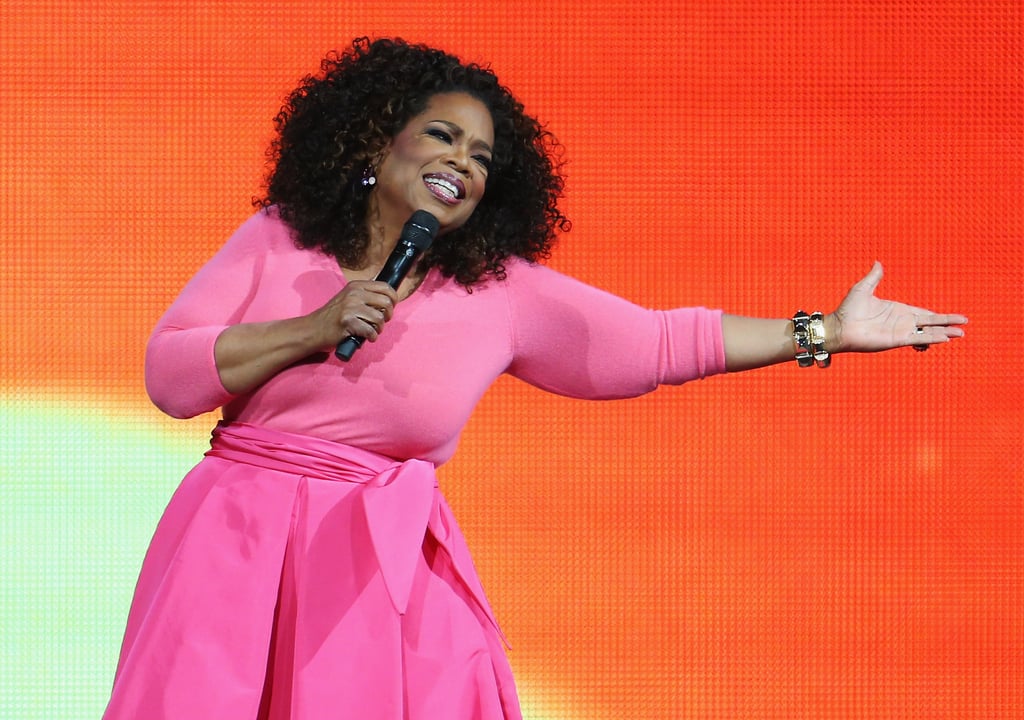
Oprah Winfrey may be the queen of media, an accomplished actress, and a master of motivational speaking, but she is ultimately recognized for her heart of gold. The 64-year-old mogul has made it her mission to help as many people as she can all over the world, not only by donating to various charities, but also by establishing her own foundations and creating programs to help underserved communities. Today, we’re honoring Oprah with a look at her philanthropic work because let’s be honest: we could all learn a few things from her.


The Oprah Winfrey Leadership Academy Foundation

The foundation was established to fund the Oprah Winfrey Leadership Academy For Girls in South Africa in 2007. The school aims to provide students with a better future and “change the face of the nation.”

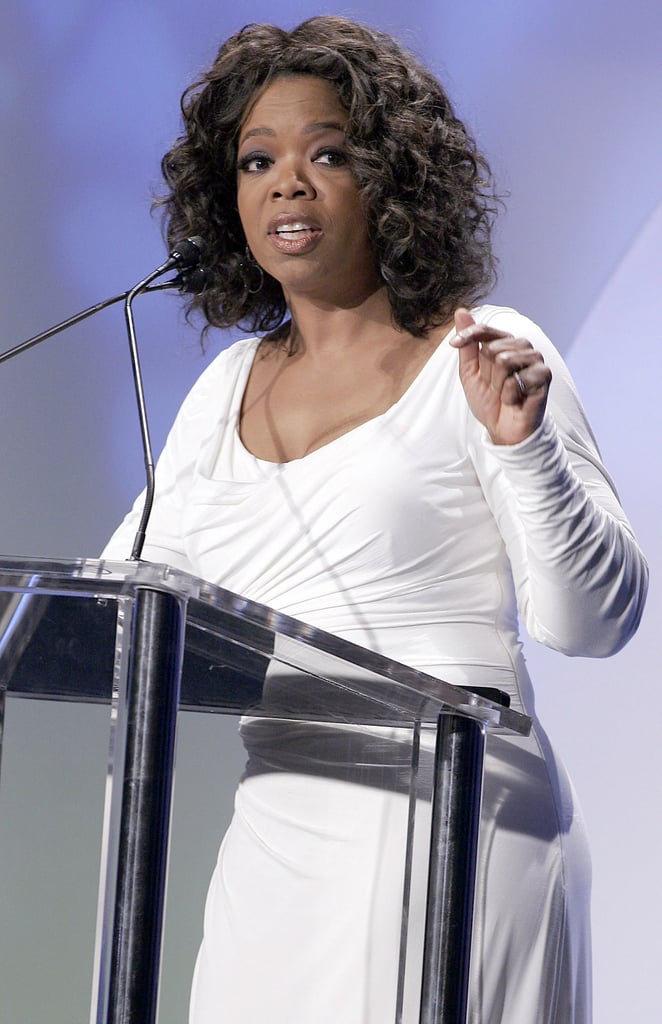
In 2015, Oprah was honored for her work with the charity at Variety‘s Power of Women luncheon. During her speech, Oprah opened up about why she decided to build a school, saying that she wanted to create a school “for leaders that would change the lives of women and [that would] be able to break the cycle of poverty for themselves and their families forever and become a part of the real and true new and free South Africa.”


The Oprah Winfrey Foundation

Oprah exclusively runs this private charity to provide grants for nonprofit organizations of her choosing. These causes include education and programs for women and children.


O Ambassadors

In 2008, Oprah’s former Angel Network and Free the Children teamed up to launch the initiative; its mission is to teach students how they can change the world by becoming ambassadors of hope in their own communities. Through the program, students built a school in Kenya, raised money for new school supplies, and helped make a difference in their communities.


The US Dream Academy

Oprah is one of the organization’s “biggest supporters and champions.” The national program provides after-school mentoring to at-risk youth, and in 2009, Oprah donated $900,000 to the charity.


Written By: Monica Sisavat

Image result for popsugar logo

INDIO, CA - APRIL 14:  Beyonce Knowles performs onstage during 2018 Coachella Valley Music And Arts Festival Weekend 1 at the Empire Polo Field on April 14, 2018 in Indio, California.  (Photo by Larry Busacca/Getty Images for Coachella )


Beyoncé is donating $100,000 to four historically black colleges and universities following her incredible Coachella performance that paid tribute to HBCUs. The artist announced her plans to donate $25,000 each to Tuskegee University, Bethune-Cookman University, Xavier University of Louisiana, and Wilberforce University as part of the newly established Homecoming Scholars Award Program through her BeyGOOD initiative.

“We salute the rich legacy of Historically Black Colleges and Universities,” said Ivy McGregor, director of philanthropy and corporate relations at Parkwood Entertainment, which houses BeyGOOD. “We honor all institutions of higher learning for maintaining culture and creating environments for optimal learning which expands dreams and the seas of possibilities for students.”

One qualified winner from each school will receive $25,000 for the 2018-2019 academic year for study in various fields, including literature, creative arts, African-American studies, science, education, business, communications, social sciences, computer science, and engineering. Scholarship applicants must have a 3.5 GPA or higher, and the universities will choose the winners this Summer.

Not only did Beyoncé’s homecoming-themed Coachella performance delight festival attendees with a wide range of favorites, including “Freedom,” “Crazy in Love,” and “Sorry” (plus a highly anticipated Destiny’s Child reunion), but the two-hour set also spotlighted HBCU traditions like step choreography. Beyoncé made history as the first black female artist to headline Coachella.


Written By: Erin Cullum

Image result for popsugar logo


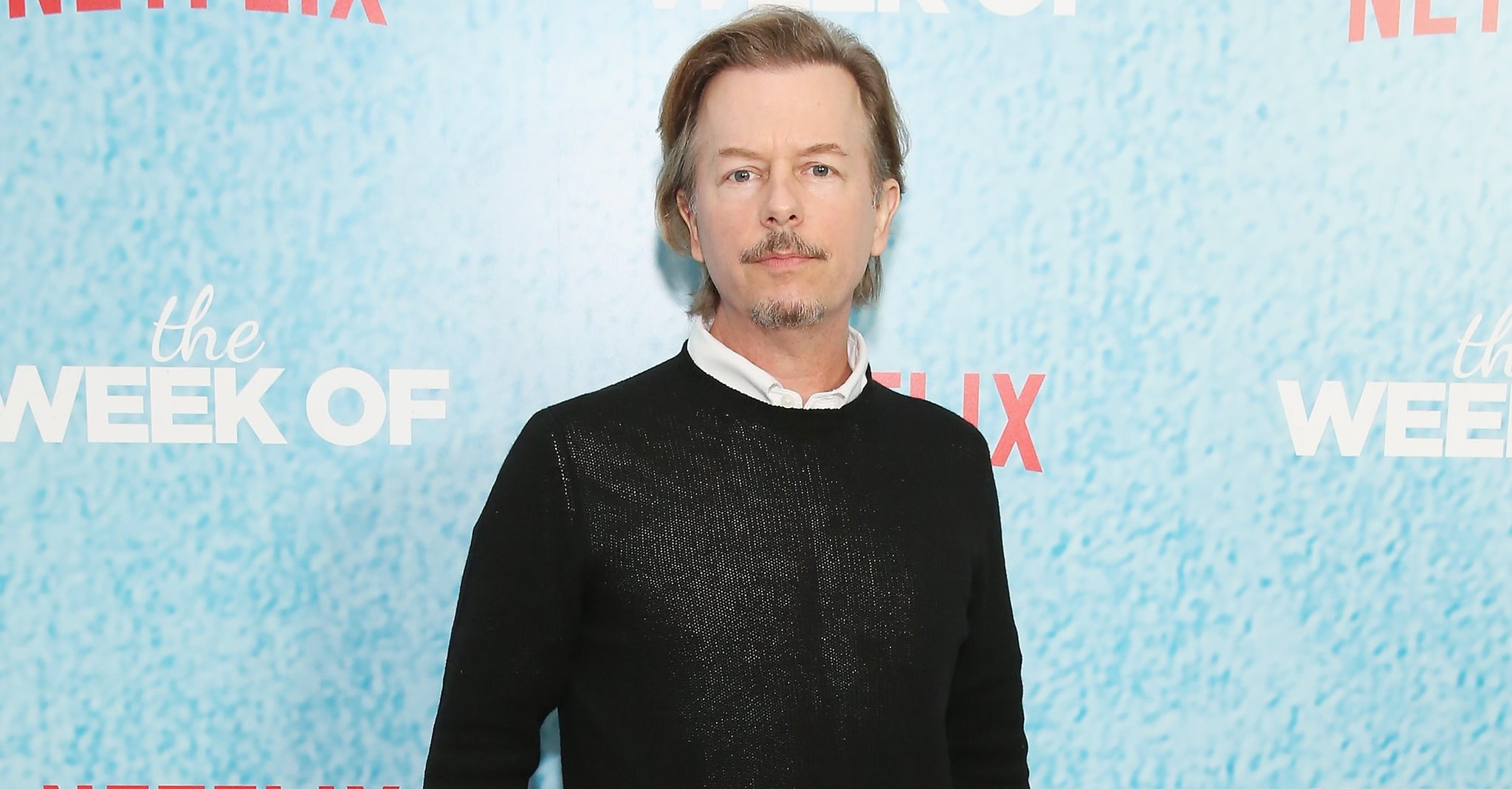
On June 5, the world mourned the loss of fashion designer Kate Spade. Shortly after her death, her brother-in-law David Spade reacted to the news with a heartfelt tribute on Instagram. Now, the 53-year-old actor and comedian is honoring her legacy by donating $100,000 to the National Alliance on Mental Illness, People reports.

“More people suffer from mental health issues than we may realize but no one should ever feel ashamed to reach out for support,” David said in a statement. “If you or anyone you know is in need of help or guidance please contact the national suicide prevention hotline at 800-273-8255 or go to nami.org to learn more and help those who may be in need.”

Kate was reportedly found dead in her apartment after an apparent suicide. According to TMZ, a note from the deceased was found made out to her 13-year-old daughter, Frances Beatrix. Kate and David’s brother, Andy Spade, tied the knot back in 1994, although the couple was separated at the time of her death.

If you or a loved one are in need of any help, the National Suicide Prevention organization has several resources and a 24/7 lifeline at 1-800-273-8255.


Written By: Terry Carter

Image result for popsugar logo


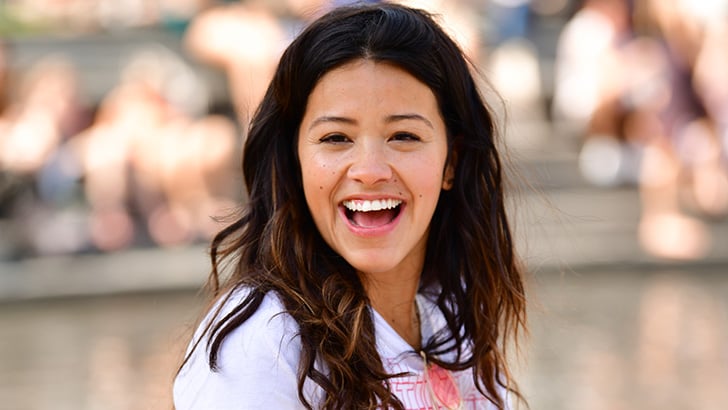
I have had the pleasure of interviewing Gina Rodriguez on multiple occasions throughout my career, and to say she’s one of the sweetest, most caring people you will ever meet is an understatement. Every move the badass star makes is to shed light on different issues and inspire others to take action. That’s why I wasn’t the least bit surprised by her decision to do something special with her allotted 2018 Emmy campaign money for Jane the Virgin from CBS TV Studios.”Our show has always jumped at any opportunity to help do something for the Latinx community. So I asked my show runner, Jennie [Snyder Urman], if we could do something different with the money this year,” she told The Hollywood Reporter.

Gina partnered with Big Brothers Big Sisters of Los Angeles to find the perfect candidate. The result? A Princeton University-bound undocumented high school student who will now have her entire tuition funded thanks to Gina.

“It’s taboo to talk about the money being spent, but it’s the reality. I think sharing this might inspire other people to do something similar. You can desire recognition and, at the same time, decide to not play in the confines of the game as it’s set up,” she said.

The 33-year-old actress, producer, and director previously opened up about the fact that it took her 11 years to pay off her college debt, and now she’s literally paying it forward to a very lucky student!


Written By: Celia Fernandez

Image result for popsugar logo


The migrant children crisis at the US-Mexico border is sparking an outcry from citizens, politicians, and celebrities alike. Now, George Clooney and his wife, Amal, are speaking out. The couple, who welcomed twins Ella and Alexander last year, released a statement to People on Wednesday, saying, “At some point in the future our children will ask us: ‘Is it true, did our country really take babies from their parents and put them in detention centers?’ And when we answer yes, they’ll ask us what we did about it. What we said. Where we stood.”

George and Amal also announced they are donating $100,000 to the Young Center for Immigrant Children’s Rights on behalf of the Clooney Foundation for Justice because “[we] can’t change this administration’s policy but we can help defend the victims of it.” Their latest contribution comes just a few months after their donation of $500,000 to support the survivors of the Parkland school shooting.

Regardless of what you think of the Clooneys, one thing’s for sure: they always put their money where their mouth is.


Written By: Terry Carter

Image result for popsugar logo

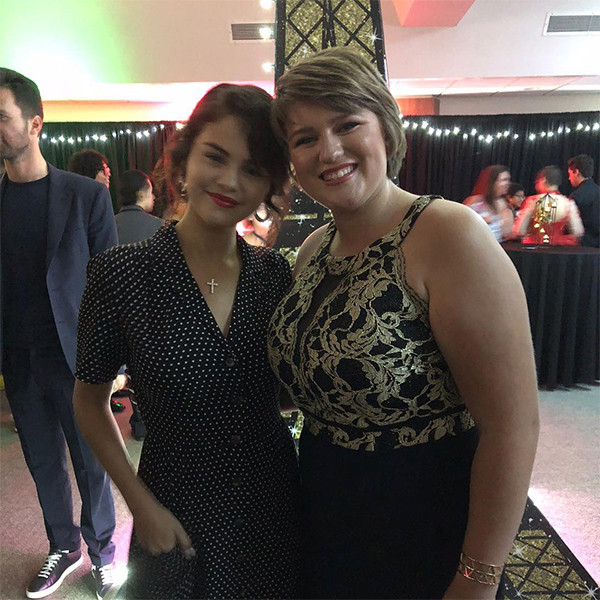
Teens and young adults attending the Children’s Hospital of Orange County’s prom had a few special guests during their annual celebration this year. Selena Gomez, Jack Black, and members of the Grey’s Anatomy cast like Caterina Scorsone, James Pickens Jr., Sarah Drew, and Kevin McKidd met fans during the “Around the World in One Night” themed dance party on June 24. This event gave teens undergoing cancer treatment and those who are post-treatment the opportunity to celebrate prom together while rubbing shoulders with a few of Hollywood’s brightest stars.

Image result for Selena Gomez and the Grey's Anatomy Cast Meet Fans at This Children's Hospital Prom

Prom attendees took photos with the celebrities throughout the night and learned the latest dance moves from Jack, himself. “I just wanted to teach you a couple, because that’s the most important thing at a prom,” the actor told the cheering crowd. After the festivities, the CHOC shared photos of the night on Instagram, and guests left comments thanking the stars for joining in the night. Keep reading to see more snaps, plus a fun video of Jack leading the dance floor.


Written By: Karenna Meredith

Image result for popsugar logo

Most celebrities do some kind of charity work — it’s good public relations — but a few stand out for going the extra mile.

Some like George Clooney, Angelina Jolie, Matt Damon, and Michael J. Fox, have devoted considerable time to using their fame to help groups working on big problems like genocide, poverty, or disease. Others, like director George Lucas and Hollywood icon Kirk Douglas and his wife, Anne, have given tens of millions of dollars to support causes like education, the arts, science, senior care, homelessness, and conditions like dementia.

Here are some other stars who have produced big results for charity but aren’t as widely recognized for their giving:


Alec Baldwin

TODD HEISLER/THE NEW YORK TIMES/REDUX

Best known these days for his impersonation of President Trump on Saturday Night Live,Alec Baldwin has given nearly $17.6 million to charity in the last decade through his foundation, including more than $2.7 million since 1993 to his alma mater, New York University’s Tisch School of the Arts; more than $1.7 million to the East Hampton Library on Long Island; and $1 million to the New York Philharmonic, where he is board member and for which he hosts a weekly radio series.


Leonardo DiCaprio

ALBERTO PIZZOLI/AFP/GETTY IMAGES

Actor Leonardo DiCaprio is a workhorse for environmental causes, raising at least $61 million for more than 65 climate-change, biodiversity, and conservation programs since 1998. Public records show he has donated about $3.2 million of his own money.


Michael Jordan

VCG/GETTY IMAGES

Chicago Bulls basketball legend Michael Jordan pledged $2 million last year to help build trust between communities of color and law-enforcement officers across the country, splitting the gift between the NAACP Legal Defense and Educational Fund and the International Association of Chiefs of Police’s Institute for Community-Police Relations. Other recent donations include $5 million to the National Museum of African American History and Culture and an undisclosed sum to nearly two dozen Chicago charities that help needy children.


Dikembe Mutombo

RODGER BOSCH/AFP/GETTY IMAGES

At 7 feet 2 inches tall, Dikembe Mutombo was a fearsome presence under the basket, blocking more shots in his 18-year pro-basketball career than Kareem Abdul-Jabbar. The NBA Hall of Fame center shows a softer side off the court. He has showered his wealth on people in need in the Democratic Republic of Congo, where he grew up, most notably giving $23 million to build a hospital that opened in 2007. He also gives time and money to help the homeless in Georgia and provides Christmas gifts to a children’s hospital in Atlanta, where he played for four-plus seasons.


Shonda Rhimes

(MARK PETERSON/REDUX

Television writer and producer Shonda Rhimes, whose credits include Scandal and Grey’s Anatomy, pledged $10 million to the National Museum of African American History and Culture. President Obama appointed her to the Board of Trustees of the John F. Kennedy Center of the Performing Arts in 2013.


ROYCE DEGRIE/TAS/GETTY IMAGES FOR TAS

Taylor Swift

At 27, pop superstar Taylor Swift has already established herself as a celebrity of uncommon generosity and dedication to a variety of causes. She pledged $4 million in 2012 to the Country Music Hall of Fame and Museum for an education center and regularly contributes to relief and recovery efforts for survivors of natural disasters. Last year she gave about $1.2 million to charities helping people affected by floods in Louisiana. In previous years she has donated $250,000 to help survivors of a tornado in western Alabama and $100,000 to help victims of a flood in Iowa.


Written By: Maria Di Mento

HGSE students, Julia Cunningham, (from left) Morgan Barraza, and Shane Trujillo

Of nearly 51 million K–12 students in the U.S., about 9 million attend rural schools. Yet despite being one-sixth of the nation’s student body, rural students, and rural education in general, are often overlooked in debates about education policy, specialists say.

Some Harvard-trained educators would like to change that.

During their one-year master’s program at the Graduate School of Education, Morgan Barraza ’18, Shane Trujillo ’18, and Julia Cunningham ’18, bonded over their commitment to the issue, working through the Rural Educators Alliance to foreground hurdles faced by students and teachers in rural settings. The group was co-founded by Cunningham and Carlye Sayler ’18.

“One of the missions of the group is to challenge the perceptions of rural America,” said Cunningham, who taught at an Oglala Lakota Nation school on the Pine Ridge Indian Reservation in South Dakota before enrolling at the Ed School. “Whenever anyone thinks of rural education, the picture that comes to mind for the most part is not of Native American students or black students in the South. It’s usually white Appalachia, and that’s not the whole picture.”

To shed light on the complexity of rural America, the group this spring organized a week of panels on identity, school practices, issues of gender and sexual diversity, and more.

Over the summer, the students will develop a virtual toolkit, with a list of resources, to be sent to Ed School faculty to help them cover rural education issues in their courses. The goal is to ensure that the School remains committed to addressing rural education, said Barraza, who worked as a high school teacher at the Laguna Pueblo Reservation and in Aztec, both in New Mexico.

As Barraza noted, faculty at the Ed School have supported the group’s efforts.

“Rural schools are a lifeblood of education in the country,” said Matt Miller, associate dean for learning and teaching. “As Mara Tieken, doctoral alumna of the Harvard Graduate School of Education and leading thinker on rural education, taught me over the years, we can’t talk about rural education as ‘not urban.’ Scholars and policymakers need to understand rural communities and their educational needs on their own terms.”

Experts say rural students lack the choices and opportunities available to urban students. According to the 2017 Report of the Rural School and Community Trust, more than 25 percent of the country’s public schools are rural, but only 17 percent of state education aid goes to rural districts. The organization listed lack of resources, teacher shortages, and limited childcare and early education programs among the challenges schools face in states such as Mississippi, Arizona, Alabama, South Carolina, South Dakota, Georgia, Nevada, Florida, Oklahoma, and Alaska.

In D.C. gathering, Faust and faculty discuss the importance of equity in learning

The challenges extend to Native American students growing up on reservations or in small towns. During their time at Harvard, Barraza, Trujillo, and a handful of students joined forces to draw attention to education for Native Americans.

A member of the Laguna Pueblo and Salt River Pima tribes, Barraza co-chaired Future Indigenous Educators Resisting Colonial Education, a group founded by Adrienne Keene, Ed.D. ’14. In March, the organization held a series of events highlighting issues that affect Native American communities, from the plight of missing and murdered indigenous women to tribal justice to feminism in indigenous communities.

“I feel a personal obligation,” said Barraza, who plans to teach in the Salt River Pima Maricopa Indian community, a tribe located in the metropolitan area of Phoenix. “Too often, issues regarding contemporary Native American peoples are not addressed, and indigenous and Native American peoples are blocked out of the conversation.”

“We live in a culture where indigenous peoples are seen as historical figures, or if they’re contemporary representations, they’re seen as broken and we need to go and save them,” said Trujillo. “We’re trying to highlight voices that have been lost in the margins.”

Courtney Van Cleve, Ed.L. ’20, who is pursuing a doctorate in education leadership, will take the helm of the Rural Educators Alliance this fall. For Van Cleve, who has spent most of her life in Mississippi schools as a student, teacher, principal, and regional director, it’s the perfect fit.

“Rural education remains at the core of my personal and professional identity,” she said.

Change is overdue, Van Cleve said, partly because of increasingly prominent divides between rural and urban America, but mostly because rural students deserve the same opportunities as their urban peers.

“There is a real opportunity for systems across contexts to learn from each other in shaping the future of education reform,” she said.


Written By: Liz Mineo

Image result for the harvard gazette logo

Star Velasquez, 9, a second grader at the Gardner Pilot Academy, can’t contain her excitement when the super-thin film coating on a piece of paper reflects a rainbow of color.


The experiment showcased the properties of super-thin films—nail polish dropped onto the top of the water spread into a nanometer-thick film that creates iridescent, rainbow colors on the paper.

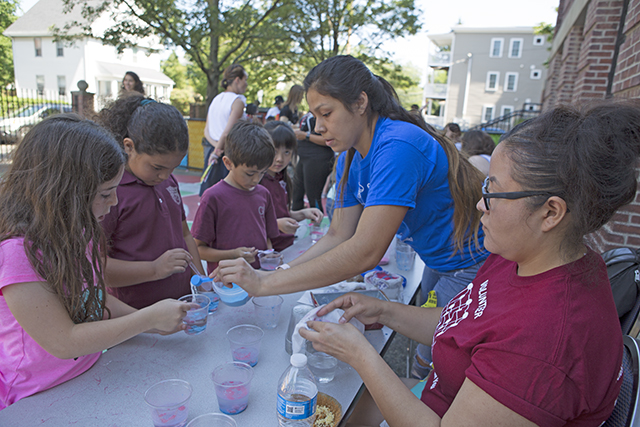
Velasquez, a second grader at the Gardner Pilot Academy in Boston’s Allston neighborhood, and her peers learned about materials science during an outreach program conducted by students in the Research Experience for Undergraduates (REU) program at the Harvard John A. Paulson School of Engineering and Applied Sciences (SEAS).

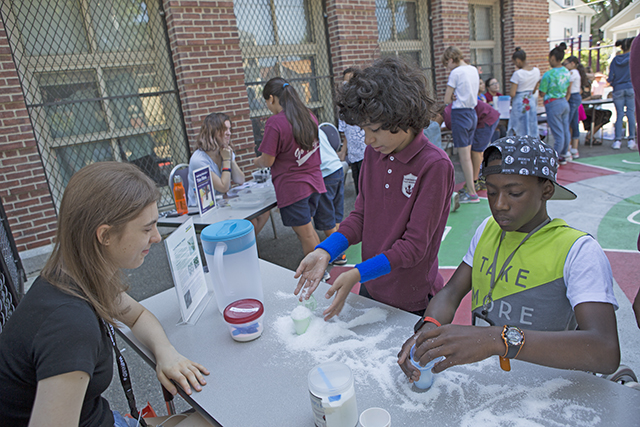
In another hands-on experiment, elementary school children mixed blue and pink sand in water to learn about hydrophobic materials. The blue sand collected at the bottom of the water-filled beaker, while the pink sand, which was hydrophobic, reacted by clumping together when it hit the water to form a protective barrier.

Second grader Raul Galdamez, 8, said he had never seen anything like the clumping pink sand.

“I enjoy science because you can do experiments and learn new things about the world,” said Galdamez, who hopes to become an astronomer.


REU students Dominique Pablito (left) and Trisheena Kills Pretty Enemy use different colored sand to explain how hydrophobic materials interact with water. (Photo by Adam Zewe/SEAS Communications)

REU students Dominique Pablito (left) and Trisheena Kills Pretty Enemy use different colored sand to explain how hydrophobic materials interact with water. (Photo by Adam Zewe/SEAS Communications)

REU students Trisheena Kills Pretty Enemy and Dominique Pablito explained the scientific reaction as Galdamez and his peers watched the colored sand.

“This is my way of giving back, and it helps inflame my own passion for science,” said Kills Pretty Enemy, a senior majoring in microbiology at Montana State University. “This is all about planting the seed, especially for minorities, because there are not as many of us in the STEM field.”

She and Pablito are spending the summer conducting research on the microbiome in the lab of George Whitesides, Woodford L. and Ann A. Flowers University Professor. They are developing a fast and simple test for bacterial infections using a paper strip, similar to pH paper.

For Pablito, a senior majoring in chemistry and biology at the University of Utah, working with the elementary school children reminded her why she decided to pursue science.

“I like that you don’t always know the end results of your experiments, and you get to be creative in finding a solution,” she said. “With research, it always feels like a huge success when you figure something out, no matter how small it is.”

REU student Cunningham, a sophomore at Princeton University majoring in operations research, oversees a hands-on science experiment demonstrating the properties of hydrogels. (Photo by Adam Zewe/SEAS Communications)

REU student Holly Cunningham, a sophomore at Princeton University majoring in operations research, oversees a hands-on science experiment demonstrating the properties of hydrogels. (Photo by Adam Zewe/SEAS Communications)

The joy of a successful experiment was apparent at a hydrogel demonstration overseen by Holly Cunningham and Jaylen Scott. Kids sprinkled white powder into cups half-filled with water; the powder absorbed the water and rapidly expanded into a puffy, white pile that spilled out the top of the cups, eliciting surprised laughs.

One of these kids might see an REU student who looks like them and think, ‘he’s a scientist, maybe I can be one, too.’

This powder, a polymer called polyacrylate, can absorb up to 1,000 times its weight in water, Cunningham explained to the kids.

“Being able to see science in action like this can help these kids really absorb the material,” said Cunningham, a sophomore at Princeton University majoring in operations research. “I love kids and I love encouraging them to enjoy science. Hopefully, some of them will develop a passion for it like I did when I was their age.”

Cunningham, working in the Privacy Tools Lab of Salil Vadhan, Vicky Joseph Professor of Computer Science and Applied Mathematics, enjoyed taking a break from the technical work to interact with such an excited group.

The outreach event is intended to help REU students increase their science communication skills, a goal of the annual program, explained Kathryn Hollar, Director of Community Engagement and Diversity Outreach at SEAS. The 70 students in this year’s cohort hail from New England, New Mexico, and everywhere in between, bringing a wide range of backgrounds to Harvard.

That diversity is important for the elementary school children to see, she said.

“Even more than teaching them about the materials, this event is an important opportunity for these kids to make a connection with young scientists,” she said. “One of these kids might see an REU student who looks like them and think, ‘he’s a scientist, maybe I can be one, too.’”


Written By: Adam Zewe

Image result for the harvard gazette logo