New York Paris London Palm Beach Hudson Valley

Posts Tagged ‘Old Fashioned Mom Real Estate’

graphic of brain


A study shows that both mindful meditation and the relaxation response provide benefits, however, the mindfulness program resulted in further improvements in measures such as self-compassion and rumination.

A variety of meditation-based programs have been developed in recent years to reduce stress and medical symptoms and to promote wellness. One lingering question is to what extent these programs are similar or different. In a study published in the June issue of Psychosomatic Medicine, a team led by Massachusetts General Hospital (MGH) researchers, in collaboration with members of the two leading mind-body stress-reduction programs, documents the different effects these mind-body practices have in the brain.

There are two widely used meditation-based stress-reduction courses. One is based on “The Relaxation Response” — first described by Herbert Benson, director emeritus of the MGH-based Benson-Henry Institute for Mind Body Medicine — which focuses on eliciting a physiologic state of deep rest, the opposite of the “fight or flight” stress response. The other is Mindfulness-Based Stress Reduction, developed by Jon Kabat-Zinn of the University of Massachusetts Medical School, which emphasizes a particular, nonjudgmental attitude termed “mindfulness” as key to stress reduction. Although both interventions are based on meditation, the scientific philosophies and meditative traditions upon which each is founded are different, and these differences are reflected in the instructions and exercises they teach.

“If the hypotheses proposed by the programs’ creators are in fact correct, they imply that these programs promote wellness through different mechanisms of action,” says Sara Lazar of the MGH Psychiatric Neuroscience Research Program, senior author of the current report and assistant professor of psychology at Harvard Medical School. “Such a finding would suggest that these programs could potentially have different effects on disease.”

To investigate that possibility, healthy adults with high levels of stress were randomized to two eight-week programs. Eighteen completed the relaxation-response program, and 16 completed the mindfulness program. Both programs successfully decreased stress and increased mindfulness in participants. However, the mindfulness program resulted in further improvements in measures such as self-compassion and rumination, clearly indicating that the programs are not the same, Lazar says.

To further understand the similarities and differences between the programs, the team measured brain activity during a meditation technique common to both programs — a body scan, in which attention is moved sequentially throughout the body to develop bodily awareness. While the relaxation-response program instructs participants to deliberately relax each body area as they become aware of it, the mindfulness program just emphasizes mindful awareness and acceptance “without any attempt to change anything.”

Lead author Gunes Sevinc, a research fellow in Lazar’s laboratory says, “By directly comparing the body-scan meditations, which differed only in cognitive strategy, we were able to identify the brain regions that are involved in mediating the common and differential strategies employed by each intervention

Meditation study shows changes associated with awareness, stress

The results showed that the strength of neural interaction between brain regions associated with present-moment awareness and bodily attention increased during both types of body-scan meditation. But each program also showed unique patterns of brain activity, in line with the different theoretical orientation of each program. The relaxation-response body scan strengthened coupling between neural regions commonly associated with deliberate control, including the inferior frontal gyrus and supplementary motor areas. Conversely, the mindfulness body scan strengthened coupling between neural regions associated with sensory awareness and perception, including the insula and the pregenual anterior cingulate.

“These findings indicate that the programs are working through different neural mechanisms,” says Sevinc. “The relaxation-response program is working more through deliberate control mechanisms, while the mindfulness program is working more through sensory-awareness mechanisms. It is somewhat analogous to weight training versus aerobic exercise — both are beneficial, but each has its unique mechanism and contribution.”

Norman Farb of the University of Toronto Department of Psychology, who was not part of the study, says, “Professor Lazar’s neuroimaging study helps us to better appreciate how these seemingly similar practices differ in important ways. Both practices seem to promote access to neural representations of the body, but they differ in how such representations are structured. This study is important for beginning to inform the public about key differences between conceptually similar therapeutic approaches, which may in turn allow people to make more skillful decisions about which practice might be right for their personal improvement.”

Lazar notes that future studies will be needed to determine whether these neural and psychological differences impact specific diseases in unique ways.


Written By: MGH Public Affairs

Image result for the harvard gazette

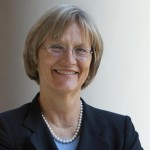
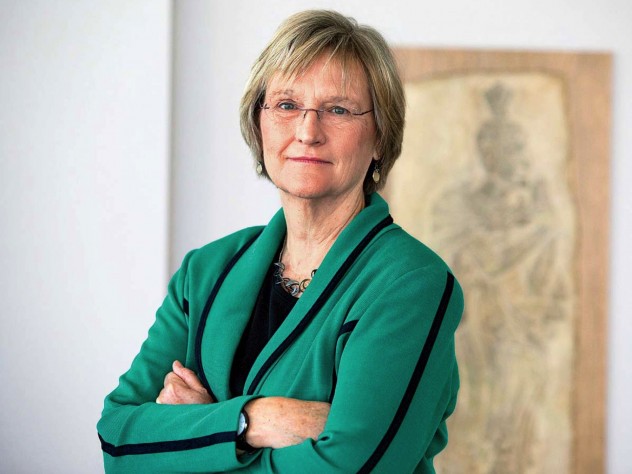
In her early years as president of Harvard University, Drew Faust began to imagine how a more inclusive Harvard — a more connected Harvard — might be developed. Each individual School was distinct and best in class. But how could the University as a collective benefit from the talents and specialties of each individual School? How could the whole be greater than the sum of its diverse and distinctive parts? The answer, it seemed to Faust, was both simple and visionary.


Image result for drew faust


The University, she said, should create new spaces across campus in order to generate greater discussion, collaboration, partnership, learning, and sense of belonging.  These spaces could allow the many social, academic, and cultural communities of the University to come together across disciplines to create exciting, meaningful, and profound work.

“We learn again and again that spaces shape our intellectual and social interactions with each other and with the many visitors who come to Harvard and Cambridge to share in the life of this University. … It’s important that we take a focused look at our historic spaces … to ensure that we are taking full advantage of the ways in which our physical environment can support the kinds of engagement that enhance and sustain the vitality of the Harvard community,” Faust wrote in 2008, when she convened the Committee on Common Spaces at Harvard.

It was chaired by Lizabeth Cohen, dean of the Radcliffe Institute for Advanced Study and Howard Mumford Jones Professor of American Studies, and Mohsen Mostafavi, dean of the Graduate School of Design and the Alexander and Victoria Wiley Professor of Design, who spent a year listening and gathering thoughts and suggestions from students, faculty, and staff — 18 focus groups, including more than 150 individuals and more than 6,000 survey respondents.

The message was “loud, clear and strikingly consistent”: Harvard was short of common spaces. The University community longed for spaces where students could work informally in groups; where faculty, students, and staff from all Schools and disciplines could come together and cross paths. They wanted spaces that “nourished a sense of place.” Spaces for them to unwind, to study, to gather and celebrate with friends.

“As a university committed to interdisciplinary collaboration, we need spaces that can serve as the intellectual and academic crossroads for the campus, inviting the real-time and in-person transactions that support daring and border-crossing work,” the committee said.

Ten years later many of the committee’s early recommendations have been achieved with a series of renovated and new spaces, and by programming and experiments with the goal of enhancing both community and that desired core sense of place.

From the scattering of brightly colored chairs throughout the Yard to the activation of outdoor spaces like the lively plaza outside the Science Center to the Richard A. and Susan F. Smith Campus Center opening in the fall, Faust’s Common Spaces initiative is thriving.

“Early in Drew Faust’s presidency, in January 2008, she asked Mohsen and me to co-chair an ambitious effort to create more spaces on campus where students, faculty, and staff could interact,” said Cohen. “Now, a decade later, Drew is nearing the end of her presidency and I am delighted that we can look forward next fall to opening the final stage of our ambitious plans for more common spaces at Harvard: a much-needed campus center that will encourage greater contact and communication across our community’s diverse constituencies and schools. I anticipate that the Smith Center will have a transformative impact on our centuries-old Harvard campus.”

“Throughout her presidency, Drew Faust has encouraged all of us to think and act as one organic Harvard community and to cross disciplinary boundaries in the pursuit of new knowledge,” said Mostafavi. “Fundamental to such forms of collaboration is the spatial dimension that frames and shapes new opportunities for reimagining our physical environment. In this regard, the Smith Campus Center is both a manifestation of Drew’s vision of One Harvard and the site of innumerable productive encounters, dialogues, and ideas that are yet to come.”

Ke Tang and Kris Snibbe/Harvard file photos

When the initiative began to pick up steam, Faust made it formal, creating the Common Spaces Program in 2013. It hired its first director in 2016, and the group has continued to thoughtfully identify, develop, program, and maintain spaces across the University.

“The Common Spaces program is fortunate in that it has been guided by the visionary work of deans Cohen and Mostafavi and the Committee on Common Spaces developed nearly 10 years ago. Today, we’re building upon that foundation,” said Julie Crites, the program’s director, “working across the campus to foster welcoming and inclusive campus spaces. We are particularly excited by the countless possibilities for the University community within the new Richard A. and Susan F. Smith Campus Center, which will be the first space of its kind at Harvard.”

As planning began in earnest for the center, Cohen and Mostafavi were joined by Danoff Dean of Harvard College Rakesh Khurana. Together they joined forces to explore how a large, centrally located campus community space could continue to deliver on the promise and potential of University common spaces.

“In addition to the College’s providing resources to support students’ social opportunities on campus, we had an opportunity to build an amazing and central space to support their connecting with peers,” said Khurana. “Our focus is on identifying fun and inclusive social venues for our undergraduates — in the Houses, the Yard, and in our plazas. The Smith Center will be a unique space for our students, and I think it will be a gravitational force for many students and student organizations. I am looking forward to its opening.”

When it’s complete, the center will be a striking embodiment of Faust’s original vision: a crossroads for members of the community to gather in a space that belongs to all the Harvard community. A range of comfortable and relaxing gathering spaces and amenities including eight different local and unique food venues, Wi-Fi, and spaces to plug in or unplug, will attract faculty, students, staff, and community members to an abundant and thriving indoor University common space. The first and second floors of the building will include the Moise Y. Safra Welcome Pavilion and Plaza along Massachusetts Avenue, with space for the Harvard community and visitors to mingle, buy tickets to University events, join tours of campus, and take in the views onto Harvard Square with a coffee from locally owned Pavement Coffee. Interactive screens will highlight upcoming events across the University’s Schools, museums, libraries, theaters, institutes, and centers, so that both the Harvard community and campus visitors can see what is happening on or coming to campus.

The building and adjoining plazas will be home to double the number of chess tables as were available before, half of them indoors for year-round play. Members of both the Harvard and Cambridge communities provided input into the design of the plaza overlooking Massachusetts Avenue and of the other areas around the building’s exterior.

The first floor will strengthen the historical arcade space designed by the building’s original architect and Dean of the Graduate School of Design from 1953 to 1969 Josep Lluís Sert, replete with six large-scale 18-foot-tall vertical gardens and home to three distinct food venues (Bon Me, Swiss Bakers, and Whole Heart Provisions), along with an enclosed vitrine garden featuring seasonal plantings surrounded by benches and cafe seating. With its significantly increased exposure to nature and natural light, the space promotes healthy and more sustainable lifestyles.

The main floor of the Campus Center is complete with a hallmark new space, Harvard Commons, by day a large community living room home to lunchtime concerts and conversation and by evening transformed into a program space that will feature talks, lectures, and performances by Harvard students, faculty, and staff. The center also will house flexible meeting and multipurpose spaces for students, faculty, and staff meetings, events, and University activities. The Undergraduate and Graduate councils will have offices in the center.

“I am unbelievably excited for the opening of the Smith Campus Center in the fall, and the opportunities it presents for all students. The Undergraduate Council got the opportunity to tour the space recently, and I was blown away by the thought put in, especially from the students who had dreamed of this several years ago. … I really believe the center will have a huge positive effect on campus,” said Catherine Zhang ’19, Undergraduate Council president.

“After seeing the sketches and taking part in city zoning board meetings, it was exciting and inspiring to finally see the new Smith Campus Center renovations,” said Kevin Tian, Graduate Council president. “It is refreshing to imagine, in this place uniquely made for the Harvard community, how students could come together to make spaces for inclusion and belonging. The Harvard Graduate Council hopes to use some of this space as a cornerstone for University-wide events.”

The 10th (and top) floor will offer sweeping views of the Charles River, the Allston campus, and Harvard Yard. It will feature another food venue, and additional common lounges for Harvard affiliates and their guests, in addition to a conference and private event space for up to 400 people overlooking Massachusetts Avenue with a beautiful view across historic Harvard Yard.

In Faust’s recent letter to the Harvard community concerning the findings of the Report of the Task Force on Inclusion and Belonging, she wrote that the new Campus Center will offer a unique opportunity “to embody a number of the task force recommendations in its identity from the outset.” Convening spaces in the Smith Campus Center have been designated as locations for various programs related to issues of inclusion and belonging, including sessions on “civil disagreement” to be convened by Professor Danielle Allen, task force co-chair and director of the Edmond J. Safra Center for Ethics.  The Smith Center will also serve as an information hub that will help students, faculty, and staff experience different areas of campus.

“The Smith Campus Center is going to be a brilliant centerpiece for our campus and an exciting crossroads for our entire community. I am looking forward to seeing the finished spaces when the ribbon is cut this fall. So many people have worked to make the project possible, and I am especially grateful to Richard Smith and the late Susan Smith for their vision and generosity. They understood that they were helping to create a place of extraordinary possibility for students, faculty, and staff — and we will see it come to life in just a few short months,” said Faust.

“While Harvard is to some degree a set of productive discrete domains, its communal characteristics, including shared purposes, cross-disciplinary endeavors, and common physical spaces make it one university,” the Committee on Common Spaces report said 10 years ago. “By developing its common spaces, Harvard will lose none of its traditional character. It will become more essentially itself.”

As her tenure as Harvard’s 28th president ends, Faust leaves a campus more connected than ever. And with the proliferation of so many common spaces, more possibilities for even greater connections.


Written By: Brigid O’Rourke

Image result for the harvard gazette

Robin Bernstein, Lawrence Bobo, George Lauder, Yukio Lippit, and Amy Wagers have been named Harvard College Professors.


Five faculty members across a wide range of disciplines have been named Harvard College Professors.

Edgerley Family Dean of the Faculty of Arts and Sciences Michael D. Smith announced the honor for Robin Bernstein, Dillon Professor of American History and professor of African and African American studies and of studies of women, gender, and sexuality; Lawrence Bobo, W.E.B. Du Bois Professor of the Social Sciences; George Lauder, professor of biology and Henry Bryant Bigelow Professor of Ichthyology; Yukio Lippit, professor of history of art and architecture, Japanese art; and Amy Wagers, Forst Family Professor of Stem Cell and Regenerative Biology.

“These faculty members bring extraordinary passion and dedication to their work, and I am delighted to announce these appointments,” said Smith. “Their commitment to learning and intellectual energy are qualities that I cherish. I am delighted to recognize these outstanding individuals in the FAS for the impact they have had on the lives and education of our students.”

The Harvard College Professorships were launched in 1997 through a gift from John and Frances Loeb. They are five-year appointments that include extra support for research or scholarly activities, as well as a semester of paid leave, or summer salary.

Robin Bernstein. Kris Snibbe/Harvard Staff Photographer.

Robin Bernstein

“Performance is everywhere, it completely surrounds us,” said Bernstein. “Not just in videos, sports, concerts, and television … we perform in our everyday lives, all of us. My goal is for students to understand the complex relationship between race, gender, sexuality, and performance. There is always some sort of relationship, even if it is not straightforward.”

Bernstein was an actor and playwright before shifting to a career as a scholar.

“What I really wanted was to think about U.S. cultural history. I’ve also had a longstanding interest in childhood because you can add persuasiveness to any political argument by claiming it supports children. Ideas about childhood have been crucial to arguments about race since the middle of the 19th century.”

Lawrence D. Bobo . Stephanie Mitchell/Harvard Staff Photographer

Lawrence Bobo

The Civil Rights mission of Martin Luther King Jr. helped lead Bobo toward research and teaching focused on race, politics, and social inequity.

“I grew up under the warming sun of Martin Luther King’s vision and the Civil Rights struggle,” he said. “Too young to directly participate, I was nonetheless galvanized by the struggle, the ideals, and hope of those years for a society freed from the burdens of racism, discrimination, and inequality.”

Bobo specializes in social psychology. Among his popular courses is an undergraduate seminar titled “Race, Racism, and American Politics,” which he will offer again this fall. During spring semester he taught “Introduction to African American Studies” with Alphonse Fletcher University Professor Henry Louis Gates Jr.

George Lauder. Jon Chase/Harvard Staff Photographer

George Lauder

Lauder brings a lifelong passion for marine life to bio-robotics, helping design new systems for underwater exploration.

“I’ve always been interested in ocean life,” he said. “I’m a scuba diver, I like being in the ocean, and I’m also very interested in mechanics and how things work. So this really combines those two areas.”

At the moment, Lauder is focused on learning from fish. “We want to understand how fish swim so efficiently and effectively, with the goal of using that information to design more efficient robot systems.”

Lauder has incorporated plenty of fieldwork in his classes, including visits to the Charles River.

“Students seem to really enjoy the hands-on aspect of my courses, so I try to offer as much of that as I can.”

Yukio Lippit. Kris Snibbe/Harvard Staff Photographer

Yukio Lippit

Lippit has spent two decades studying the history of Japanese art, with a particular focus on links to Zen Buddhism.

“One of the aspects of teaching the history of art that is particularly rewarding is the special role that exhibitions and the study of objects can play in pedagogy,” he said.

Lippit emphasized that students’ work is critical to driving that process.

“Much of what I do is to stage encounters between students and artworks, and then to work with students to move outward in ever-larger concentric circles toward cultural history, to gain insights into the world that made them. What I’ve found is that, increasingly, students are teaching me how to stage these encounters for others. I’ve enjoyed sharing with students how artistic representation can relate to daily living, religious practice, and philosophical inquiry in the most remarkable and seemingly counterintuitive ways.”

Amy Wagers. Jon Chase/Harvard Staff Photographer

Amy Wagers

For Wagers, a career in the Department of Stem Cell Regenerative Biology is not merely a profession; it’s personal.

“I was a grad student studying immunology, and I received a call because I was a match for a bone-marrow transplant,” she said. “I got really interested in the field and decided to make it my focus.”

Wagers is particularly interested in the biology of aging.

“People recover from injury slower as they get older,” she said. “I’m really interested in how blood and skeletal systems change with age, and how we can boost the process of recovering from injuries.”

Going forward, she hopes to share her passion for biology with a wider range of students.

“I would love to introduce a general education course for students who are not concentrating in biosciences, but have an appreciation for it and would like to advance their understanding of it.”


Written By: Aaron Goldman

Image result for the harvard gazette

Australian Bogong moth


What if you had to find your way through hundreds of miles of unknown territory with only your eyes and a simple compass to guide you? That’s what the Australian Bogong moth does in its annual migration, flying over 600 miles (roughly 30 million times its body length) to seek a haven from summer heat in the cool caves of the Australian Alps.

An international team of researchers announced in the journal Current Biology that Bogong moths rely on a magnetic sense as well as vision to steer its flight path. This makes them the first nocturnal insect we know of that can sense the Earth’s magnetic field — and maybe use it to guide their seasonal odyssey, joining a sophisticated club of birds, sea turtles, and fish.

Move Over, Monarchs

Several moth varieties fly long distances during their migrations, but Bogong moths are the only insect other than Monarch butterflies who travel from a broad geographical area to gather in a specific spot. For the flashy Monarchs, that’s a warm winter getaway in Mexico called the Monarch Butterfly Biosphere Reserve, a UNESCO World Heritage Site and popular tourist destination. For the humble Bogongs, it’s a summer home in a remote set of caves in the Australian Alps.

“This particular species is interesting because we know exactly where they’re going,” says David Dreyer, a research fellow at the University of Lund, Sweden with expertise in neuroethology — the study of animal brains and behavior. He and Eric Warrant, a professor and neuroethologist also at the University of Lund, conducted much of the study.

Knowing the moths’ migration direction was key to the experimental design. When Dreyer and the team captured moths along their migration routes, they could be sure of which way the moths were headed — south toward the Australian Alps in the spring, north in the fall. If the moths were using a magnetic sense to navigate, captured moths in an artificial setup might similarly prefer to fly toward magnetic south or north poles, depending on when they were caught.

A Flight Simulator for Moths

The researchers tested the moths in a specialized flight simulator their colleagues had invented to study the migration of Monarch butterflies. They attached moths to long shafts that let them turn in any horizontal direction and which constantly logged the moths’ flight direction. Around each moth they placed a cylindrical plastic barrier, bare except for a few simple shapes as visual landmarks, and a magnetic coil that mimicked the Earth’s magnetic field.

Finally, to actually get the moths to cooperate and fly in this artificial setup, the researchers projected satellite images of the surrounding countryside onto a surface below the moth, following the direction of movement and simulating a natural moving landscape.

When the researchers kept the visual landmarks and magnetic field direction aligned, the moths consistently flew toward the landmarks, making corrections to their flight path when the landmarks and magnetic field were moved. However, when the researchers turned the magnetic field so it was now at a different angle relative to the visual cues, the moths became disoriented and flew in random directions. When the magnetic field and landmarks were returned to the original setup, the moths once again flew consistently toward the landmarks.

Because the moths became disoriented when the magnetic field didn’t agree with what they were seeing, the researchers conclude that Bogong moths are definitely able to sense magnetic fields, and that they seem to use a combination of magnetic senses and vision to steer their flying. It’s a step further to say that Bogong moths use their magnetic senses in their long-distance migrations, but Dreyer and Warrant think they probably do. After all, why develop magnetic senses without using them?

As a follow-up experiment, Dreyer and Warrant are working on a study to measure electrical signals in the brains of Bogong moths near changing magnetic fields. If they can detect changes in the moths’ brain signals, they’ll be close to finding where their magnetic sensors are located.

Just Checking

One surprise, though, was that changing the magnetic fields didn’t confuse the moths right away. It was usually “a couple of minutes before the moths seem to realize that something has gone horribly wrong,” Warrant says.

To the researchers, this suggests that the moths may navigate primarily with visual cues and that they use their magnetic sense to check that they’re on track once in a while. Warrant says, “It’s almost like they put their compass back in their pocket, if you like, and check the field only every couple of minutes.”

Maybe the moths navigate like many of us do in when we’re in somewhat familiar territory. You’re pretty sure you know how to find your way, but you sneak a look at Google Maps on your phone sometimes, just in case.


Written By: Erika. K Carlson

Galaxy NGC 3344 (Credit: NASA/ESA)


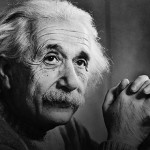
Albert Einstein’s name is synonymous with intelligence, but he’s more than earned his rep. The man revolutionized physics when he was in his 20s and 30s. He came up with a whole new way of understanding reality, not as a fixed grid against which events occur, but as fundamentally intertwined with time and perception. Trying to prove Einstein wrong, somehow, is a perennial goal of budding and experienced physicists alike.

Well, they’ll have to keep trying. A new study in Science today shows that Einstein was so good, even in distant galaxies he’s still right.

Warp Zone

It all has to do with general relativity, Einstein’s theory of gravity, which posits that anything with mass warps the fabric of space time. The bigger the mass, the more the very universe deforms around it. This explains why massive objects attract less massive objects: they’re just following space time’s curves. Light also follows the warps and wefts created by gravity — black holes and galaxies literally bend light around them.

Sometimes, when massive enough objects line up just right, they can actually focus more distant light like a glass lens in a telescope, with the bends in space time acting as a kind of “gravitational lens.”

And while these are useful in studying those ultra-distant objects emitting that warped light, they can also serve as a “laboratory” for testing relativity itself.

Relatively Straightforward

That’s important, because even though scientists have confirmed Einstein’s general relativity within the solar system, that’s still small potatoes compared to the larger universe. As the paper’s authors write, “the long-range nature of gravity is still poorly constrained.” So they found a way to use a nearby gravitational lens around galaxy ESO 325-GOO4 to test out relativity on the galactic scale.

First, the team measured just how much the galaxy was warping spacetime, using Hubble data of the area. This allowed them to derive the galaxy’s mass. Then, they calculated the mass a different way, by observing stellar movement, this time using data from the Very Large Telescope in Chile. If Einstein was right, the two figures should be about the same.

Spoiler alert: Einstein was right. The ratio between the two values was 0.97 ± 0.09, which is pretty darn close to the predicted value of 1.

This is great news not just for Einstein worshipers, but anybody who wants to understand what’s going on in the universe at large scales. The finding rules out many alternative theories of gravity, and confirms that even at large scales general relativity holds true. It also means we have to keep around the notion of dark energy — the still mysterious force propelling the universe to expand faster and faster — since it’s (partly) a consequence of general relativity.


Written By: Bill Andrews


If Alice had been of drinking age when she fell down the rabbit hole, she probably would have found herself in a strange and surreal universe resembling Maison St-Germain, which made its 2nd annual return to NYC last night.

Held at the Battery Gardens, the floral fete felt like a dream. Arms served up cocktails from within picture frames. Golden palm trees grew disco balls rather than coconuts. Interpretive dancers moved like air within a field of light-up flowers. Giant pastel fish circled themselves in a trippy seaglass carousel. Even Alice would say that “wonderland” was an understatement.

St-Germain, the high-end elderflower liqueur, has always had a vintage vibe, from its bottle to its mindful approach to cocktail-making. It’s no wonder then, that when they teamed up with A-list fashion stylist, Kate Young, to create the second iteration of this experiential event, they turned to the lavish bashes of the 1920s – drawing inspiration from F. Scott Fitzergald’s other classic, The Beautiful and Damned.

A pink sunset poured into a massive clear dome housing multiple bars, giant flower installations, a gilded bed worthy of Cleopatra, and a glittering DJ booth where MGMT’s Andrew VanWyngarden was responsible for filling the room with tunes. Well-heeled guests, including Lynn Yaeger, TK Wonder and Cipriana Quann, Timo Weiland, and Carly Cushnie explored the surrounding gardens, which were dotted with bar carts, plush couches, and plenty of Instagrammable surprises. At every turn, it seemed, there was something else to gasp at.

Some major musts of the evening included an artful temporary tattoo studio, as well as a turn on the Battery’s famous SeaGlass Carousel. You know, besides trying every 1920s-esque cocktail on the menu. Crafted by St-Germain Global Ambassador Camille Ralph Vidal, the throwback sips ranged from a classic St-Germain elderflower spritz to an absinthe-splashed Brin Vert.

The night culminated in a breathtaking performance by the Battery Dance Group, who took over the stage for an ethereal number that left attendees (us, especially) with goosebumps.


Timo Weiland


TK Wonder, Cipriana Quann

Andrew VanWyngarden

Brittany Asch

Lynn Yaeger, Lola Rykiel


Carly Cushnie


Camille Ralph Vidal


Written By:  Stephanie Maida


Finally, a taste of Tulum has arrived right in the heart of New York City! Prepare to be transported to a lush cabana with tropical craft cocktails and flavorful food from every cool kid’s favorite hideaway in Mexico.

James Gardner, owner of Gitano, just celebrated the hot spot’s debut in the Big Apple with an A-list opening bash coinciding with the summer solstice. Chloe Sevigny, Leigh Lezark, Alex Pettyfer, and more came out to toast the concrete jungle oasis, located in chic downtown hood Hudson Square. Contemporary Mexican cuisine (think: grilled avocado with almonds, ceviche verde with lychees) and thirst-quenching cocktails, such as the Jungle Fever and Gitano Margarita, greeted guests.

Taking over a 24,000-square-foot lot space, the NYC outpost boasts an ultra-tropical vibe, with rich greenery surrounding the bar, rustic beachy furniture, and a giant, wood-burning oven taking center stage. While you won’t actually find a beach at this location, the outdoor space is also set to house a cafe, CALÓ retail concept, curated art platform, meditation space, reflecting pool and educational urban farm. Click through for a look inside!

Gitano, 76 Varick St.


Written By: Stella Stephanopoulos


Over the weekend, the First Daughter joined her crew of New York socialites in celebrating the LGBTQ+ community in NYC, donning colorful sequins and plenty of glitter.

While she remained quiet on her own social media accounts, Tiff’s fashion designer bestie Andrew Warren snapped pics of her accompanying him everywhere from Soho House to the Top of the Standard, where they raged alongside the likes of EJ Johnson.

Surprising? Not really. This isn’t the first time Tiffany’s personal views seemed to clash with that of her father’s (or at least his party’s) – remember when she ‘liked’ Instagram photos of the March For Our Lives? Maybe someone should let her into these policy meetings…


Image result for tiffany trump celebrates pride


Written By: Stephanie Maida


You may have a whole drawer in your kitchen dedicated to wine stoppers, but let’s be honest – once you pop, you can’t stop. You know it, we know it, and the guy at your local liquor store knows it. So rather than face the shame of emptying out an entire bottle of bubbly in one sitting, just sit back, relax, and drink one glass!

One glass that happens to hold a bottle’s worth of booze, that is.

Of all of Amazon’s random gems, this giant champagne and/or prosecco flute is a serious game-changer. The 25-oz glass is almost a foot tall, with a diameter of 3.5 inches – i.e. the perfect size for celebrations (or quiet nights in with Netflix and Seamless – we don’t judge).

The best part? This jumbo-flute is only $12.99. Dangerous, yes, but also the perfect gift for bachelorettes, New Year’s hosts, and just about anyone who exists in the year 2018. An XXL toast to that!


Written By: Stephanie Maida


Twenty thousand people are anxiously waiting to access this fashion platform.

Villageluxe, luxury fashion’s version of Airbnb, allows invite-only Luxers to borrow and lend pieces in their closet to fellow New Yorkers. It is redefining how people shop, and we couldn’t be more on board.

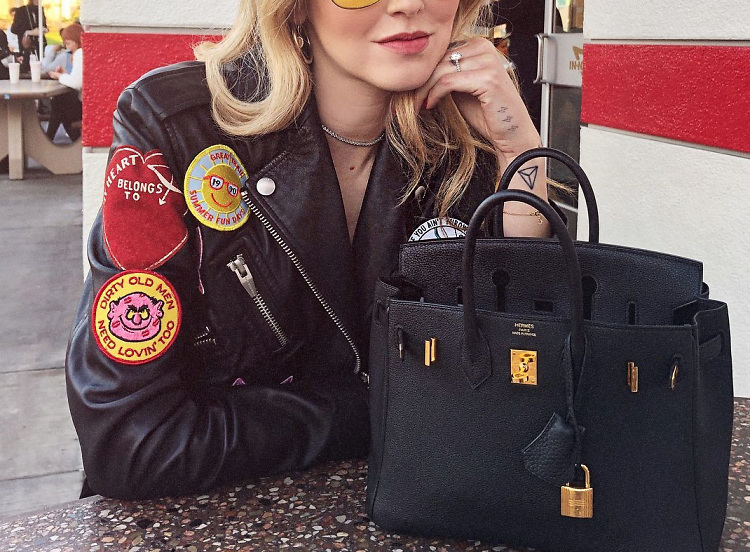
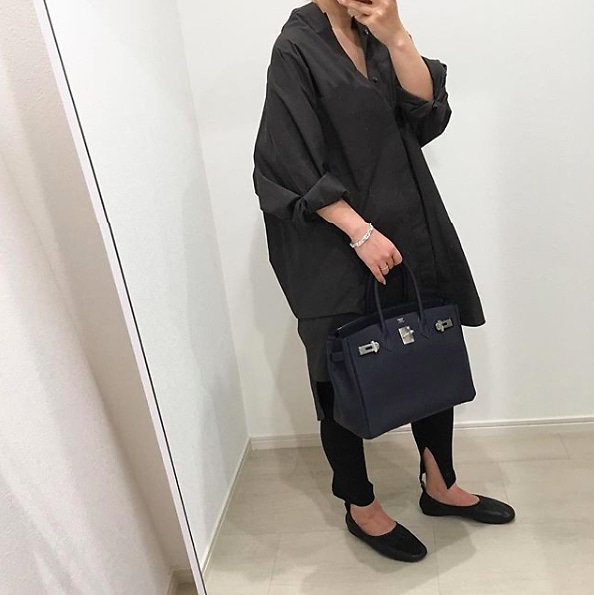
Cocktail night with the girls? Borrow an Alexander McQueen dress from the chic fashion editor down the street. Want to feel like Carrie Bradshaw and live out your Sex and the Cityfantasy? Borrow a pair of Manolo Blahnik heels and a vintage Chanel bag. And yes, you can claim a Hermes Birkin bag as your own for only $250 per week. With over $10 million in inventory listed, we’re pretty sure you can find some pieces that strike your fancy.

“Godmother of luxury e-commerce” Carmen Busquet (early investor in Net-a-Porter, Moda Operandi, Business of Fashion, and Farfetch) recently put $2 million toward the website and app, giving it the ultimate stamp of approval for future greatness.

We’ve chosen the best handbags New York closets have to offer at the moment. AND, Guest of a Guest has gotten an exclusive invite code for you to skip the waitlist. Because that’s how we do things around here. Enter summer18 on villageluxe.com for insider access. Thank us later.


Hermes Birkin Bag

According to its profile, this Birkin just had a trip to the spa and is feeling brand new. The 40CM Ebene Birkin in Togo Leather retails for $13,000, but can be borrowed for $250.

Carry this baby to your next Hamptons weekend for ensured glances of pure envy.

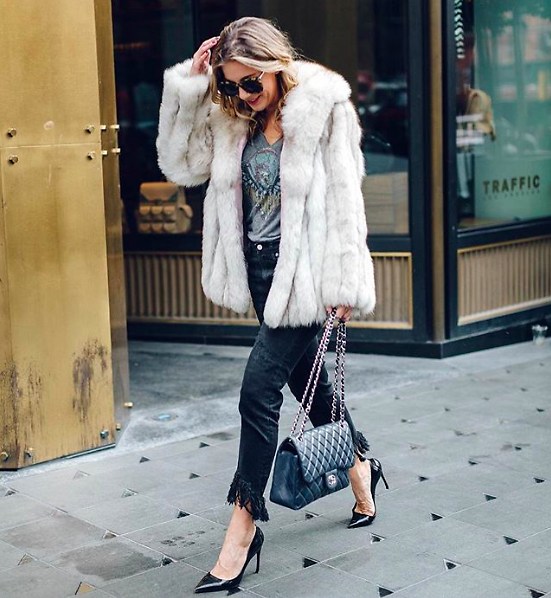
Naked Chain Chanel Bag

Managing Editor at The Zoe Report, Lauren Carusoborrowed this gorgeous Naked Chain Chanel bag on villageluxe.

Here she paired it with a coat and boots, but it could easily go with a sundress and espadrilles.

Oh yeah, and while this bag retails for $2,000, you can borrow it for $40. STEAL.

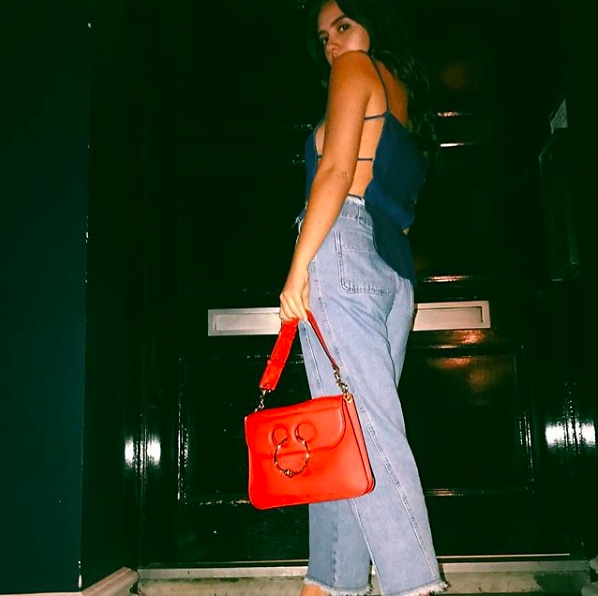
J.W. Anderson Pierce Bag

Founder of Friend of a Friend and actual friend to your favorite super models, Olivia Perez is both a breath of fresh air and a quiet style star.

She plucked this J.W. Anderson bag (retail: $1700, borrow: $175) from the villageluxe platform, and it has never looked better.

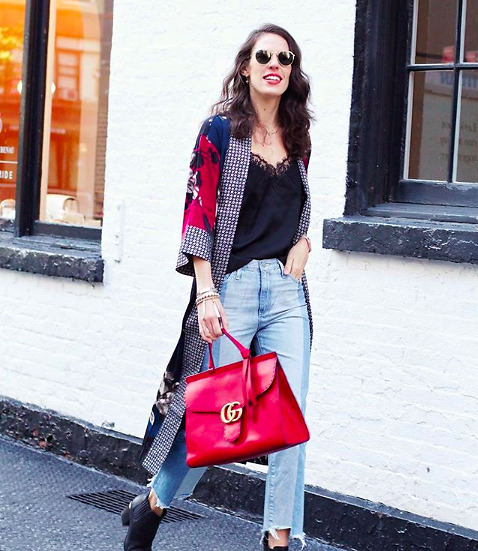
Gucci Marmont

Cool girl and accessories aficionado Emily Kammeyer clutched this show-stopping red Gucci tote for a mere $200, a fraction of the retail price of $2,500. Steal a bit of her street style and borrow that bag.

Chanel Quilted Flap Bag

Ashley Nelson carries the most classic and iconic handbag: a quilted black Chanel Flap Bag. Normal retail: $4,600. Villageluxe borrow: $95.

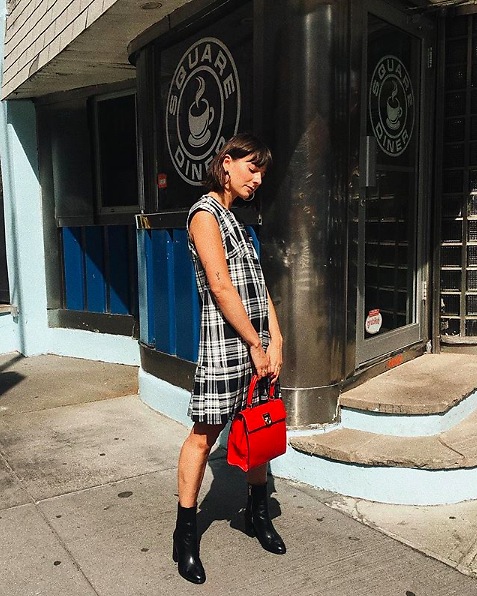
Vintage Celine

It Girl Alyssa Coscarelli of @alyssainthecity carried this little, red vintage number from Celine – a true testament to the special nature of Villageluxe. Though the sticker price is $2,000, borrowing will only run you $50. Bargain.


Written By: guestofaguest