New York Paris London Palm Beach Hudson Valley

Posts Tagged ‘Old Fashioned Mom Hotel’

Billionaire scoops up most expensive house in Dallas:

By Jennifer Chininis


10000-Hollow-Way-Walnut-Place-in-Dallas_112208


Tom Hicks, with the help of high-profile listing agent Allie Beth Allman, finally landed a buyer for his Preston Hollow estate: billionaire Andy Beal, founder of Plano-based Beal Bank. Asking price had been $100 million for the 25-acre property.

Candy’s Dirt founder and CultureMap contributor Candy Evans says that Beal had been eyeing the Trammell Crow estate, a historic, 6-acre gem in Highland Park.

Allman sold the home to Hicks and his wife, Cinda, back in 1997, after which they began a multimillion-dollar renovation. The work took nearly three years to complete.
Evans toured the compound back in March 2015, including the 28,000-square-foot main house and 3,347-square-foot guest house. “The approach to the private gates of 10000 Hollow Way Rd. feels more like a drive through the French countryside to a fabulous chateau deep in the heart of the forest. It’s hard to believe this is just seconds from the Dallas North Tollway and less than 10 minutes from downtown,” she wrote.

The estate overlooks a forest of trees and a creek. The property also features meadows, trails, pond, rose and vegetable gardens, greenhouse, two courtyards lined with 16 magnolia trees each, tennis court, and helipad.

“The most expensive sale in Dallas prior to this was closer to $20 million,” Allman told the Dallas Morning News. “It’s my understanding that is the largest sale ever in Texas for a residential property.”


10000-Hollow-Way-garden_110625


10000-Hollow-Way-guest-house-bathroom_105740


10000-Hollow-Way-guest-house-bathroom_105806


10000-Hollow-Way-guest-house-bedroom_105845


10000-Hollow-Way-guest-house-dining-room_105903


10000-Hollow-Way-his-master-closet_110339


10000-Hollow-Way-main-house-conservatory_110043


10000-Hollow-Way-main-house-foyer_110127


10000-Hollow-Way-main-house-kitchen_110405


10000-Hollow-Way-main-house-morning-room_110542


10000-Hollow-Way-main-house-office_110600


10000-Hollow-Way-master-bath_110337


10000-Hollow-Way-wine-room_110804

landscape-1457445838-elle-chanel-hero-05


The invitation read “front row only” and true to its inscription there was only front row seating at today’s fall 2016 Chanel show. To give everyone a front row seat, wooden-backed chairs, like the kind you’d find in an atelier, wrapped the entire length of Paris’ Grand Palais. (Invitations came with maps to help guests navigate the three separate entrances.)

That meant each model took a trip down a catwalk that ran well over a mile. One source tells us the runway added up to 1.6 miles (and that’s not including the finale walk). Thank goodness then that the shoes were incredibly practical: pink tweed wellies, flat knee high-boots, and the tiniest of kitten heels.

Yes, the length of the runway was remarkable. But for Karl Lagerfeld, who usually stages grand, Instagram-worthy themed shows, this show was notable in its simplicity: rows of chairs, beige carpeting, a recreation of a salon show of the past.

Nothing to distract from the clothes—classic tweed suits, sporty parkas, tent-like trenches, flowing frocks with corsetry details—which everyone could see up close from their front row seat. Nothing of course, except the celebrity models (Kendall Jenner, Gigi and Bella Hadid)…

KENDALL JENNER WALKS CHANEL FALL 2016

GIGI HADID WALKS CHANEL FALL 2016

The show was almost sweet in its simplicity, such a departure from the normally flashy Chanel shows.


By: LEAH CHERNIKOFF


costarica_casaramon_06-800x533


Pacific Ocean views, pool parties and more, these 3 unique properties attract Hollywood’s elite time and time again.


You already expect comfort, convenience and chic interiors from a luxury retreat. But here are several properties that go above and beyond to satisfy even your most indulgent whims.

Stone Manor, Malibu, California

Known for its “Red Carpet Treatment” of guests, Stone Manor has a 25-year-long reputation among the elite of Hollywood. It’s been enjoyed by Academy Award winners, revered rock stars and prime-time television producers.  But you don’t have to be a celebrity to feel like one.

losangeles-stonemanor_02“We want people to feel like a star in their own lives,” says Aime Lindsay, the owner. This means vetting the staff and every recommended experience. “A wonderful vacation doesn’t happen by accident, and you won’t get a do-over. It takes a team of people to put together a world-class celebration and vacation.”

We recommend booking Stone Manor for any occasion, but if you’re celebrating something special, tell your concierge and the staff will make it just perfect. Whether you want to have elegant cocktails with a few friends near the waterfall and pool, or you prefer a DJ’d dance party on the lawn looking out toward the Pacific Ocean, no request is too small, or too large. If you can, schedule your stay over the full moon, when the magic of the moonlight reflects off the water for miles.


Villa Contea, Tuscany, Italy

Located in the picturesque Val d’Orcia area of Tuscany, this magnificent country villa is among the rolling hills and vineyards that were the setting for the Oscar winning movie The English Patient and which provided the breathtaking panoramic countryside scenes fromGladiator. This is the kind of retreat that people dream of experiencing all of their lives.  And Villa Contea is devoted to making sure that every detail of that dream comes true.

tuscany_villacontea_10Three acres of manicured lawns, orchards, and groves make a paradise for relaxing travelers. A private chef can be arranged to provide authentic Italian meals made with local produce from Tuscan farm estates, and accompanied by wine from nearby vineyards. Several decadent spas and challenging golf courses are within an hour’s drive, as well as sightseeing opportunities in Montalcino Pitigliano, and Lake Bolsena.

If you go, we recommend asking the concierge to arrange a private, VIP tour of a vineyard in the heart of this world-renowned wine country. Cooking classes and truffle hunts are another great favorite among guests.  Most of all, we recommend seeing as much of the countryside as possible, whether by Vespa, Ferrari, or hot air balloon. Whatever you dream of doing and seeing in the Italian countryside, Villa Contea is the ideal place to make it happen.


Casa Ramon, Playa Dominical, Costa Rica

Surrounded by rich, tropical vegetation along the Pacific coastline of Costa Rica is a home unlike any you’ve ever experienced. Perched on a lush mountainside with vast oceanic views, it is often visited by friendly wildlife including Capuchin monkeys, toucans, parrots, and the occasional sloth. Since its opening Ramon has been a favorite retreat of celebrity guests from around the world. This is the ultimate luxe getaway: plenty to do, but no pressure to do it.

costarica_casaramon_05Casa Ramon is, of course, a luxurious home with every comfort provided. Unique arrangements of fresh tropical flowers are displayed in each room, daily maid service ensures everything remains meticulously clean, and special arrangements can be made to satisfy even the smallest of whims. Whether you are interested in a hot stone massage in the private spa, or an original epicurean adventure with the chef, or even you would like fireworks to celebrate a special occasion, just ask your concierge!

While there is no shortage of adrenaline-pumping activities such as waterfall hikes in the mountains, zipline tours in the rainforest canopy, or horseback rides along the beach, we suggest you take every moment you can to practice the true meaning of the word “leisure”.  Spend a quiet afternoon in a hammock with a margarita and a good book, or enjoy a candlelit dinner at sunset.  It is the perfect place to reconnect both with nature and your loved ones.

BY: CAMILLE MILLER

111111

element

How To Raise Truly Thankful Children:
By Jeannie Cunnion

When our kids were itty-bitty we were told to teach them a few basic words in sign language, as this helps eliminate frustration and whining in kids who desire to communicate their needs but haven’t developed the language skills to do so.

The four words that were recommended to us were “Please, thank you, all-done and more.”

And I can assuredly say, we found those four signs to be very helpful in the early days.

Looking back however, I do find it comical that “more” was one of the first four words we taught our kids…… because then we spend the rest of our days trying to teach our kids to be thankful for what they have rather than always wanting “more more more.”

Our children are learning what it looks like to live a life of thankfulness, or a lack thereof, through us.

In a world of so much selfishness and entitlement, I long to raise thankful children, ones who live in awareness of the basics they take for granted, the wonderful opportunities they are given, and the experiences they enjoy.

But even more than that, I want to raise children who recognize that everything they are and everything they have is a gift from God.  Because, it is this kind of thankfulness that breeds humility, generosity, and happiness.

God exhorts us to give thanks in all circumstances, not because He needs to hear thank you, but because He knows that thankfulness changes the trajectory of our hearts.

However, the human tendency is to look at everything we don’t have and demand “more” to be happy.  When, ironically, happiness is not found in acquiring “more” but in being more thankful for what we’ve already been given.

For example, I recall an afternoon when my husband and I were driving our three boys to the beach and we were passing by beautiful homes that sit right on the water’s edge with glorious views of the sound.

Without realizing it, I found myself thinking out loud, “Look at that one, honey.  Could you imagine how amazing it would be to wake up to that view every day? That is my dream house.”

And immediately, my eight year old chimed in.  “Yeah, why can’t we live there, Daddy?  That one is so much bigger and better than ours!”

Ouch. I knew what I’d just done and conviction hit me to the core.

“Hey boys,” I replied. “Mommy needs to apologize.  I’m lacking thankfulness right now. God has given us a beautiful home. We are unimaginably blessed. But I just allowed myself to believe that what we have isn’t enough and that happiness can be found in having more. Please forgive me.”

I don’t believe it’s wrong to dream or admire.  However, there is a fine line between admiring and worshipping.

And I don’t believe it’s wrong to have an abundance, especially when we live in gratitude for and in generosity with that abundance.

But let us not forget, as demonstrated by my eight-year-old son, that our children are learning what it looks like to live a life of thankfulness, or a lack thereof, through us.

Therefore, if our goal is to raise kids who are truly thankful, we have to ask ourselves:

1. Do our kids see us worshiping the gifts or the Giver of the gifts?

2. Do they see us being greedy or generous with our gifts?

3. Do we lead our kids in living out grateful and generous lives?

Because beating ingratitude in our kids begins with them seeing tangible gratitude in us.  And fostering gratitude in our kids only happens when we lead them in experiencing- actually living out- in word and deed, a life of giving thanks and giving back.

Jeannie Cunnion is the author of “Parenting the Wholehearted Child,” and a blogger at www.jeanniecunnion.com. She has a Master’s degree in Social Work, and her background combines counseling, writing, and speaking about parenting and adoption issues. Jeannie and her husband, Mike, are the proud parents of three wild and awesome boys.

element

The great philosopher ( and possibly basketball coach ) Aristotle once said, “We are what we repeatedly do. Excellence, therefore is not an act, but a habit.”
I couldn’t agree more with this as I have always subscribed to the School of thought that James Allen so poetically penned in 1903 in his literary essay As A Man Thinketh…..A man is literally what he thinks, his character being the complete sum of all his thoughts.
Most little boy’s dream of being a professional athlete at some point in their life, mine wants to play for the NBA and Notre Dame…my son is 9, so the journey begins with hard work and dedication ….and a Great Coach. Jim Santoro is exactly this, as he is the Head Men’s Basketball Coach at Our Lady of Lourdes and Director of Edge Athletics Camp, Clinics and Programs. I remember the first time I saw him in action coaching the boys….the drills were extremely challenging and they were repeated multiple times, Jim made it look effortless as he demonstrated, however it was not.
Leadership, Knowledge, Motivation, Knows the Athlete, Consistency and Effective Communication Skills is where the line is drawn in the sand between good and great coaches. Jim possesess all of these traits and having raised four boys of his own in the very competitive arena of basketball knows how to handle the temperament of each child.
I applaud the dedication and long term vision Coaches have for their athletes and thank Jim for his commitment to children. We here at Old Fashioned Mom are proud to introduce Jim Santora as our 5th Celebrity Father!


element

FullSizeRender (1)

Evan Sims, Christian Versaci, Hudson Heinemann and Friends.
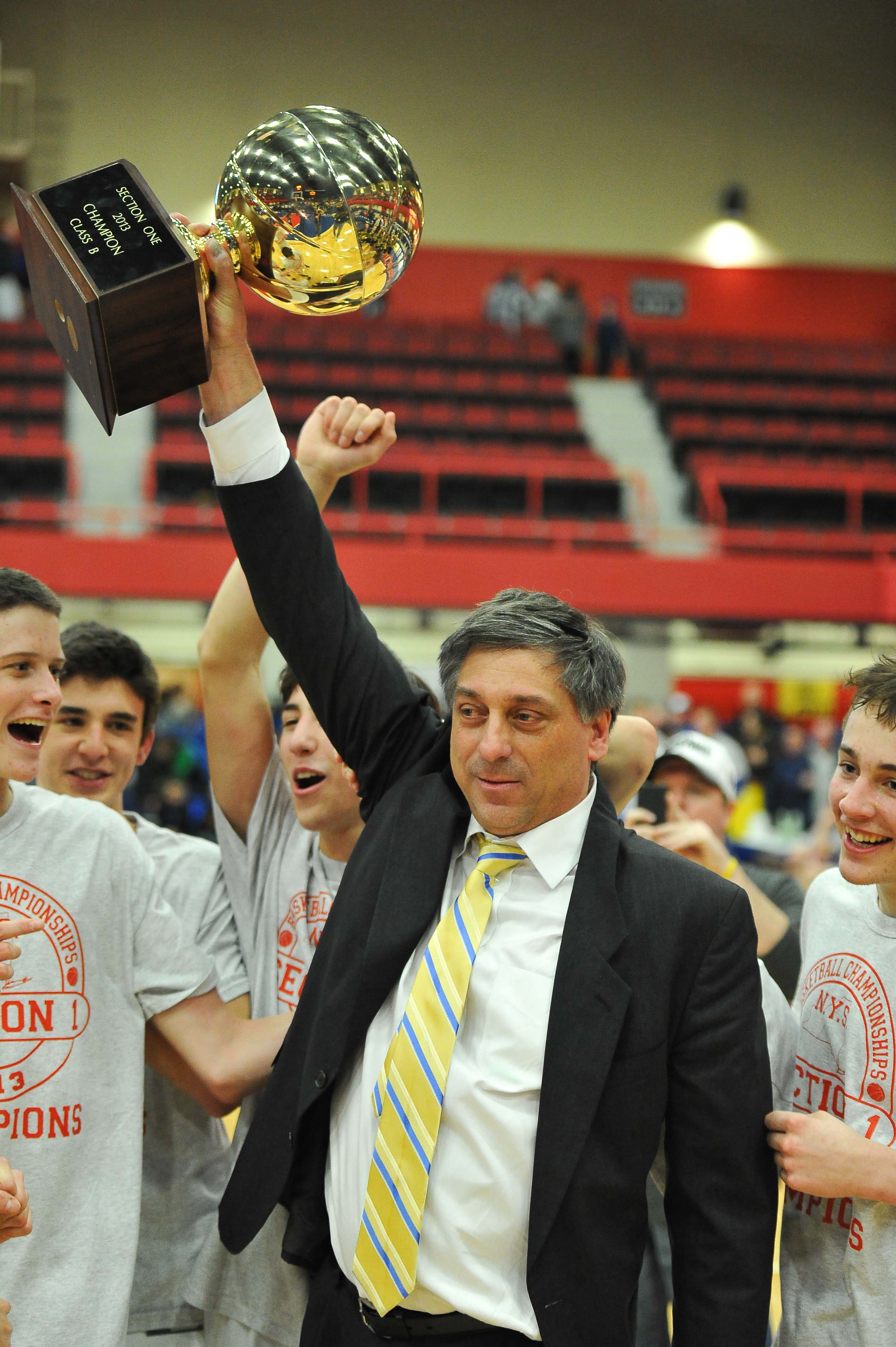
 

image1

element

1.What is the most challenging aspect of being a Coach?

Coaching presents many challenges at every age level and in every capacity. It is, therefore, hard to come up with the most challenging aspect, so I will offer up two.  The first one is communicating to athletes in a way that creates a fun environment that gets them to want to work hard at improving their individual and collective team skills. Each athlete, regardless of age, is unique and has to be approached with whatever means is going to best motivate him or her to reach their full potential.


The second challenge is how to deal with parental concerns and how to best guide them. Parents generally have at least the one common goal of wanting the best for their child.  As a coach of just not one team, but a director of an entire program, I find it very challenging helping parents “grow” as their child progresses from being a very young athlete to an athlete competing at higher levels.  Helping parents manage the emotions of successes and failures of their own child, as well as their team, can be very difficult.


2.Please tell us about your children?


I am very blessed to have four children, all boys, and all are healthy and happy.


My oldest son, Rob, is married and works in Manhattan for a major law firm. He started his own company designing websites at age 12 and has always had a love for business and entrepreneurship.  He attended Binghamton University as an undergraduate before obtaining his Juris Doctor Degree at the University of Buffalo.  Rob and his wife, Amelia, just recently had their first child and my first grandson, Landon.


My second oldest, Chris, lives locally, and is a Partner with New York Life. Chris graduated from Nichols College where he got both his undergraduate degree in Sports Management and Masters in Business Administration.  Prior to his current career, he worked for the New York Knicks, the Miami Heat, and the New Jersey Nets. He was, and still is, one of those happy go lucky guys that truly enjoys people and life. He is a very hard worker with a great personality and just a lot of fun to be around.


Kelby, my third child, just graduated from SUNY Oneonta this spring.  He is probably the quietest of my four boys, at least until you get to know him.  He has a very loyal personality and is similar to his older brother, Rob, in a lot of ways.  Unsure of what’s up next after college, he is currently looking at different types of employment options.  He loves to be by the water, whether it’s the ocean or the lake, and thoroughly enjoys hanging out with his brothers.


That leaves Kyle, my youngest son.  Kyle transferred from SUNY Potsdam, but has not yet selected his next school. He has narrowed down his choices to several schools, where he will continue his basketball career while pursuing a business degree. He loves to compete and is also the daredevil in the family.  Fast and wild are his thing. He attempted his first bungee jump at 6 but had to wait patiently until he was of legal age to sky dive at 18.


All four of my boys are very close and extremely competitive.  They all played basketball for me at the high school level, and all played at the collegiate level in some capacity.  They thoroughly enjoy being with each other and traveling together.  I am very lucky to have four kids that were and remain so close as they grow older.

3. How would you describe yourself?


For as far back as I can remember, helping others succeed has been at my core. As a Big Brother and coach I have always worked with kids to help them to succeed.  As a manager at IBM, my goal was to help employees advance their own careers. Aside from that, others tell me that I am fanatical, committed, have OCD, and sometimes even a little crazy!
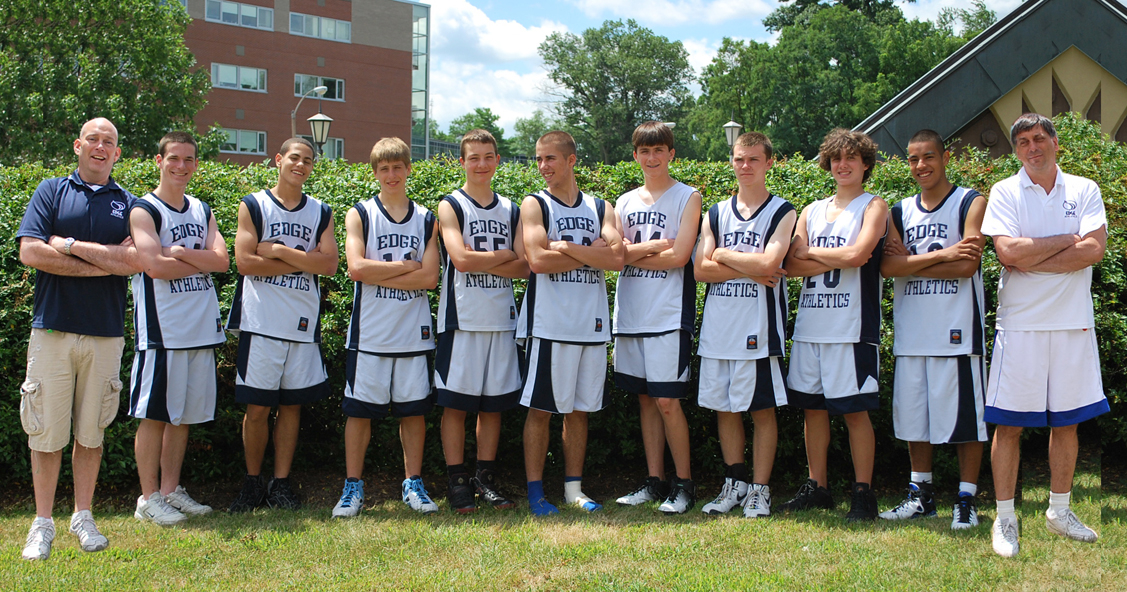
 

image1 (4)


4. Do you feel athletic talent is created or some children are born with it?

I think both are true.  There are many athletes that are born with the ability or “gift” that enables them to excel in their respective sport.  But there are also those athletes that just simply work hard, and work hard for many years to develop their skill.

There is, however, a significant difference between the two.  First, just because an athlete is born with certain genetics or traits that can’t be taught or acquired, does not mean that they will be exceptional athletes or that their talent will prevail.  They still must invest countless hours to develop that talent and reach their maximum potential. Those athletes that reach the collegiate or professional level are generally highly committed and driven, traits that may not necessarily be part of that “gift.”

On the other hand, there are those athletes that can excel by simply committing and working hard at what they do.  This, however, does not mean that working hard is a guarantee that an athlete will reach the level of success they desire to achieve.  Sometimes, the hard work is simply just not enough.

What I believe to be absolutely true is that those athletes that commit themselves to work as hard as they can are more likely to reach whatever full potential that their mind and body are capable of achieving.

5. What is a typical day for you?

A typical day for me changes depending on the time of year.  During the winter, I spend most of my time preparing my high school team to compete and succeed.  During the spring, I am heavily engaged with the management of our youth basketball program that serves 8-17 year olds.  In the summer, we switch gears a bit where I direct five weeks of camps.  And in the fall, I spend countless hours helping student athletes with the college recruiting, selection, and application process.

In addition, on an all-year-round basis, I teach basketball skills to athletes of all ages and levels on a more personal one on one or small group basis.

In general, my day begins fairly early to get all of the administrative tasks out of the way unless, of course, its camp season where my days and nights are somewhat reversed.  There are many tasks that have to be completed during the day including calls to college coaches, film review and scouting reports, practice preparations, and the planning and preparation that is required for the next season.


When that day’s work is done, I usually arrive at either the Our Lady of Lourdes or Poughkeepsie Day School gym by 3pm where I will spend the rest of the afternoon and evening coaching and teaching athletes, monitoring other teams’ practices, or consulting with parents.


6. Tell us about your basketball career and how you ended up in the coaching profession.


Although I started to play basketball in the 9th grade, I really didn’t invest any time into the sport until several years later.  I did not play CYO or attend any camps.  I made the junior high team as a freshman, Junior Varsity as a sophomore, and the Varsity as junior, basically because I was tall. At the end of my junior year, I became friends with an all-star athlete, Tom Emma, who eventually played for Duke University, the top Division I program in the country at the time.


Tom introduced me to the world of basketball and all of the hard work and commitment that went along with it to become successful. Spending countless hours, usually more than 8 hours a day during the summer, I remember burning through sneakers at a rate of a pair every two weeks.  After a fairly successful senior year both from an individual and team perspective, the continued hard work earned me a spot playing for Clarkson University for the next four years.  During the summers of my college years, I worked at many different overnight basketball camps.  It was then that I knew that coaching would be a part of my life.  I just did not realize at the time how big a part it would become.


My first job out of college was working for IBM in Poughkeepsie, New York, in August of 1982.  It did not take long to get involved with coaching in the local CYO program where I coached a 6th grade team.  Continuing to coach at the CYO level for the next four years was inevitable and led to my first high school position as the Junior Varsity coach at Our Lady of Lourdes.  I was named the Varsity coach two years later and have been there ever since.


Although successful at IBM, achieving management status in three years, I knew that coaching and teaching young athletes was my passion.  While working and advancing with IBM, I found myself spending more and more time, both physically and emotionally, with coaching.  Edge Athletics was formed in 1996 as a small program with one team and incorporated as a not for profit in 2001.  In 2007, after 25 years, I left IBM to run Edge Athletics and develop all-year programs on a full time basis. I remain the head Varsity coach at Lourdes and am heading into my 28th year.

7.What advice would you give young athletes today?

There are a few things that I tell young athletes to help them develop.

First and foremost, and simply put, they have to have fun.  That might sound like something easy to do and even a little bit of a cliché, but excelling at sports is a complex process.  If young athletes are not playing the sport because they love to play it and are not having fun playing it, then the rest of the process becomes even more complex and difficult. Unfortunately, the coach and the parents are key components for this to happen.

Next, and along the same lines, I stress to the athletes that they need to put in as much time – or as little time – as they want to.  I try to ensure that each athlete recognizes what it takes to be successful, but at the end of the day it is the athlete that has to want to do it more than their parents want them to.

And then finally, I encourage the athletes to set realistic goals for themselves.  It is okay to have a long term dream, but in order for athletes to improve, they must set realistic internal and measurable goals. Those goals can range from improving their shooting percentage, to earning a spot on a team, or earning a starting role on a team. Setting realistic measurable goals is a great way for young athletes to motivate themselves to work hard leading to self-confidence as they achieve them.

James C. Santoro

Director, Edge Athletics Camps, Clinics, and Programs

Head Men’s Basketball Coach, Our Lady of Lourdes High School

element


image1 (5)
TOSHIBA Exif JPEG

Whipped Pineapple Pops:
By Natalie Monson
Whipped Pineapple Pops

element

If you have ever been to Disneyland, they have this amazing thing called a Dole Whip.  It’s like a fluffy, creamy tangy pineapple treat that people actually wait in line for 30 minutes for.  My sister is visiting from Texas and she loves to cook and try new recipes, and so the other day we attempted to recreate our own Dole Whip and in the process ended up making it into popsicles from our creation.  And so glad we did

There are a couple of ways you can do this.  You can either use crushed pineapple or fresh pineapple.  We chose to use crushed since that is what I had on hand.  This Whipped Pineapple Pops Recipe makes quite a bit of ‘whip’, so you can cut it in half if you aren’t making it for very many people.  We used 2 – 20 oz cans of crushed pineapple.  Drain one can and include the juice of the other can.  Whenever I buy canned fruit, I always buy ‘Naturally Sweetened’.  The fruit that is canned in syrup contains a lot of extra sugar and so make sure you buy naturally sweetened.  If you are using fresh pineapple, you will probably need an entire pineapple, cut up into chunks.

Whatever pineapple you decide to use, place it in a high powered blender.  If you like a little more tart flavor you can add the juice of a fresh squeezed lime.


Kids will definitely love these pineapple pops!

If your pineapple isn’t very sweet, you can add 1-2 tablespoons of your favorite sweetener, but it isn’t necessary.  Blend until it is a smooth, frothy consistency.

A great way to eat pineapples by making it into popsicles!

The next step is to combine with your creamy ingredient.  We used cream that we whipped because we were going for an extra fluffy rich texture.  But you can also use almond milk, coconut milk (full fat works best) (think pina colada – yum!) half and half, or whatever you prefer.

Your favorite pineapple dessert, made into a popsicle!

If you use whipped cream, you can put the mixture in the freezer for a bit and just serve it as a ‘Dole Whip’.

Turn your favorite pineapple dessert into an amazing popsicle!

Otherwise, pour your mixture into popsicle molds and you have Whipped Pineapple Pops!

element

10 Of The Best Places To Live Abroad:
By Suzy Strutner

Most of us have a deep, sneaking dream to just quit everything and go abroad. 

And if you’re going to make the scene change permanent, Switzerland is apparently
the best place to do so. The country ranked first on HSBC’s annual Expat Explorer
survey, which polled nearly 9,300 expats around the world — people who actually live
the dream! — about the quality of life, financial well-being and ease of raising a
family in their new homes abroad. 

Switzerland’s work-life balance earned especially high marks in the survey, which
included 34 countries. And it’s just one of many accolades: Switzerland also ranked
high on this summer’s Expat Insider report from expat community site InterNations.
That survey asked expats in 61 countries to rate their experience in areas like
personal finances and ease of settling in — Switzerland ranked first for “quality of
life,” aka the ideal blend of leisure options, travel and transportation, health and
safety and personal happiness.

In an interesting twist, Ecuador lead the InterNations list as the top expat
destination overall. “Expats are generally very pleased with their financial
situation in Ecuador,” the report reads. Respondents also said it was easy to settle
in and make friends in the South American hotspot.

Asia also has some of the best places for expats to live — 76 percent of expats in
the HSBC survey said they have more disposable income since moving to China,
according to a press release. Hong Kong and Singapore placed in the top 10 of both
surveys, with stellar scores for general quality of life from InterNations.

Considering a move (or just looking for a good daydream)? Here are some of the top
places for expats, 2014.
element

Switzerland
HSBC rank: 1
InterNations rank: 4
154941952

Singapore
HSBC rank: 2
InterNations rank: 6
88786321

Germany
HSBC rank: 4
InterNations rank: 12
154341690

New Zealand
HSBC rank: 6
InterNations rank: 16
456129001

Hong Kong
HSBC rank: 10
InterNations rank: 10
459944165

Canada
HSBC rank: 11
InterNations rank: 14
462011227

Australia
HSBC rank: 12
InterNations rank: 9
469852797

Mexico
HSBC rank: 21
InterNations rank: 3
182021903

Spain
HSBC rank: 24
InterNations rank: 7
114280140

Thailand
HSBC rank: 7
InterNations rank: 22
171623188

 download (3)

elementHeart Disease:
By ELAINE ST. PETER

Heart disease is the leading cause of death in the United States. In a new study
from Brigham and Women’s Hospital and Harvard Medical School published in the April
26 issue of JAMA, researchers found that women who work more than 10 years of
rotating night shift work had a 15 to 18 percent increased risk of developing
coronary heart disease, the most common type of heart disease, as compared with
women who did not work rotating night shifts.

“There are a number of known risk factors for coronary heart disease, such as
smoking, poor diet, lack of physical activity and elevated body mass index. These
are all critical factors when thinking how to prevent coronary heart disease.
However, even after controlling for these risk factors, we still saw an increased
risk of coronary heart disease associated with rotating shift work,” said lead
author Celine Vetter, an HMS instructor in medicine and a chronobiologist at Brigham
and Women’s. “Even though the absolute risk is small and the contribution of shift
work to coronary heart disease is modest, it is important to note that this is a
modifiable risk factor, and changing shift schedules may have an impact on the
prevention of coronary heart disease.”

Get more HMS news here

Researchers examined the association between rotating night shift work and coronary
heart disease over a period of 24 years. About 189,000 women in the Nurses’ Health
Study I and II who reported their lifetime exposure to rotating night shift work
(defined as three or more night shifts per month, in addition to day and evening
shifts) in 1988 and 1989 were included in the analysis.

These women also reported on their coronary health, indicating whether they had an
angiogram that confirmed coronary heart disease-related chest pain, a heart attack
or cardiovascular procedures such as angioplasty, coronary artery bypass graft
surgery or stents. 

In the case of a self-reported heart attack, or death, information was confirmed by
medical records and death certificates to ensure that the event was related to
coronary heart disease.

Questionnaires also collected data on known risk factors of coronary heart disease
every two to four years throughout the study period. Over the 24-year period, more
than 10,000 newly developed cases of coronary heart disease occurred.

In addition, researchers also found that recent shift work might be most relevant
for coronary heart disease risk and that longer time since stopping shift work was
associated with decreased coronary heart disease risk, a new finding that
researchers note warrants replication.

“Our results are in line with other findings, yet it is possible that different
schedules might carry a different risk, and we have very little information on exact
schedules, as well as work start and end times,” said Vetter, who is also an
associate epidemiologist in the Channing Division of Network Medicine. “We believe
that the results from our study underline the need for future research to further
explore the relationship between shift schedules, individual characteristics and
coronary health to potentially reduce coronary heart disease risk.”

Researchers note that individual characteristics such as the individual’s biological
rhythm, disrupted in rotating night shift workers, and information on sleep patterns
and quality might modulate coronary heart disease risk.
element
image1 (2)
IMG_7111
element
Exploring Sports With Your Children:
By Randy Clark
Everyone knows that children benefit physically from sports, but one of the
over-looked benefits of playing sports is the life lessons. Team-based and
individual sports can help kids develop a sense of confidence and improve their
self-esteem. And you can help. We set the tone for their experiences. Consider the
following when exploring sports with your children.


Be a role model and coach:

Parents and coaches can make or break a kid’s love of sports. Kids observe how we
demonstrate sportsmanship. Showing respect for the other team and officials,
focusing on how well the team played rather than wins or losses, and shaking hands
with the other team after the game are ways we can all help create a positive
environment. While it is a big responsibility, it is the ultimate opportunity to
bond with our kids.  But remember, these are kids.  The negative, yelling and
screaming coaching style will not prove effective with these young people.

Ask them which activities they’d like to try:

When you’re trying to find sports and activities for your kids, think about their
personalities and what they enjoy doing. Some may enjoy team sports like soccer,
while others prefer individual sports, like swimming.  Not every child will want to
play little league baseball or hockey, but with a bit of investigating and a lot of
patience, you can explore several options your kids may enjoy.

Enroll with a friend:

Then, they can look forward to participating together, and mom and dad can benefit
from ride-sharing, too.

Set some ground rules:

When you try a new sport, explain that it will be for the whole season. Ask them to
try their best and remind them at the end of the season, they don’t have to commit
to doing it again. Often, kids will really grow and even reluctant young athletes
can gain confidence as the season progresses.

Celebrate the successes:

As a life-long coach, my goal is simple, I always try to celebrate the successes, no
matter how little.  At a young age, it’s less about winning the game and more about
trying our best and being good sports out on the field. And, to help make sure all
kids feel a part of the team we always had a team cheer – win or lose – to
celebrate.

Explore other ways to be active together:

If organized sports aren’t for your child, remember family physical activities are
also a great opportunity. Going for walks together, taking a hike or a bike ride,
just going and spending time together is important.  It can be a great family
bonding opportunity.  The key is helping to create a sense of enjoyment and making
sure that being active is not something they feel like they “have” to do, but
instead want to do.
element

Throughout history, many of the richest of the rich have felt a responsibility to help the less fortunate.

Billionaire investor and philanthropist Warren Buffett has taken the call to action a step further by asking billionaires to follow his lead.

By signing The Giving Pledge, created by Buffett, billionaires make a public promise to dedicate most of their wealth to philanthropy.

To date, there have been more than 125 pledgers from around the world, many of them high-profile philanthropists and self-made titans.

Here is are some of the signers:

bill

Pledger: Bill Gates, co-founder, Microsoft

Estimated net worth: Around $81 billion

Pledged to give away: “We have committed the vast majority of our assets to the Bill & Melinda Gates Foundation,” wrote the Gateses in their pledge letter.

Charities: The Bill and Melinda Gates Foundation supports ending extreme poverty and poor health in developing countries, and is working to help America’s education system.

element

fgdffd
Pledger: Larry Ellison, co-founder, Oracle

Estimated net worth: Around $51 billion

Pledged to give away: “I put virtually all of my assets into a trust with the intent of giving away at least 95 percent of my wealth to charitable causes,” wrote Ellison in his pledge letter.

Charities: The Ellison Medical Foundation’s mission is to research and prevent age-related diseases and disabilities.

element

xzdsds

Pledge: Michael Bloomberg, founder, Bloomberg LP

Estimated net worth: Around $35 billion

Pledged to give away: “… I am enthusiastically taking The Giving Pledge, and nearly all of my net worth will be given away in the years ahead or left to my foundation.”

Charities: Bloomberg Philanthropies donates to a variety of causes, including education, arts, public health, environment and government innovation to improve city life.

element

df

Pledger: Mark Zuckerberg, CEO, Facebook

Estimated net worth: Around $35 billion

Pledged to give away: Most of his wealth

Charities: In 2013, Zuckerberg donated Facebook shares worth just under $1 billion to the Silicon Valley Community Foundation.

element